
Introduction
What happens to your food after you swallow it?
Your meal travels through the esophagus and enters the stomach, a muscular organ containing acid, enzymes, mucus, and specialized cells. The stomach does much more than hold food. It expands to accommodate a meal, mixes its contents, begins important stages of digestion, protects its own lining, and gradually releases processed material into the small intestine.
The stomach is therefore both a mechanical processor and a tightly regulated chemical environment. Its different cell types, muscle layers, nerves, hormones, and protective mechanisms work together to prepare food for the next stage of digestion.
Where the Stomach Fits Into Digestion
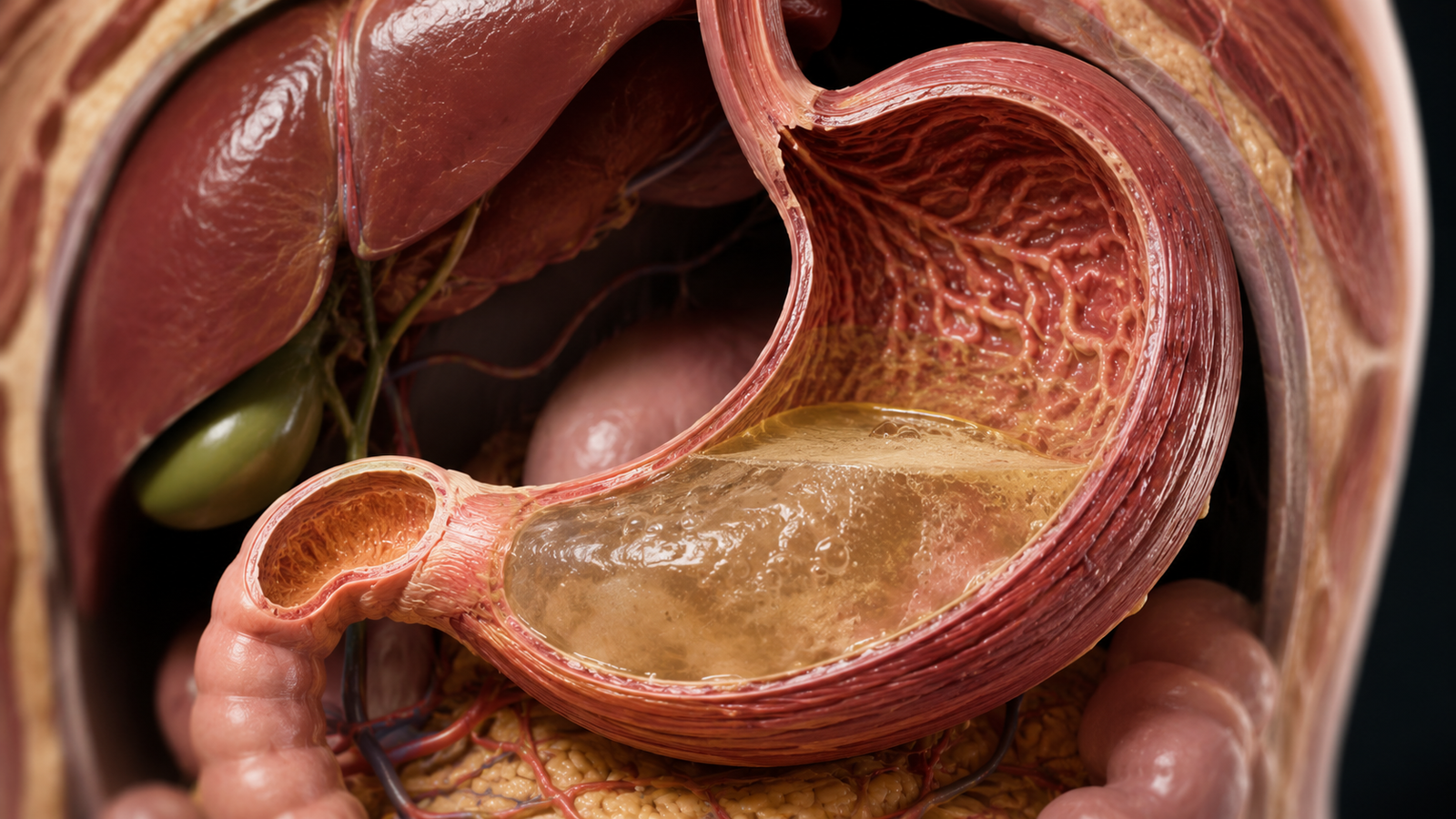
The stomach lies in the upper abdomen, mainly toward the left side, between the esophagus and the small intestine. The esophagus delivers swallowed food into the stomach, while the duodenum, the first part of the small intestine, receives the processed stomach contents.
This places the stomach at an important transition point. Food has already been chewed and mixed with saliva, but it still needs substantial processing before the small intestine can continue digestion and absorption.
How the Stomach Stores and Mixes Food
The stomach has several regions, including the cardia, fundus, body, antrum, and pylorus. Together, these regions support storage, mixing, processing, and controlled emptying.
An empty stomach contains prominent folds called rugae. As food enters, these folds flatten and allow the stomach to expand. This process, known as gastric accommodation, lets the stomach hold a substantial amount of food without an immediate dramatic rise in pressure.
The stomach wall also contains three layers of smooth muscle within the muscularis externa. Their arrangement allows the stomach to generate strong mixing movements and makes it an active mechanical processor.
How Food Becomes Chyme
Once food enters the stomach, muscular contractions mix it with gastric secretions. Some material moves toward the pylorus, while some is pushed backward into the stomach.
This backward movement is called retropulsion. It improves mixing and helps reduce food particles into smaller pieces.
After sufficient mechanical and chemical processing, the stomach contents become a semi-fluid mixture called chyme. The pylorus then controls how much chyme enters the duodenum at a time.
How Stomach Acid Works
Parietal cells in the gastric glands, particularly in the fundus and body, produce hydrochloric acid. The acidic environment helps denature proteins, supports activation of digestive enzymes, and contributes to defense against many microorganisms entering with food.
Inside parietal cells, hydrogen ions are transported into the stomach through the H+/K+ ATPase, also known as the proton pump. Chloride ions also enter the gastric lumen, producing the highly acidic environment characteristic of the stomach.
The proton pump requires energy because it actively transports ions against their gradients. Drugs called proton pump inhibitors reduce acid secretion by inhibiting this pump, which makes the mechanism clinically important in acid-related conditions.
How Protein Digestion Begins
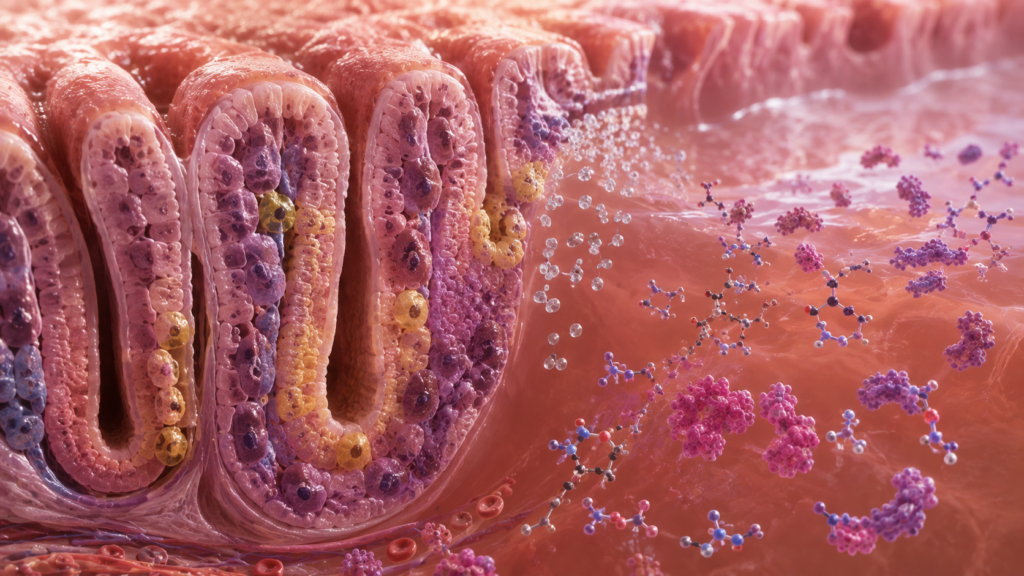
The stomach plays an important early role in protein digestion.
Chief cells produce pepsinogen, an inactive precursor of the enzyme pepsin. Producing the enzyme in an inactive form helps limit protein-digesting activity within the cells that produce it.
When pepsinogen enters the acidic gastric environment, it becomes pepsin. Pepsin begins breaking proteins into smaller peptides.
Hydrochloric acid also helps disrupt the interactions that maintain protein structure, allowing pepsin to act more effectively. Protein digestion does not finish in the stomach. Pancreatic proteases and intestinal enzymes continue the process in the small intestine.
How the Stomach Protects Itself
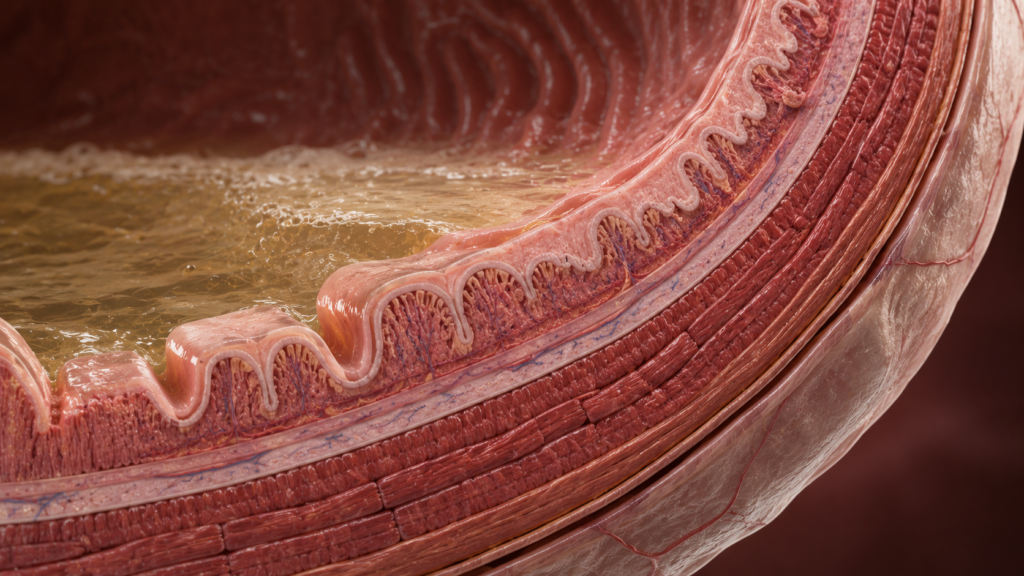
The stomach contains powerful digestive chemicals, yet its own lining normally remains protected.
Surface mucous cells produce a mucus layer over the gastric epithelium. Bicarbonate is secreted near the epithelial surface, creating a more protected microenvironment next to the cells.
Other defenses include tight junctions between epithelial cells, adequate blood flow, prostaglandins, and rapid epithelial renewal. These mechanisms work together rather than relying on a single protective barrier.
This explains why the stomach does not normally digest itself despite containing acid and protein-digesting enzymes.
The Specialized Cells That Control the Stomach
The gastric mucosa contains glands with several specialized cell populations.
Parietal cells produce hydrochloric acid and intrinsic factor. Chief cells produce pepsinogen. Mucous cells produce protective secretions, while endocrine cells release regulatory signals.
This cellular cooperation allows the stomach to coordinate digestion, protection, movement, and nutrient-related functions.
One important example is intrinsic factor. Parietal cells produce it, and vitamin B12 ultimately needs to bind intrinsic factor for efficient absorption in the terminal ileum. Gastric acid and pepsin also help release vitamin B12 from food proteins.
The stomach therefore contributes to a nutrient-absorption process that is completed much farther along the digestive tract.
How the Stomach Regulates Digestion
The stomach does not operate independently. Its activity is regulated through hormonal and neural signals.
Gastrin is produced mainly by G cells in the gastric antrum. Food entering the stomach, particularly protein-containing food, can increase gastrin secretion. Gastrin supports gastric acid secretion, motor activity, and maintenance of the gastric mucosa.
Histamine provides another pathway for stimulating acid secretion. Enterochromaffin-like cells release histamine, which acts on H2 receptors on parietal cells.
Acetylcholine provides an important neural signal. Gastrin, histamine, and acetylcholine can therefore work together to regulate parietal-cell activity.
The Brain and the Stomach Communicate
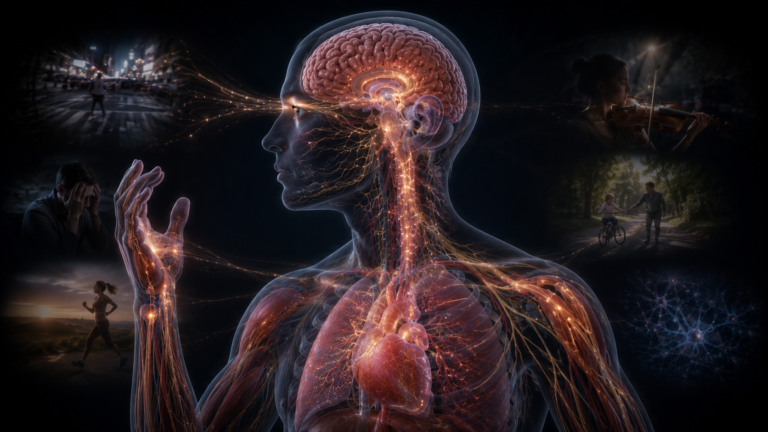
The stomach is connected to the autonomic nervous system and contains extensive enteric neural networks. The vagus nerve plays an important role in digestive regulation, while the enteric nervous system can coordinate local movement, secretion, and blood flow.
Digestive preparation can even begin before food reaches the stomach. Seeing, smelling, tasting, or anticipating food can activate neural signals that prepare gastric activity. This is known as the cephalic phase.
Once food enters the stomach, the gastric phase begins. Stretch of the stomach wall and chemical signals from the food influence acid secretion, gastrin release, and muscular activity.
The process continues when chyme enters the duodenum. The small intestine sends feedback that can slow gastric emptying when the incoming material is particularly acidic, fatty, or concentrated.
Why the Stomach Does Not Empty Everything at Once
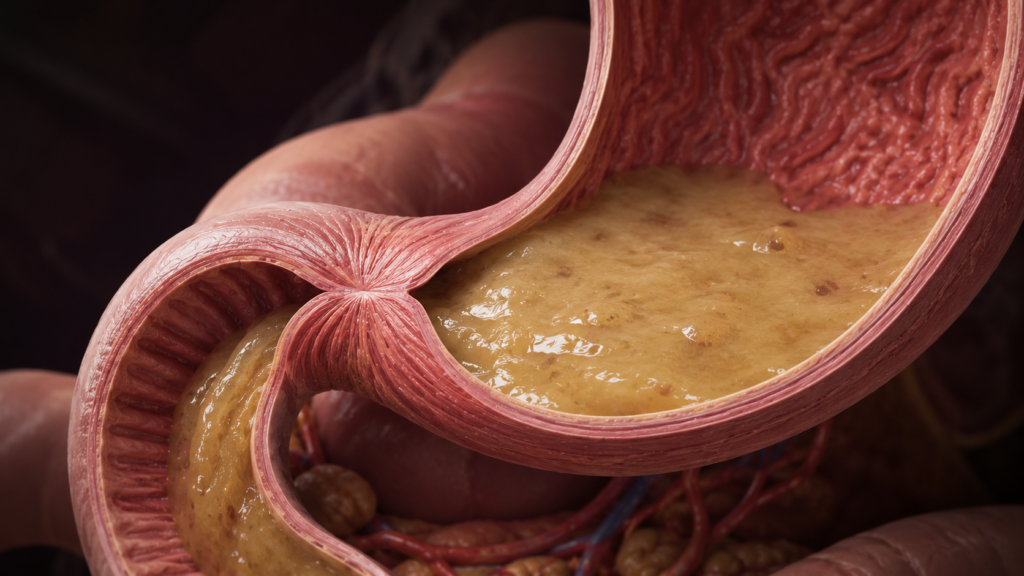
The pyloric sphincter controls the passage of chyme from the stomach into the duodenum.
Pressure waves move stomach contents toward the pylorus, but the pylorus does not simply open and release the entire meal. Instead, it permits controlled amounts of sufficiently processed material to pass.
This regulation gives the small intestine time to neutralize, digest, and absorb the incoming material.
Fatty meals can empty more slowly because signals from the small intestine respond to their composition and slow gastric emptying. This allows more time for bile, pancreatic enzymes, and intestinal processes to handle the meal.
What Role Does the Stomach Play in Different Nutrients?
The stomach does not digest every nutrient to the same extent.
Carbohydrate digestion begins in the mouth through salivary amylase. Gastric acidity eventually inactivates this enzyme, so the stomach plays a relatively smaller role in carbohydrate digestion.
The stomach contributes some mechanical processing and limited fat digestion, but most fat digestion occurs in the small intestine.
Protein digestion receives more attention in the stomach because acid helps denature proteins and pepsin begins breaking them down.
The Stomach Also Acts as a Defense System
The acidic gastric environment can kill or inhibit many microorganisms that enter with food. It is not an absolute barrier because some organisms can survive the stomach’s conditions.
Gastric acidity therefore serves two important functions at once. It contributes to digestion while also providing part of the body’s defense against microorganisms.
What Happens After the Stomach?
The duodenum receives chyme from the stomach and also receives bile from the liver and gallbladder and digestive secretions from the pancreas.
Pancreatic bicarbonate helps neutralize gastric acid. Pancreatic and intestinal enzymes then continue digestion, while the small intestine carries out most nutrient absorption.
The stomach is therefore one important link in a much larger digestive sequence. It prepares the meal rather than completing digestion by itself.
When Gastric Protection Fails
The stomach’s protective mechanisms are strong, but they are not absolute.
Peptic ulcers can develop when damaging factors overcome mucosal defenses. Two important causes are Helicobacter pylori infection and nonsteroidal anti-inflammatory drugs, commonly called NSAIDs.
H. pylori is adapted to survive in the stomach and can colonize the gastric mucosa. It produces urease, which helps create a more favorable local environment. Chronic infection can cause inflammation and contribute to peptic ulcer disease and increased risk of gastric cancer.
NSAIDs can reduce prostaglandin synthesis. Because prostaglandins support mucus, bicarbonate, blood flow, and other protective functions, reducing their activity can weaken gastric defenses and increase the risk of gastric injury.
Acid Reflux and the Esophagus
The lower esophageal sphincter normally helps limit movement of stomach contents back into the esophagus.
When stomach contents repeatedly move backward into the esophagus, acid reflux can occur. Frequent reflux can contribute to gastroesophageal reflux disease and inflammation because the esophagus is less adapted to prolonged exposure to gastric acid than the stomach.
The Stomach and Hunger
The stomach participates in appetite regulation, but it does not control hunger by itself.
Ghrelin is produced primarily in the stomach and other parts of the gastrointestinal tract. Its levels often rise before meals and fall after eating.
Stomach stretch contributes to fullness, while nutrients entering the intestine generate additional hormonal and neural signals. The brain integrates these signals with information from the stomach, intestine, hormones, nutrient levels, and other systems.
This is one example of the broader gut-brain axis, through which the digestive system and brain communicate through neural pathways, hormones, and immune signals.
What Happens When the Stomach Is Empty?
The stomach does not simply become inactive between meals.
During fasting, it can generate the migrating motor complex, a pattern of contractions that helps move residual material through the digestive tract.
Stomach sounds can result from the movement of gas and fluid through the gastrointestinal tract. They do not necessarily mean that you are hungry.
The stomach can also temporarily hold liquids. Depending on the meal and physiological state, some liquids may pass into the small intestine relatively quickly while others remain longer.
The Stomach’s Role in Health
The stomach’s mucosal lining undergoes continuous renewal. Stem and progenitor cells within gastric glands contribute to replacing damaged cells and maintaining the protective barrier.
Inflammation of the gastric mucosa is broadly described as gastritis. Possible contributors include H. pylori, medications, alcohol, autoimmune mechanisms, severe physiological stress, and other factors.
Autoimmune gastritis can affect parietal cells and related components. Acid secretion may decrease, and reduced intrinsic factor production can impair vitamin B12 absorption and eventually contribute to deficiency.
The stomach can also develop cancer when abnormal cells arise in its lining. Chronic inflammation, H. pylori infection, certain dietary factors, smoking, and genetic factors can influence risk.
Follow One Meal Through the Stomach
Consider what happens to one bite of food.
You chew it and saliva begins the first stages of processing. You swallow, and the esophagus moves the bolus into the stomach.
The stomach relaxes to accommodate the incoming food. Its muscles then contract and mix the food with gastric secretions.
Acid is secreted, pepsinogen is released, and pepsin becomes active in the acidic environment. Proteins begin to break down as the food becomes progressively mixed and processed.
Chyme eventually forms, and the pylorus releases small amounts into the duodenum. Signals from the intestine then influence how quickly the stomach continues emptying.
The stomach is therefore constantly adjusting its activity according to what it contains and what the intestine is ready to receive.
Follow a Protein Molecule
A protein entering the stomach encounters hydrochloric acid, which disrupts the interactions maintaining its structure.
Pepsin then breaks the protein into smaller peptides. These peptides move into the duodenum, where pancreatic proteases and intestinal peptidases continue the digestive process.
Eventually, amino acids and small peptides can be absorbed and enter the circulation.
The stomach starts the process, but the small intestine carries most of the later digestive and absorptive work.
Follow Vitamin B12
Vitamin B12 enters the stomach associated with food proteins.
Gastric acid and pepsin help release the vitamin from those proteins. The vitamin eventually associates with intrinsic factor produced by parietal cells.
The complex travels through the small intestine to the terminal ileum, where vitamin B12 is absorbed.
This shows how an activity that begins in the stomach can be essential for a nutrient to be absorbed much farther along the digestive tract.
The Stomach as a Timing System
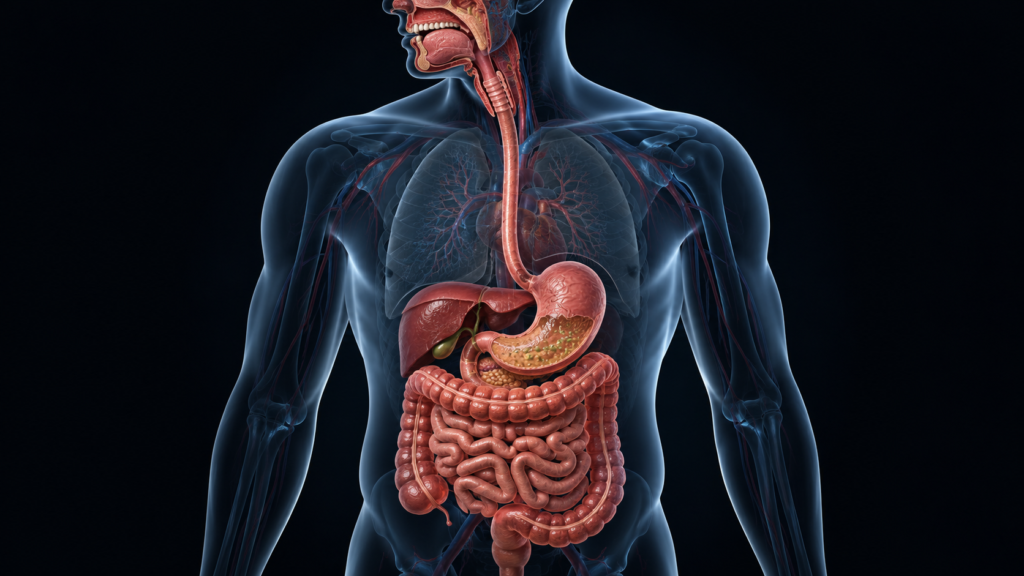
The stomach has several jobs that must occur together.
It must store food, mix it, begin digestion, protect its own lining, and release chyme at an appropriate rate.
The pylorus and intestinal feedback make gastric emptying controlled rather than random. The stomach therefore acts as a timing system as well as a digestive organ.
The mouth begins mechanical breakdown and carbohydrate digestion. The esophagus transports the bolus. The stomach stores and mixes it and begins important protein digestion.
The small intestine then performs most enzymatic digestion and nutrient absorption, while the large intestine absorbs water and electrolytes and processes the remaining material.
The stomach is one crucial link in this coordinated sequence.
Key Takeaways
- The stomach stores food, mixes it, and prepares it for the small intestine.
- Rugae and gastric accommodation allow the stomach to expand as food enters.
- Parietal cells produce hydrochloric acid and intrinsic factor.
- Chief cells produce pepsinogen, which becomes pepsin and begins protein digestion.
- Mucus, bicarbonate, blood flow, prostaglandins, and epithelial renewal protect the gastric lining.
- Hormonal and neural signals regulate acid secretion, movement, and gastric emptying.
- The pylorus controls how quickly chyme enters the duodenum.
- The stomach contributes to appetite regulation through signals such as ghrelin.
- H. pylori and NSAIDs can weaken gastric defenses and contribute to ulcer disease.
- The stomach begins important digestive processes, but most nutrient absorption occurs in the small intestine.
Conclusion
The stomach is much more than a storage pouch. It is a muscular mixer, a chemical processing chamber, a protective barrier, a regulatory organ, and a controlled gateway into the small intestine.
Food enters, the stomach expands, muscular contractions mix the meal with gastric secretions, proteins begin to break down, and chyme gradually forms. At the same time, mucus, bicarbonate, blood flow, prostaglandins, and epithelial renewal protect the stomach from its own digestive environment.
Hormones and nerves continuously adjust the process. The stomach responds to the food it contains and to signals from the small intestine, while the brain and digestive system communicate through the gut-brain axis.
The result is a carefully coordinated process that prepares each meal for the next stage of digestion.
That is the science behind how your stomach works.
Explore more evidence-based explanations of digestion, human physiology, and how your organs work in CAVELYRA‘s Body & Health collection.