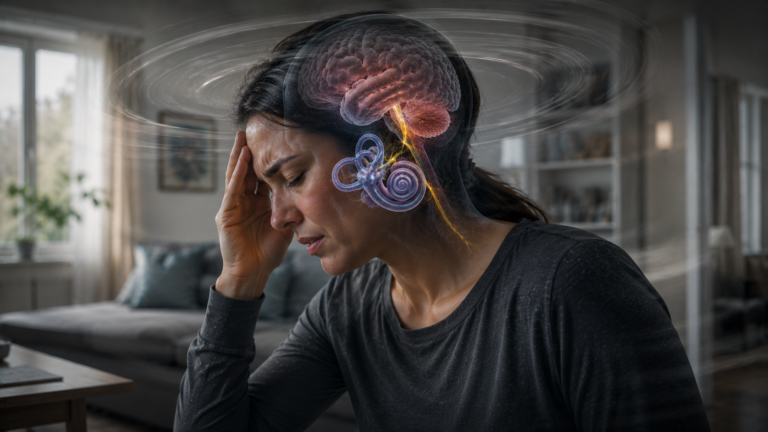

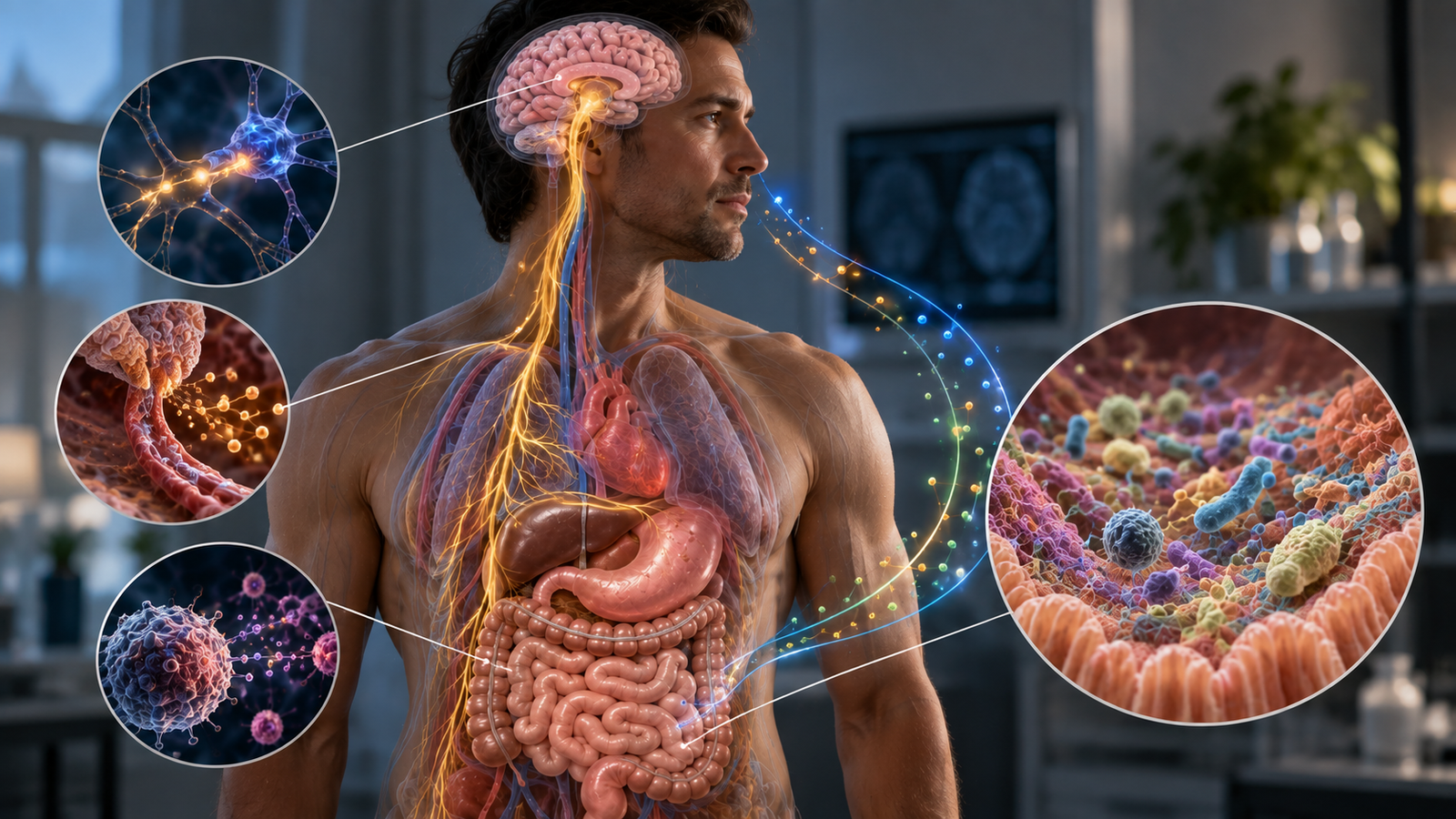
Your brain is not isolated from the rest of your body.
Every day, information travels between the brain and organs throughout the body. One particularly interesting example is the gut brain connection, which describes communication between the brain and the gastrointestinal system.
Your gut can send signals toward the brain. The brain can send signals back.
Nerves carry information. Hormones carry signals. Immune molecules participate. Microorganisms living in the gastrointestinal tract produce and modify molecules that can influence the environment around them.
Together, these interactions are commonly described as the gut-brain axis.
But there is an important problem with how this subject is often presented.
You may have heard that your gut bacteria “control your mood.” That description is far too simple.
The gut does not contain a hidden control system that determines whether you feel happy, anxious, or depressed. The relationship involves the nervous system, immune system, endocrine system, metabolism, diet, microorganisms, and the physical condition of the gastrointestinal tract.
Most importantly, the communication works in both directions.
What Is the Gut-Brain Axis?
The gut-brain axis is a network of two-way communication between the gastrointestinal system and the brain.
Several systems contribute to it.
The central nervous system includes the brain and spinal cord. The enteric nervous system contains an extensive network of neurons within the gastrointestinal tract. The autonomic nervous system helps regulate digestive functions. The immune system continually monitors the intestinal environment. The endocrine system releases hormones in response to nutrients and other signals. The gut microbiome contributes a large range of metabolic activities.
These components do not operate separately.
Stress can alter gastrointestinal function. Gastrointestinal activity can send signals toward the brain. Diet can change the environment in which microorganisms live. Microbial metabolism can change molecules available to the body. Immune activity can influence both systems.
So the relationship is not simply:
Gut → Brain
It is:
Gut ↔ Brain
That distinction is the foundation for understanding the subject.
What Is the Gut Microbiome?
The term microbiome refers broadly to the microorganisms living in a particular environment and, depending on how the term is used, their collective genetic material.
The gastrointestinal tract contains a highly diverse microbial ecosystem.
Bacteria are the best-known members, but the gut also contains archaea, fungi, viruses, and other microorganisms.
These organisms are not simply passive passengers. They participate in digestion and metabolism, interact with the intestinal lining and immune system, and produce or modify molecules. Their activity also responds to the environment created by food and other conditions within the body.
There is an especially important distinction here:
Microbiome composition is not the same as microbiome function.
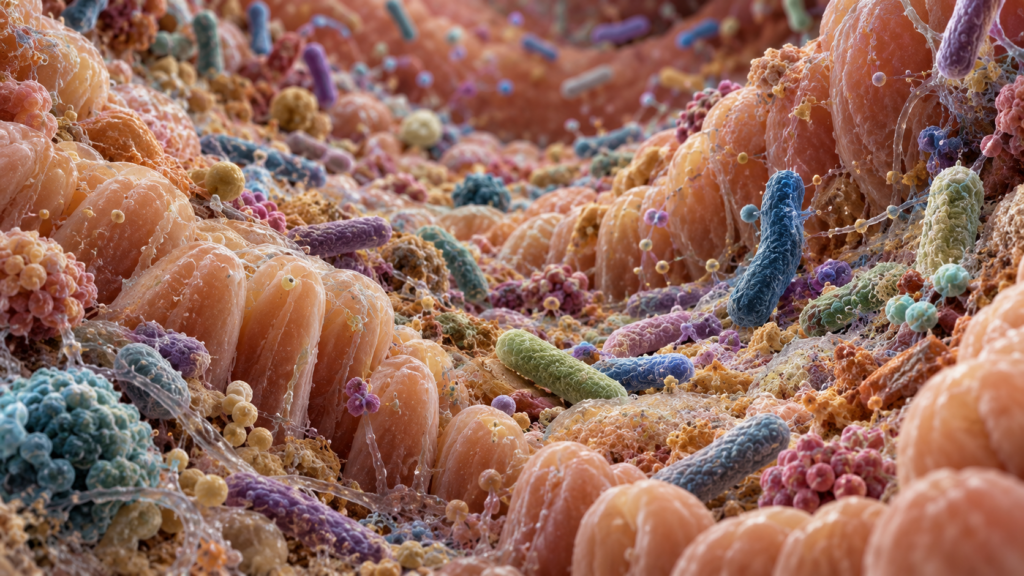
Imagine two people with different proportions of microbial species in their intestines. That tells you something about composition. It does not automatically tell you what those microorganisms are doing.
Different microbes can consume different nutrients, produce different compounds, and respond differently to the same dietary environment. Their activity can also depend on the surrounding microbial community, the intestinal environment, and the person’s own physiology.
This is why dividing bacteria into simple categories such as “good” and “bad” can produce a misleading picture.
The activity of the microbial community may be more informative than simply knowing which organisms are present.
How Does the Gut Communicate With the Brain?
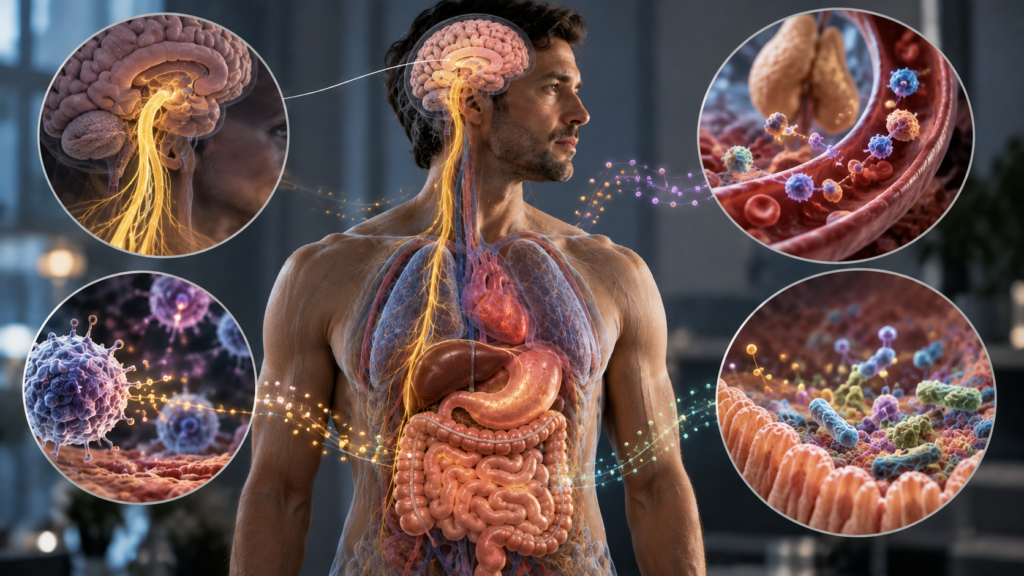
Several communication pathways work together. The major pathways include neural, endocrine, immune, and microbial or metabolic signaling.
They overlap rather
than functioning as four completely separate systems.
The Vagus Nerve
One of the best-known neural pathways is the vagus nerve.
It is a major component of the parasympathetic nervous system and provides extensive communication between the gastrointestinal tract and the brain.
Much of the information carried through the vagus nerve travels toward the brain through sensory, or afferent, fibers. These fibers can respond to information generated within the gut, including signals involving nutrients, gut hormones, and microbial activity.
The vagus nerve therefore provides an important route for relatively rapid gut-brain communication.
But it would be misleading to imagine the vagus nerve as a telephone cable running directly from individual bacteria to your brain.
Many microbial signals first interact with intestinal cells, immune cells, or other parts of the gut environment. Those systems can then influence neural signaling.
The communication is therefore a network, rather than a direct bacterial-to-brain message.
Endocrine Signaling
The gut also contains specialized endocrine cells.
These cells detect information within the intestinal environment and release hormones and other signaling molecules. These signals can influence digestion, appetite, metabolism, and communication with the nervous system.
The brain can also influence the gut through hormonal systems.
One important example is the hypothalamic-pituitary-adrenal axis, commonly called the HPA axis.
The HPA axis plays an important role in the body’s response to stress. Stress can influence gastrointestinal motility, secretion, permeability, and other aspects of gut function.
This provides another clear example of why the gut-brain relationship is bidirectional.
Immune Signaling
The gastrointestinal tract contains a large and highly active immune system.
That is not surprising. The gut is constantly exposed to food, microorganisms, and foreign molecules. The immune system must distinguish between harmless material, normal microbial communities, and potential threats.
Microbial products can influence immune cells. Immune cells can release cytokines and other signaling molecules. Those signals can influence tissues beyond the gut, including pathways relevant to the nervous system.
This is one reason researchers are interested in the relationship between microbial activity, immune signaling, inflammation, and brain function.
However, the evidence connecting these processes to human mental disorders remains much less definitive than some popular explanations suggest.
Microbial Metabolites Provide Another Route
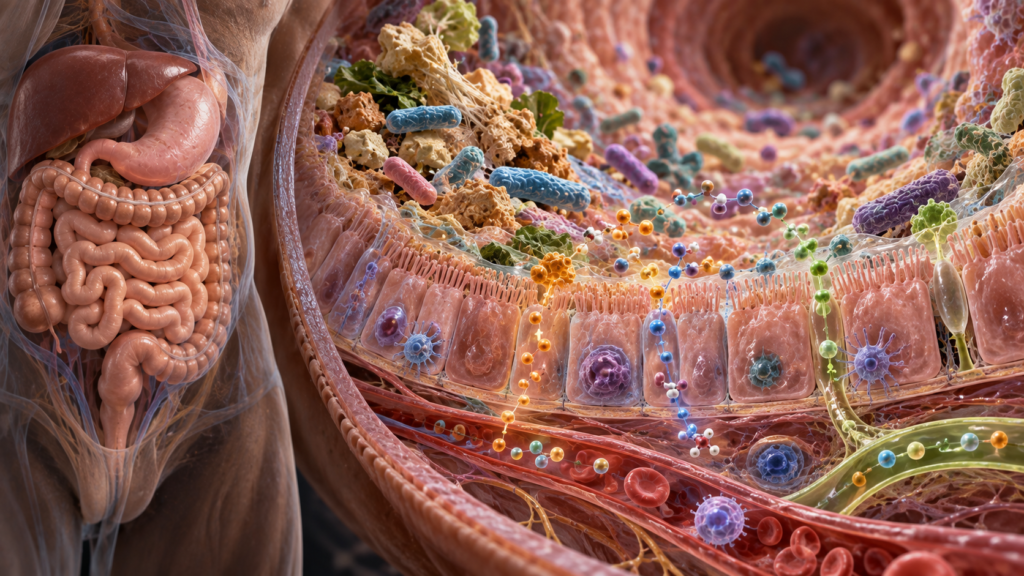
Gut microorganisms constantly transform nutrients and other compounds.
Some of the molecules produced through this activity can interact with the body.
One important group is short-chain fatty acids, or SCFAs. The major SCFAs include acetate, propionate, and butyrate. They are produced largely when gut microorganisms ferment certain carbohydrates and dietary fibers.
SCFAs can influence intestinal cells, immune signaling, metabolism, and other physiological processes. Researchers are also investigating their possible role in communication between the gut and brain.
Other microbial-related pathways involve bile acids and tryptophan metabolism. These molecules can influence signaling systems within the gut and throughout the body.
But the existence of these pathways does not mean that eating one particular food will immediately change brain function.
A biological pathway is not the same thing as a guaranteed health outcome.
Does the Gut Produce Neurotransmitters?
This is another area where a real scientific observation can easily become an exaggerated claim.
Certain microorganisms can produce or modify compounds related to neurotransmitter pathways. Serotonin, GABA, dopamine-related compounds, and other neuroactive molecules have all been studied in connection with the gut microbiome.
But consider the claim:
“Gut bacteria produce serotonin, therefore they control your mood.”
That conclusion does not follow.
Much of the serotonin in the body is produced outside the brain, particularly by specialized cells in the gastrointestinal tract. Serotonin involved in gut function is not equivalent to serotonin simply entering the brain and changing mood.
The blood-brain barrier also matters.
Some molecules cannot simply travel from the intestine into the brain. Other molecules may influence brain-related processes indirectly through immune, endocrine, metabolic, or neural pathways.
Understanding that distinction is essential when interpreting microbiome research.
Why Stress Can Change What Happens in Your Gut
The communication also works in the opposite direction.
Your brain can influence your digestive system.
Think about what can happen before an important exam or another stressful event. Your stomach may feel different. Your appetite can change. You may feel nauseated or suddenly need to use the bathroom.
These responses are not imaginary.
Stress can influence gastrointestinal movement, secretion, sensitivity, and other functions through neural and hormonal pathways.
Long-term psychological stress can also interact with gastrointestinal symptoms. This is particularly relevant to disorders involving gut-brain interactions, such as irritable bowel syndrome.
But there is an important qualification.
Not every digestive problem is caused by stress.
Gastrointestinal diseases have many possible causes and mechanisms. The gut-brain axis is one part of a larger physiological system.
What About Depression and Anxiety?
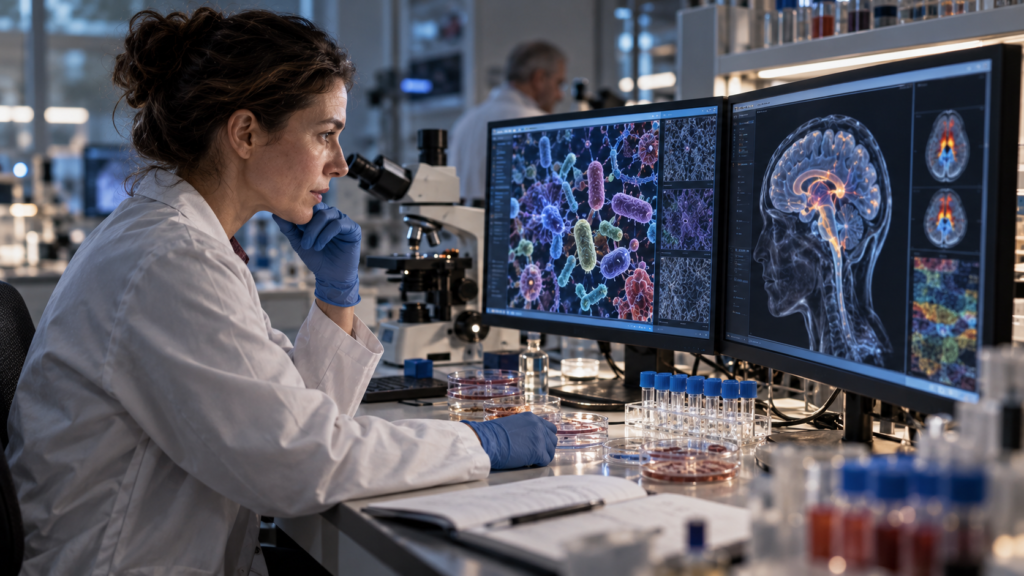
This is where the evidence becomes particularly interesting, but also where caution matters most.
Researchers have found differences in gut microbial patterns between some groups of people with psychiatric conditions and healthy comparison groups.
Animal experiments have also shown that manipulating gut microorganisms can influence aspects of behavior and stress responses.
These findings provide important clues.
They do not, however, establish a simple cause-and-effect relationship in humans.
Association does not prove causation.
Suppose researchers find that people with depression have different microbiomes. Several explanations are possible.
The microbiome could influence aspects of the condition. The condition itself could change diet, sleep, physical activity, hormones, or medication use, which could then change the microbiome. Another factor could influence both. Or several mechanisms could operate at the same time.
Without appropriate experimental evidence, separating these possibilities can be difficult.
Why Animal Studies Matter, But Are Not Enough
Animal studies are valuable because scientists can control variables that are difficult to control in humans.
Researchers can manipulate microbial communities, alter diets, control environmental conditions, examine tissues, and investigate particular biological pathways. This can reveal mechanisms that would be difficult to study directly in people.
But an animal model is not a miniature human.
Human diets and environments are more complicated. Human microbiomes vary considerably. Human psychological states are also difficult to reproduce experimentally.
A finding in mice can therefore generate an important hypothesis without proving that the same intervention will improve human mental health.
This distinction is especially important when evaluating claims about microbiome-based treatments or so-called “psychobiotics.”
Why Diet Matters to the Gut Microbiome
Diet is one of the major environmental factors influencing the gut microbiome.
Food provides substrates that microorganisms can use. Different dietary patterns therefore create different environments for microbial metabolism.
Dietary fiber is particularly relevant because many gut microorganisms can ferment carbohydrates that humans cannot fully digest. That fermentation can produce short-chain fatty acids and other metabolites.
A varied diet containing adequate fiber is therefore relevant to the gut environment.
But this does not mean that one food is a cure for a psychological disorder.
There is no single “best microbiome food” that universally fixes mental health.
Individual responses vary. The existing microbial community matters. The overall dietary pattern matters. And the health condition being considered matters.
What Are Prebiotics?
A prebiotic is a substance that is selectively used by microorganisms in a way that provides a health benefit to the host.
Many prebiotics are forms of dietary carbohydrate or fiber.
The definition is more precise than simply saying that prebiotics “feed good bacteria.” Different prebiotics can affect different microbial communities and functions. Their effects can also depend on the individual consuming them.
Again, the biology does not fit neatly into a list of good and bad bacteria.
What Are Probiotics?
Probiotics are live microorganisms that, when administered in adequate amounts, provide a health benefit to the host.
That definition matters.
Not every fermented food is automatically a probiotic. Not every bacterium is a probiotic. Different probiotic strains do not necessarily produce the same effect.
Evidence for probiotics depends on the particular microorganism, dose, population, condition, and outcome being studied.
Some clinical evidence supports benefits for particular gastrointestinal conditions. Research into mental health outcomes is active, but it remains less definitive.
What About Fermented Foods?
Fermented foods can contain microorganisms and microbial metabolites. They can also be nutritious components of an overall healthy dietary pattern.
But fermented does not automatically mean clinically proven probiotic.
The microorganisms present can vary between foods and products. Some may not survive processing or digestion.
The health effects of fermented foods therefore cannot simply be assumed from the presence of live microorganisms.
They are worth studying, but they should not be treated as guaranteed treatments for depression, anxiety, or other disorders.
Why Gut-Brain Research Is So Difficult
One of the biggest challenges is individual variation.
There is no single standard microbiome shared by everyone. Genetics, diet, medication, environment, age, infections, and other factors can influence the microbial ecosystem.
Researchers also have to decide what exactly they are measuring.
Microbiome composition, relative abundance of organisms, microbial genes, metabolites, and actual microbial function are not identical measurements.
Two studies can therefore produce different results without necessarily answering exactly the same question.
Causality creates another major challenge.
If a person develops a health condition and their microbiome changes, that change could have several explanations.
The microbial change could contribute to the condition. The condition could change the microbiome. Treatment could change the microbiome. Diet or behavior could change both. Or another factor could influence both the condition and the microbial community.
This is why a correlation between a microbial feature and a health outcome should not automatically be interpreted as a causal mechanism.
What the Evidence Actually Supports
The current evidence supports several important conclusions.
The gut and brain communicate in both directions.
The vagus nerve provides an important neural pathway. Hormonal and immune signals participate in communication. Gut microorganisms produce and modify biologically active molecules. Microbial metabolites can affect host physiology. Diet influences the gut environment. Stress can influence gastrointestinal function.
Researchers have also identified associations between microbiome features and some neurological and psychiatric conditions.
What remains much less certain is how much specific microbiome changes cause specific brain or mental health outcomes in humans.
That question requires stronger evidence.
What Should You Actually Do?
The current evidence does not require a complicated microbiome optimization program.
A sensible approach is much simpler:
- Eat a varied, nutritious diet.
- Include adequate dietary fiber from foods such as vegetables, fruits, legumes, and whole grains when appropriate for your individual health needs.
- Focus on an overall dietary pattern rather than searching for one miracle ingredient.
- Stay physically active.
- Get adequate sleep.
- Manage chronic stress.
- If you have persistent gastrointestinal symptoms, seek appropriate medical assessment rather than assuming they are caused by “bad gut bacteria.”
- Be skeptical of products claiming that a single probiotic, supplement, or food can transform your brain.
Some microbiome-based interventions may eventually prove useful for particular conditions.
But the evidence needs to be evaluated according to the specific strain, intervention, condition, and outcome.
Key Takeaways
- The gut-brain axis is a two-way communication network between the gastrointestinal system and the brain.
- Communication involves neural, endocrine, immune, microbial, and metabolic pathways.
- The vagus nerve is an important route for communication between the gut and brain.
- The gut microbiome includes bacteria as well as archaea, fungi, viruses, and other microorganisms.
- Knowing which microorganisms are present does not automatically reveal what they are doing.
- Microbial metabolites such as short-chain fatty acids can influence host physiology and are being studied as part of gut-brain communication.
- Microorganisms can produce or modify neuroactive compounds, but this does not mean they directly control mood.
- Stress can change gastrointestinal function, showing that communication also travels from the brain toward the gut.
- Differences between microbiomes and psychiatric conditions do not by themselves prove that microbiome changes cause those conditions.
- Diet, sleep, physical activity, stress, individual biology, and the broader physiological system matter more than any single “miracle” food or microorganism.
CONCLUSION
The gut-brain connection is real.
But it is not a simple story in which bacteria control your emotions.
It is a complex biological communication network involving the nervous system, hormones, immune signals, microbial activity, metabolism, diet, and the physical environment of the gastrointestinal tract.
The brain can influence the gut. The gut can influence signals reaching the brain. Microorganisms participate in that communication without acting as a hidden control system for the human mind.
That distinction matters because the most interesting part of gut-brain science is not that scientists have discovered a second brain controlling our emotions.
They have not.
The more important finding is that the body operates as an interconnected system. Information does not remain confined to individual organs. Signals produced in the intestine can influence distant physiological processes. Signals originating in the brain can change what happens in the gut. Microorganisms living inside us participate in this network.
At the same time, major questions remain unanswered.
We cannot look at someone’s microbiome and reliably predict their mood. We cannot assume that changing one bacterial species will produce a predictable psychological outcome. And we cannot treat every mental health condition as a gut disorder.
The science is promising precisely because the unanswered questions are important.
The gut-brain axis is not a hidden control panel for the mind.
It is a communication network.
Understanding that network requires something the best science always demands: curiosity without exaggeration, and evidence without losing sight of uncertainty.
Explore more evidence-based explanations of the human body, health, and science with CAVELYRA’s Body & Health collection.