

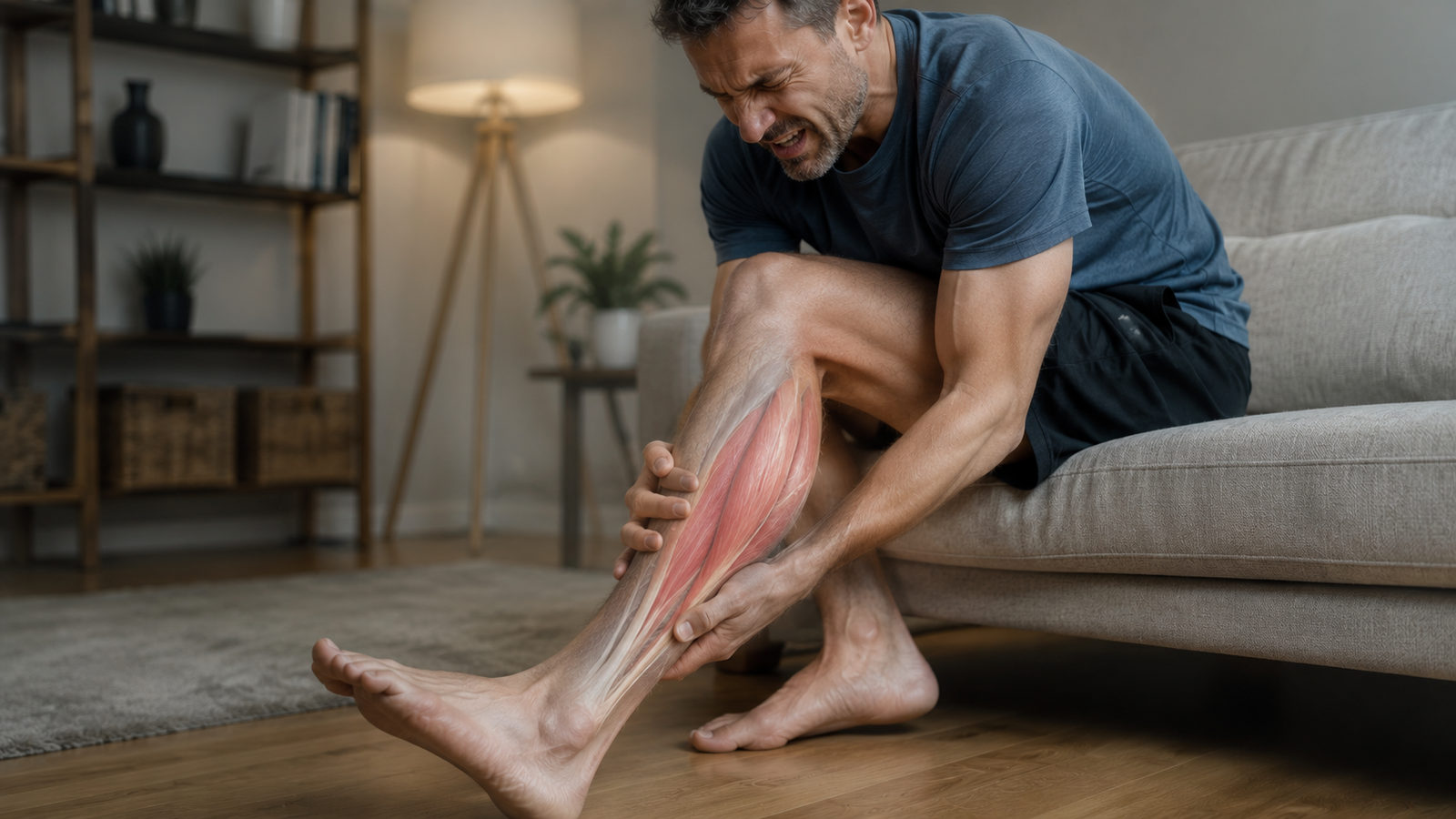
A muscle cramp can appear without warning. You may be sleeping peacefully when your calf suddenly contracts and becomes painfully hard. Or you may be exercising when a muscle unexpectedly tightens and refuses to relax. So, why do muscles cramp?
Quick answers
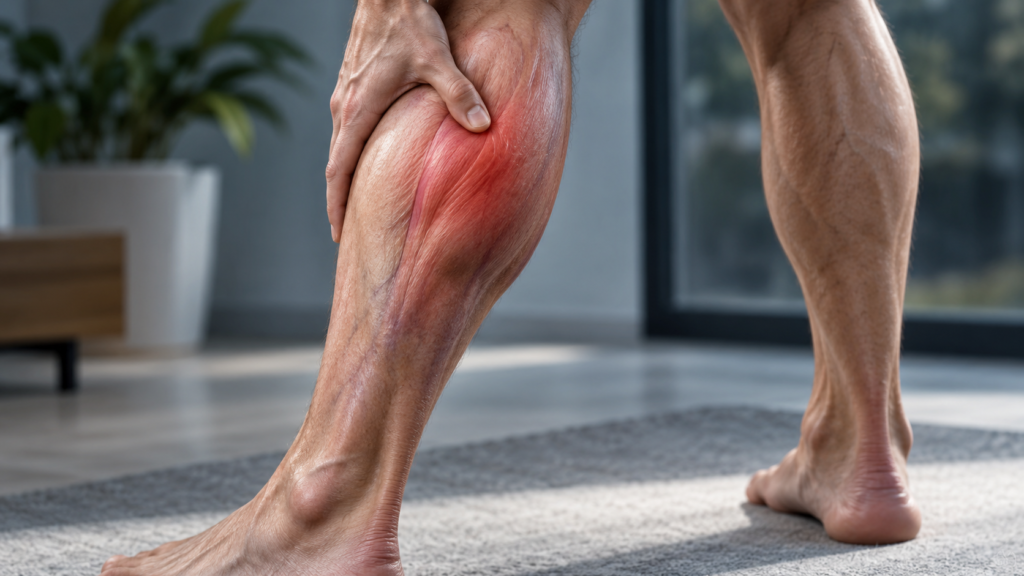
- What it is: A sudden, involuntary muscle contraction, most often in the calf. The episode may last seconds or minutes, but the pain can be intense.
- Likely contributors: Muscle fatigue and altered nerve control, with heat, sweating, medications, nerve or circulation problems, and some medical conditions in recurrent cases. Dehydration alone does not explain most exercise cramps. [1][2]
- When to get checked: Cramps that are frequent, severe, prolonged, or paired with weakness, numbness, swelling, redness, or dark urine after extreme exercise. [3]
The answer begins with how nerves, calcium, energy, and muscle contraction are coordinated. A muscle cramp is a sudden, involuntary contraction of a muscle. The calves are commonly affected, although cramps can also occur in the feet, thighs, hands, arms, abdomen, and other muscles. Exercise, fatigue, dehydration, heat, certain medications, nerve problems, reduced blood flow, and some metabolic conditions can contribute to cramps, but in many cases there is no single obvious cause. To understand why a muscle can suddenly lock into a painful contraction, it helps to look at what normally happens every time your muscles move.
How a Muscle Normally Contracts
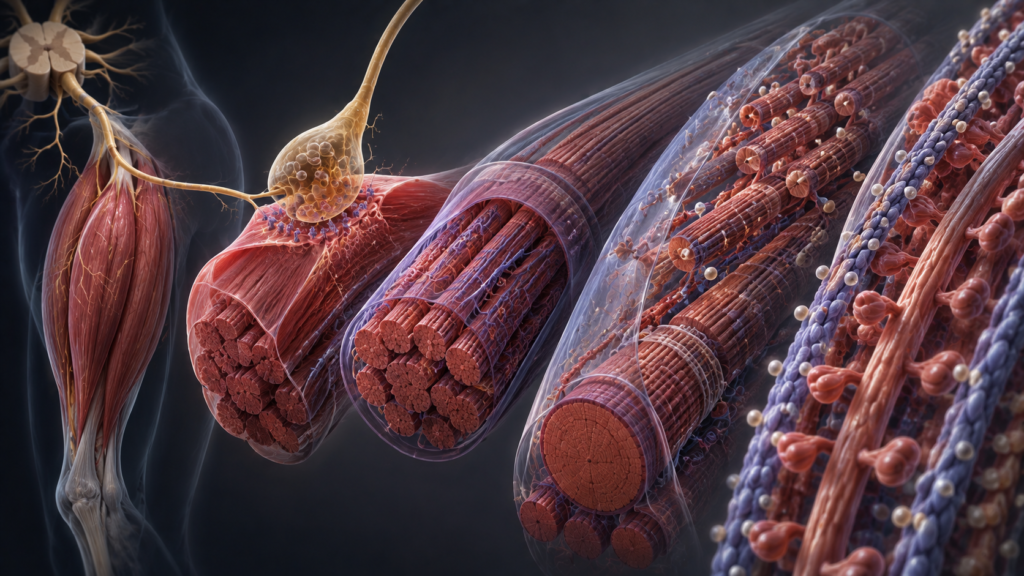
Skeletal muscles are made of bundles of muscle fibers. Inside each fiber are structures called myofibrils, which contain repeating units known as sarcomeres, one of the fundamental functional units of contraction. Two important proteins inside a sarcomere are actin and myosin, and their interaction allows the muscle to generate force.
But the process does not begin inside the muscle itself. It begins with the nervous system. When your brain sends a command to move, an electrical signal travels along a motor neuron toward the muscle. At the neuromuscular junction, the nerve releases a chemical messenger called acetylcholine, which binds to receptors on the muscle cell and helps produce an electrical signal across the muscle fiber. That signal triggers the release of calcium from a specialized structure called the sarcoplasmic reticulum. Calcium allows the contractile machinery to become active: myosin interacts with actin, the sarcomere shortens, and the muscle generates force, a process commonly described as the sliding filament mechanism. But contraction is only half the story. The muscle also needs to relax.
Why Do Muscles Cramp? The Science Behind Sudden Contraction
After contraction, calcium needs to be returned to storage inside the muscle cell, and this process requires energy in the form of ATP. Normal movement therefore depends on precise coordination between the nervous system, calcium handling, contractile proteins, and energy metabolism. A cramp can occur when this system becomes disrupted.
Muscle fatigue is one important contributor. When a muscle is asked to perform more than it is prepared to handle, the neuromuscular system becomes increasingly stressed, which is one reason cramps can occur toward the end of intense exercise, and a sudden increase in training volume or intensity can place additional stress on muscles that have not yet adapted. This does not mean that every cramp is caused by fatigue. Cramps have multiple possible causes, and the exact cause is sometimes unknown.
Exercise, Heat, and Fluid Balance

Exercise-associated cramps can be influenced by several factors, including workload, muscle fatigue, conditioning, heat, sweating, hydration, and pacing. A widely cited review of the evidence found that support for the “electrolyte depletion” and “dehydration” explanations came mainly from anecdotal clinical observations, case series totalling 18 cases, and one small case-control study, while the “altered neuromuscular control” explanation, linked to muscle fatigue, rested on human experimental studies, studies of cramping athletes, and animal data. [1] A later experimental study also found that significant and serious dehydration did not change the threshold at which cramps were triggered. [2] Exercise-associated cramps are therefore better described as multifactorial, with neuromuscular fatigue and control playing an important role rather than dehydration alone.
The situation becomes more demanding when exercise takes place in hot conditions. Sweating causes the body to lose water and electrolytes, and sodium and other electrolytes help maintain normal nerve and muscle function, so substantial fluid and electrolyte losses can affect the physiological environment in which muscles operate. But electrolyte abnormalities can contribute to muscle symptoms without explaining every cramp, and many cramps occur without a clearly identified electrolyte deficiency. That distinction matters, because automatically taking electrolyte or mineral supplements is not necessarily the right solution. Sodium, potassium, calcium, and magnesium all have important roles, but abnormal levels require appropriate evaluation rather than guesswork, and excess supplementation can cause problems: for example, excessive potassium can interfere with heart rhythm.
Why Do Leg Cramps Happen at Night?
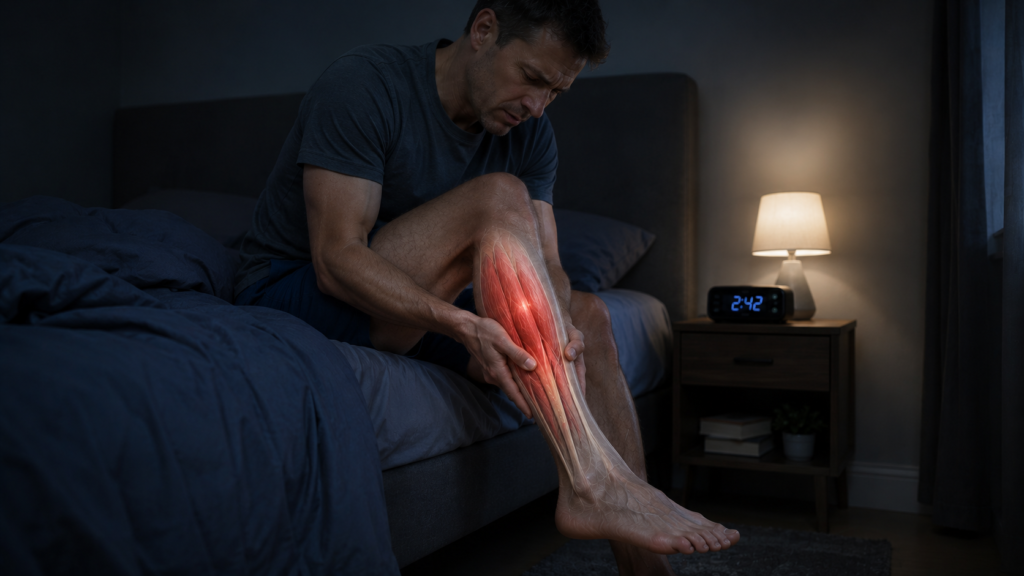
Nighttime leg cramps can be especially frustrating because they interrupt sleep. The calf may suddenly contract while the person is lying still, the muscle becomes tight and painful, and soreness can remain even after the contraction has ended. Age is associated with a greater frequency of nighttime leg cramps, and changes in muscle mass, activity, medications, and other health conditions can all be relevant. [4]
Sleep position may also matter for some people. If the ankle remains pointed downward, the calf can stay in a shortened position, and gentle calf stretching before bed may help some people, although no single strategy prevents every cramp. Nighttime leg cramps should also be distinguished from restless legs syndrome, which produces an urge to move the legs and uncomfortable sensations that are often temporarily relieved by movement. It is not the same as a muscle suddenly contracting and becoming hard and painful.
When Recurrent Cramps May Have Another Cause
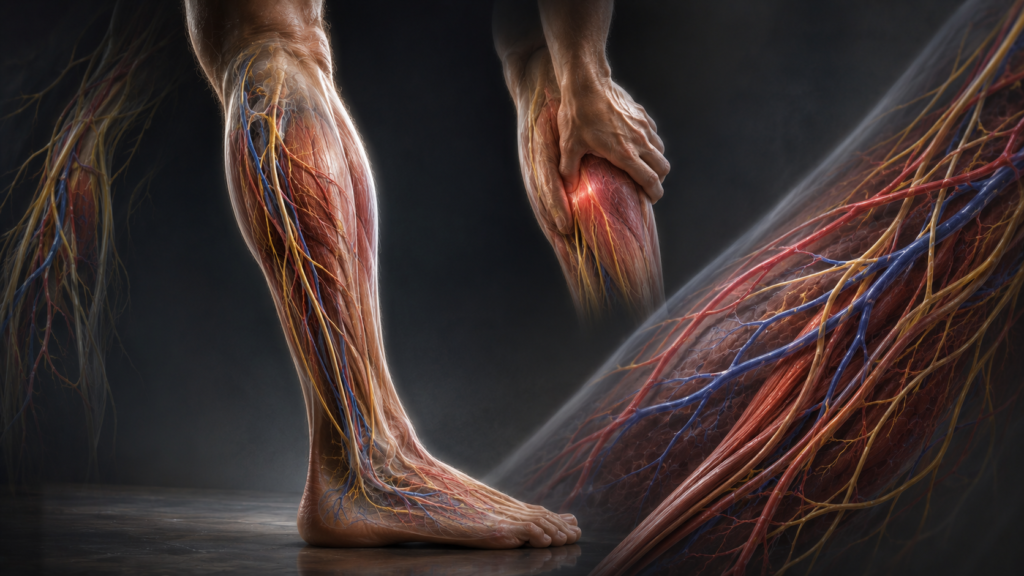
An isolated cramp is usually different from a recurring pattern. If cramps happen every night, every time you walk, after a particular medication, or together with weakness or numbness, the context becomes important.
Nerve Problems
Nerves control muscle activity. If a nerve becomes compressed, particularly in the lower back, abnormal nerve signals can contribute to pain, tingling, numbness, weakness, or cramping. Peripheral neuropathy can also affect muscle function and sensation, and diabetes is one important cause, so people with neuropathy may experience cramps along with burning, tingling, numbness, or weakness.
Reduced Blood Flow
Muscles need blood to deliver oxygen and remove metabolic waste. Reduced blood flow to the legs can produce cramping pain during walking or exercise, and with peripheral artery disease this pain may appear after walking a particular distance and improve with rest. That pattern is different from a random nighttime calf cramp, so the timing and circumstances of the pain can give a clinician important information about its possible cause.
Medical Conditions and Medications
Thyroid disorders can affect muscle function and may be associated with cramps or other muscle symptoms. Kidney disease can affect fluid and electrolyte regulation, and other conditions involving metabolism, nerves, or circulation can also contribute to recurrent muscle symptoms. Medications may be another factor. Statins, which are widely used to reduce cardiovascular risk, can cause muscle symptoms in some people, including muscle pain or weakness, and true cramps can also occur. Significant symptoms that begin after starting a medication should be discussed with a healthcare professional.
A Cramp Is Not the Same as Muscle Soreness
It is useful to distinguish a cramp from other forms of muscle pain. A cramp is sudden and involuntary, and the muscle may become hard or visibly contracted and remain tightly contracted for a period of time. Muscle soreness after exercise usually develops more gradually and can last for a day or longer: the muscle is painful, but it is not continuously locked into contraction. A muscle strain is different again. It involves injury to muscle fibers or associated tissues, often after overstretching or excessive force, and localized pain, swelling, or bruising may occur.
What Can You Do When a Cramp Happens?
When a cramp begins, the immediate goal is to reduce the unnecessary tension in the affected muscle. Gentle stretching can help lengthen the muscle: for a calf cramp, this may involve gradually bringing the foot and ankle into a more stretched position rather than forcing the movement. Gentle massage may also help the muscle relax, and heat may be useful in some situations, particularly when the goal is to relax a tense muscle. The important principle is controlled movement, because aggressive stretching or sudden force is not necessary. Afterward, the affected muscle may remain sore for some time.
How Can You Reduce the Risk of Cramps?
The most useful prevention strategy is often to identify the pattern. Does the cramp occur after exercise? At night? During hot weather? After heavy sweating? During prolonged walking? After starting a medication? The answer can provide clues.
For exercise-related cramps, gradual conditioning is important. Avoid suddenly moving from inactivity to maximum effort, increase training intensity and volume progressively, and allow adequate recovery. Gentle movement before exercise can prepare the muscles, while gentle stretching afterward may help some people maintain flexibility and reduce cramp frequency, though it is not a guarantee. Hydration should match the situation, because fluid needs depend on activity, temperature, humidity, sweating, duration, and individual physiology, and during prolonged intense exercise with substantial sweating, electrolyte replacement may become more relevant. Movement patterns matter as well: remaining in the same position for long periods may contribute to muscle fatigue or stiffness, so changing position, moving regularly, and stretching gently can help, particularly for people who sit, stand, or perform repetitive work for long periods.
A simple cramp diary can also be surprisingly useful. Record when the cramp happened, which muscle was affected, what you were doing, how long it lasted, whether you had been exercising or sweating, what you had eaten, which medications you were taking, and whether stretching helped. If the cramps continue, this information can help a healthcare professional recognize patterns that might otherwise be difficult to identify.
When Should Muscle Cramps Be Medically Evaluated?
Most occasional muscle cramps are not serious. Mayo Clinic guidance on muscle cramps also recommends evaluation when cramps are frequent, severe, associated with swelling or weakness, or do not improve with self-care. [3] Medical evaluation becomes more important when cramps are frequent, severe, unusually prolonged, repeatedly disturb sleep, or do not improve with appropriate measures, and the need is also greater when cramps occur with weakness, numbness, swelling, redness, warmth, or other unusual symptoms.
A swollen, warm, red, and painful leg should not automatically be assumed to have a simple muscle cramp, because a deep vein thrombosis can cause swelling and pain and requires medical assessment. Similarly, cramping that repeatedly occurs during walking and improves with rest may point toward a circulation problem rather than an ordinary muscle spasm. Blood tests may be used when an electrolyte problem is suspected, and depending on the situation, testing can include sodium, potassium, calcium, magnesium, and other relevant measures. Testing is more reliable than assuming that a particular supplement is needed.
When Muscle Breakdown Becomes an Emergency
Rarely, severe muscle symptoms after extreme exercise can indicate rhabdomyolysis, a condition involving substantial muscle breakdown. Clinical reviews of rhabdomyolysis describe severe muscle pain, weakness, swelling, and dark urine as important features of significant muscle injury. [5] Muscle cells release their contents into the bloodstream, and the kidneys can be affected. Dark, tea-colored urine after extreme exercise, particularly when accompanied by severe muscle pain or weakness, is an important warning sign and requires urgent medical evaluation. Severe cramping that does not stop, severe weakness, severe heat illness, confusion or loss of consciousness, suspected toxic exposure, or severe muscle symptoms after extreme exertion also require prompt medical attention; in the United States, call 911 in an emergency.
Key Takeaways
- A muscle cramp is a sudden, involuntary muscle contraction involving the nervous system, calcium, actin, myosin, and ATP.
- Muscle fatigue and altered neuromuscular control are important contributors to exercise-associated cramps, and heat, sweating, and electrolyte disturbances can contribute, but dehydration alone does not explain every cramp.
- Nighttime leg cramps have a different pattern from restless legs syndrome, and a cramp is not the same as soreness or a strain.
- Nerve problems, reduced blood flow, medications, and underlying medical conditions can contribute to recurrent cramps.
- Supplements should not be used automatically, because excessive amounts of some minerals can be harmful.
- Frequent, severe, prolonged, or unusual cramps, especially with weakness, numbness, swelling, redness, warmth, or dark urine after extreme exercise, warrant medical attention.
Conclusion
A muscle cramp is more than a muscle simply becoming tight. It reflects a temporary disruption in the precise system that normally allows nerves and muscles to communicate, contract, and relax. Fatigue, exercise, heat, fluid and electrolyte changes, nerve problems, circulation issues, medications, and other conditions can all play a role. The most useful question is therefore not simply, “Why did I get a cramp?” It is, “What pattern is this cramp following?” An occasional cramp after unusual exertion may have a very different meaning from cramps that occur every night, repeatedly appear during walking, or occur alongside weakness, numbness, swelling, or other concerning symptoms.
Explore more evidence-informed explanations of the body and everyday health in CAVELYRA’s Body & Health collection.
References
- Schwellnus MP. Cause of exercise associated muscle cramps (EAMC): altered neuromuscular control, dehydration or electrolyte depletion? British Journal of Sports Medicine. 2009;43(6):401–408. PubMed
- Significant and serious dehydration does not affect skeletal muscle cramp threshold frequency. British Journal of Sports Medicine. 2013;47(11):710–714. PubMed
- Mayo Clinic. “Muscle cramp: Symptoms and causes.” mayoclinic.org
- Allen RE, Kirby KA. Nocturnal leg cramps. American Family Physician. 2012;86(4).
- Review of rhabdomyolysis. PubMed