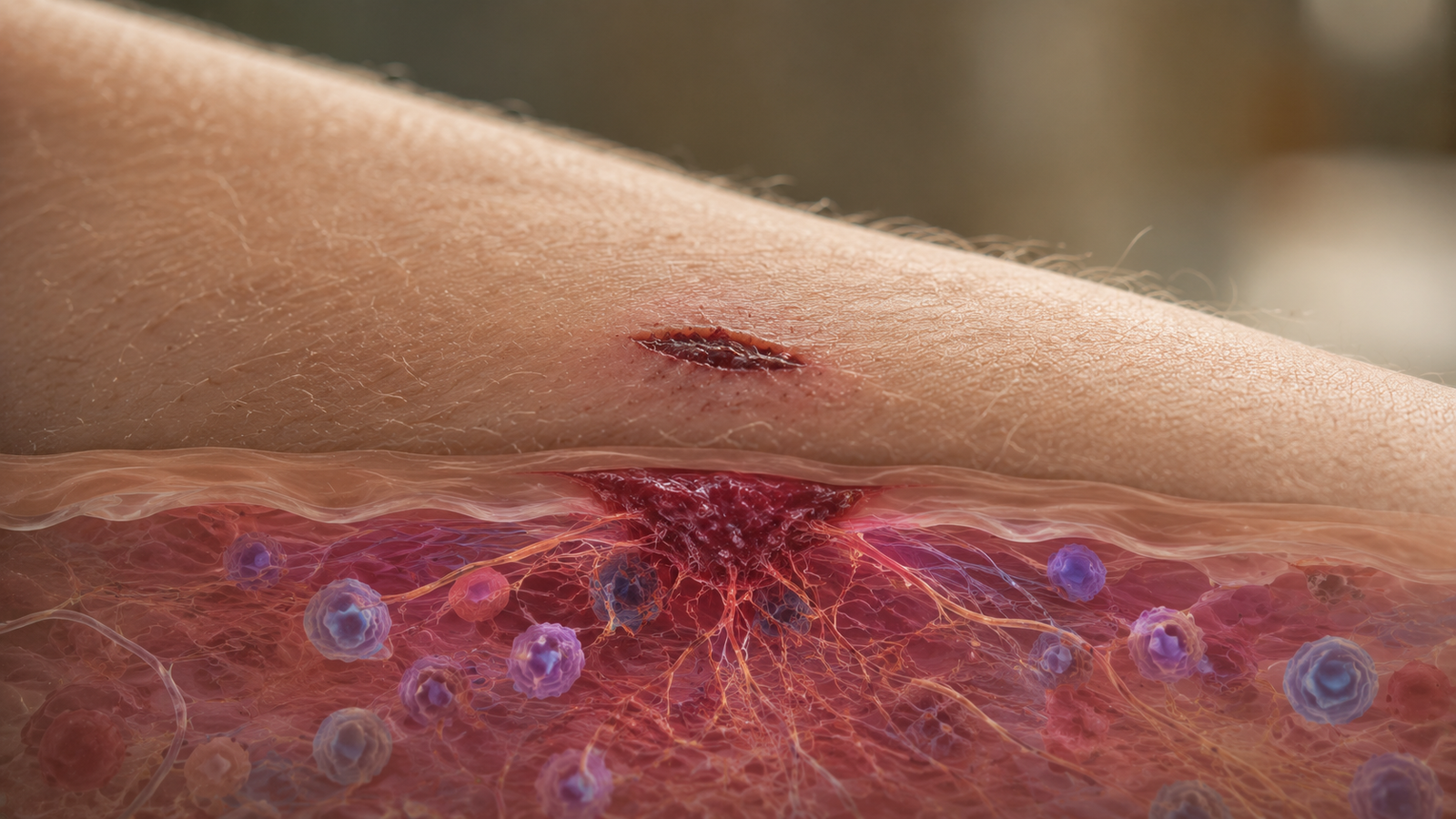
You cut your finger, and for a few seconds, blood appears. Then something remarkable begins: the bleeding slows, a clot forms, the area becomes red and swollen, and new tissue starts to grow. Over the following days and weeks, your body rebuilds the damaged area entirely on its own — you don’t have to consciously direct any of it.
Quick answers
- How wound healing begins: Blood vessels narrow, platelets gather, and a clot helps stop bleeding.
- How tissue is repaired: Immune cells clear damaged material while skin cells, fibroblasts, and new blood vessels help rebuild the area.
- Why scars form: Deeper injuries may be repaired with collagen-rich tissue that restores strength but does not perfectly recreate the original skin.
So, how does your body heal a wound from the inside out?
Wound healing is a coordinated biological process involving blood vessels, platelets, immune cells, fibroblasts, skin cells, signaling molecules, and the surrounding tissue. Scientists generally describe it as four overlapping phases: hemostasis, inflammation, proliferation, and remodeling (NCBI StatPearls, Physiology, Wound Healing).
The process is not simply about closing a cut. Your body has to stop the bleeding, protect the damaged area, remove debris, rebuild tissue, restore the skin barrier, and strengthen the repaired region — and it has to coordinate all of these steps in the right sequence.
The First Response Is to Stop the Bleeding
The moment a blood vessel is damaged, your body reacts. The injured blood vessels begin to narrow, reducing blood flow to the area. Platelets then become activated, attaching to the damaged surface and gathering together. At the same time, the blood-clotting system becomes active, and a network of fibrin forms around the platelets, creating a temporary clot that helps seal the wound.
This first stage is called hemostasis. It happens rapidly, often within seconds to minutes after an injury. The clot does more than stop blood loss — it also creates a temporary framework where the next stages of healing can begin, and platelets release signaling molecules that help recruit other cells to the injured area and initiate repair (NCBI StatPearls, Wound Physiology).
What looks like a simple scab beginning to form is therefore the first step in a much larger biological response.
Why Does a Wound Become Red and Swollen?
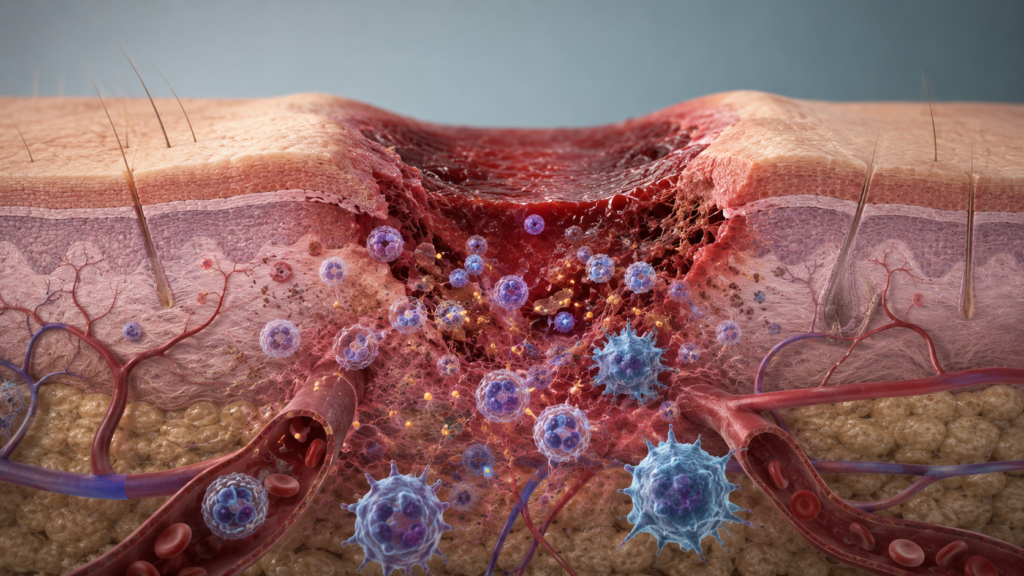
After the bleeding is controlled, the immune system becomes heavily involved — this is the inflammatory phase. Blood vessels around the wound become more permeable, and immune cells move toward the damaged tissue. Neutrophils are among the early cells recruited to the area; macrophages then help remove damaged cells, debris, and potential pathogens while also releasing signals that support tissue repair.
This is why a fresh wound may become red, warm, swollen, and tender — those changes are part of the inflammatory response. Inflammation has an important job: the body needs to remove damaged material and defend the exposed tissue before rebuilding can proceed effectively. But inflammation has to be controlled. When inflammatory activity remains excessive or prolonged, it can damage tissue and contribute to delayed or abnormal healing (Factors Affecting Wound Healing, PMC). So inflammation is not simply the body's enemy — a controlled inflammatory response is part of normal repair.
What Happens After the Wound Is Cleaned?
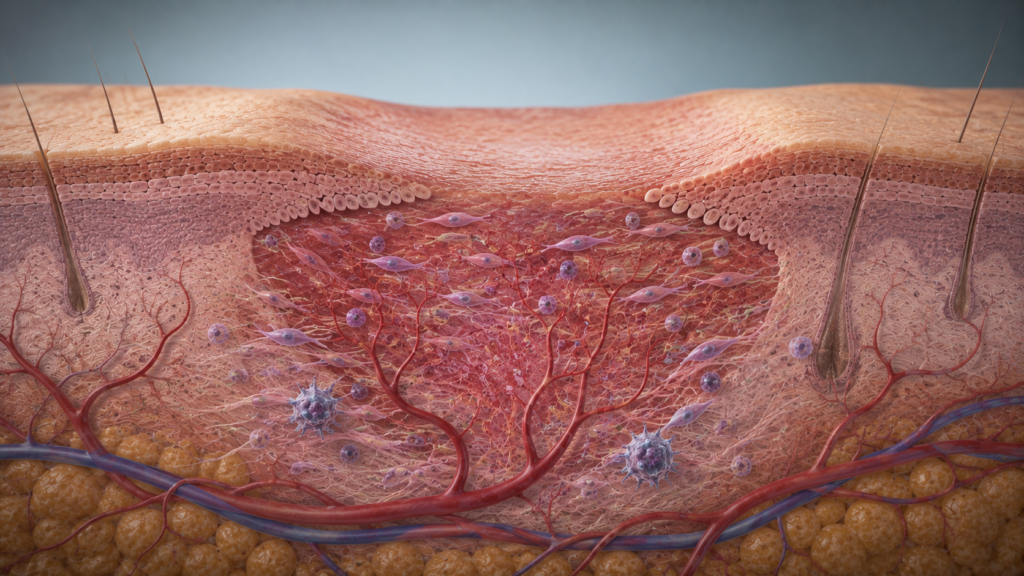
Once the early inflammatory response has established the conditions for repair, the body begins building new tissue. This is the proliferative phase, and several processes occur at the same time: fibroblasts move into the wound and produce components of the extracellular matrix, including collagen; new blood vessels develop; granulation tissue forms; and skin cells called keratinocytes migrate across the wound surface, beginning to restore the outer skin layer.
The wound is no longer simply being protected — it is being rebuilt.
How Does New Skin Grow Across a Wound?
Your outer skin layer is called the epidermis. When an injury creates a gap, the body needs to close it. Keratinocytes at the wound edges begin migrating across the damaged area, gradually forming a new epithelial layer over the developing tissue — a process called re-epithelialization.
At the same time, deeper tissue is being rebuilt underneath: fibroblasts produce extracellular matrix components that provide structural support, and new blood vessels help supply the developing tissue with oxygen and nutrients. These processes occur together rather than as separate steps — wound healing phases overlap considerably, with different cells and signaling pathways working simultaneously. This coordination allows the body to close the surface while rebuilding what lies beneath it.
Why Does a Scab Form?
A scab is the dried outer portion of a clot. As blood and tissue fluid dry at the wound surface, the material becomes firm, creating a temporary protective covering over the developing tissue underneath. New skin cells continue migrating across the wound, blood vessels develop, and the extracellular matrix changes.
Eventually, the surface layer becomes sufficiently restored that the protective covering is no longer needed, and the scab loosens and falls away. This is why removing a scab too early can interfere with healing — the tissue underneath may still be fragile, and allowing the wound to progress through its normal repair process gives the new surface time to develop.
Why Does a Wound Sometimes Leave a Scar?
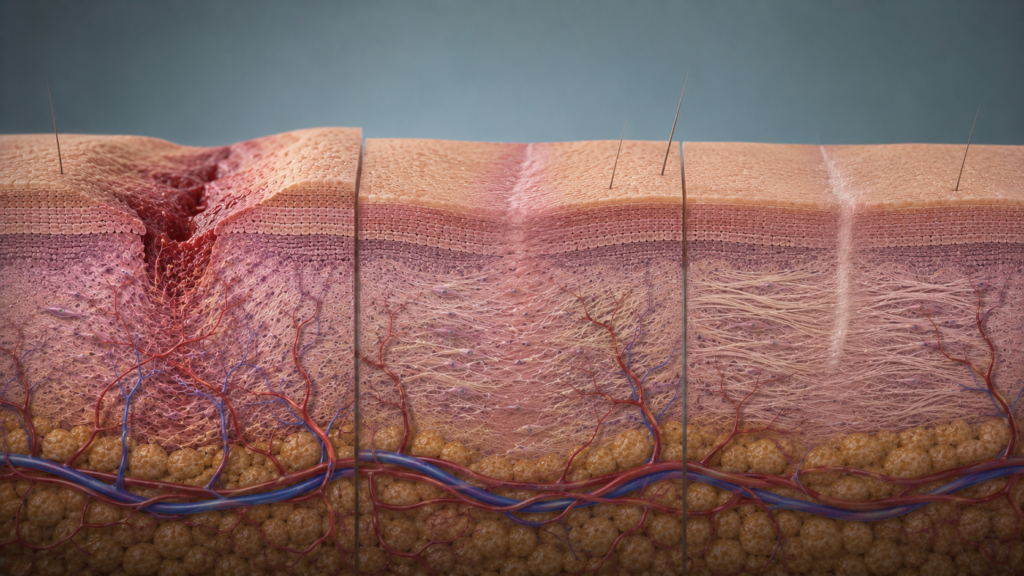
Your body is very good at repairing damaged tissue, but repair is not always the same as restoring tissue exactly as it was before. Deep injuries can damage structures throughout the skin, and when this happens, the body produces collagen and other extracellular matrix components to strengthen the repaired area. Over time, this material is reorganized — a final stage called remodeling, during which collagen fibers are reorganized and the tissue gradually becomes stronger and more structured.
The result may be a scar. A scar is therefore evidence of repair, not a sign that healing failed — it means the body restored the damaged area using a structure that isn’t identical to the original tissue.
Why Does Healing Take So Long?
The surface of a small wound may appear healed within days, but deeper repair continues for much longer. The four phases of healing overlap rather than occurring as isolated stages, and remodeling can continue for months — sometimes longer, depending on the injury (NCBI StatPearls, Wound Healing Phases).
This explains why a wound can look normal on the outside while the underlying tissue is still gaining strength. Healed does not always mean fully restored — the repaired tissue may remain weaker than uninjured tissue for some time, as collagen continues to be reorganized during remodeling, gradually improving the mechanical strength of the repaired area.
Why Do Some Wounds Heal Slowly?
Not every wound follows the same timeline. Healing depends on the size and depth of the injury, blood supply, oxygenation, infection, nutrition, immune function, age, medications, smoking, and underlying diseases. Diabetes can interfere with several stages of repair, poor blood flow can limit oxygen and nutrient delivery, smoking can impair the environment needed for healing, and infection can prolong inflammation and prevent normal progression through the healing phases (Factors Affecting Wound Healing, PMC).
This explains why two people can have apparently similar wounds but experience very different healing times. The wound itself is only part of the story — the condition of the entire body also matters.
What Happens When Healing Gets Stuck?
Normally, a wound moves from one phase toward the next. But sometimes the process becomes disrupted: a wound may remain inflamed for too long, blood supply may be inadequate, infection may persist, new tissue may fail to develop properly, or remodeling may become abnormal.
When healing doesn’t progress normally, a wound can become chronic. Chronic wounds are particularly associated with conditions such as diabetes, poor circulation, infection, and impaired tissue oxygenation (Impaired Wound Healing, StatPearls). The problem, then, isn’t always that the body has stopped trying to heal — sometimes one part of the healing process prevents the next stage from progressing normally. Understanding the cause is essential, because treating the underlying problem can matter more than simply covering the wound.
Does the Body Replace Everything It Lost?
Not always. The body’s ability to regenerate depends on the tissue and the extent of the injury. Small superficial injuries may heal with little visible evidence, while deeper injuries can produce more connective tissue and leave a permanent scar.
This reflects a basic biological compromise: the body needs to restore structural integrity, and it needs to do so efficiently. A scar provides strength, but it doesn’t perfectly reproduce the original architecture of uninjured skin — which is why a healed wound can look different from the surrounding tissue.
The Body Is Repairing the Wound From the Inside Out
A wound may look like an empty gap, but biologically, it is anything but empty. Blood clotting begins almost immediately. Immune cells arrive and debris is removed. Fibroblasts produce structural material, new blood vessels develop, skin cells migrate, and collagen is deposited and later reorganized — all of these processes communicating with one another through a complex network of signals.
The result is a gradual transition from injury to repair. The body doesn’t simply “seal” a wound; it changes the biological environment around it so that different cells can perform different jobs at different stages.
What Can You Do to Support Normal Healing?
The body performs most of the healing process itself, but the conditions around a wound matter. Protecting the injured area from repeated trauma gives new tissue a better chance to develop. Keeping a wound appropriately clean and following proper wound-care instructions can reduce the risk of complications, and adequate nutrition supports the cellular processes involved in repair. Avoiding smoking matters too, since it can interfere with oxygenation and other mechanisms involved in healing.
If a wound shows signs of infection, remains open, or isn’t progressing normally, the solution isn’t simply to wait longer — the underlying cause needs to be assessed. For people with conditions that impair circulation, immunity, or metabolism, managing those conditions is an important part of supporting wound healing.
Scientific references
- NCBI Bookshelf: Wound Healing — an overview of the biological stages involved in tissue repair.
- Wound healing: an overview (International Journal of Dental Clinics / PMC) — background on the coordinated cellular processes involved in healing.
- NHS: Cuts and grazes — practical guidance on wound care and when to seek medical help.
Key Takeaways
Explore more in Body & Health and learn how stress can influence the body in How Does Stress Affect Your Body?.
- Wound healing begins almost immediately after injury.
- The process involves four overlapping phases: hemostasis, inflammation, proliferation, and remodeling.
- Platelets and clotting factors help stop bleeding and create a temporary framework for repair.
- Immune cells remove damaged material and help protect the wound from infection.
- Fibroblasts, blood vessels, and skin cells rebuild damaged tissue.
- New skin grows across the wound through re-epithelialization.
- Remodeling reorganizes collagen and strengthens the repaired tissue.
- Deep wounds often leave scars because repaired tissue does not perfectly reproduce the original architecture.
- Infection, poor blood flow, smoking, diabetes, malnutrition, and other factors can delay healing.
- Persistent or poorly healing wounds may require evaluation of the underlying cause.
Conclusion
Your body begins repairing a wound almost as soon as the injury occurs. First, it controls bleeding. Then it manages inflammation and clears damaged material. Next, it builds new tissue and restores the skin surface. Finally, it remodels the repaired area and gradually strengthens it.
The process is remarkably organized, but it isn’t perfect — a deep wound may leave a scar, a chronic disease may slow healing, an infection may disrupt the sequence. Yet the underlying strategy remains the same: stop the damage, protect the area, clear what’s broken, build new tissue, then strengthen and remodel it. Every small cut is a visible example of a much larger biological process happening beneath the surface.
This article is for general information only and isn’t a substitute for medical advice. If a wound isn’t healing, shows signs of infection, or you have a condition that affects circulation or immunity, talk to a healthcare provider.
Explore more evidence-based explanations of human physiology, health, and the body in CAVELYRA‘s Body & Health collection.