
You receive an unexpected message.
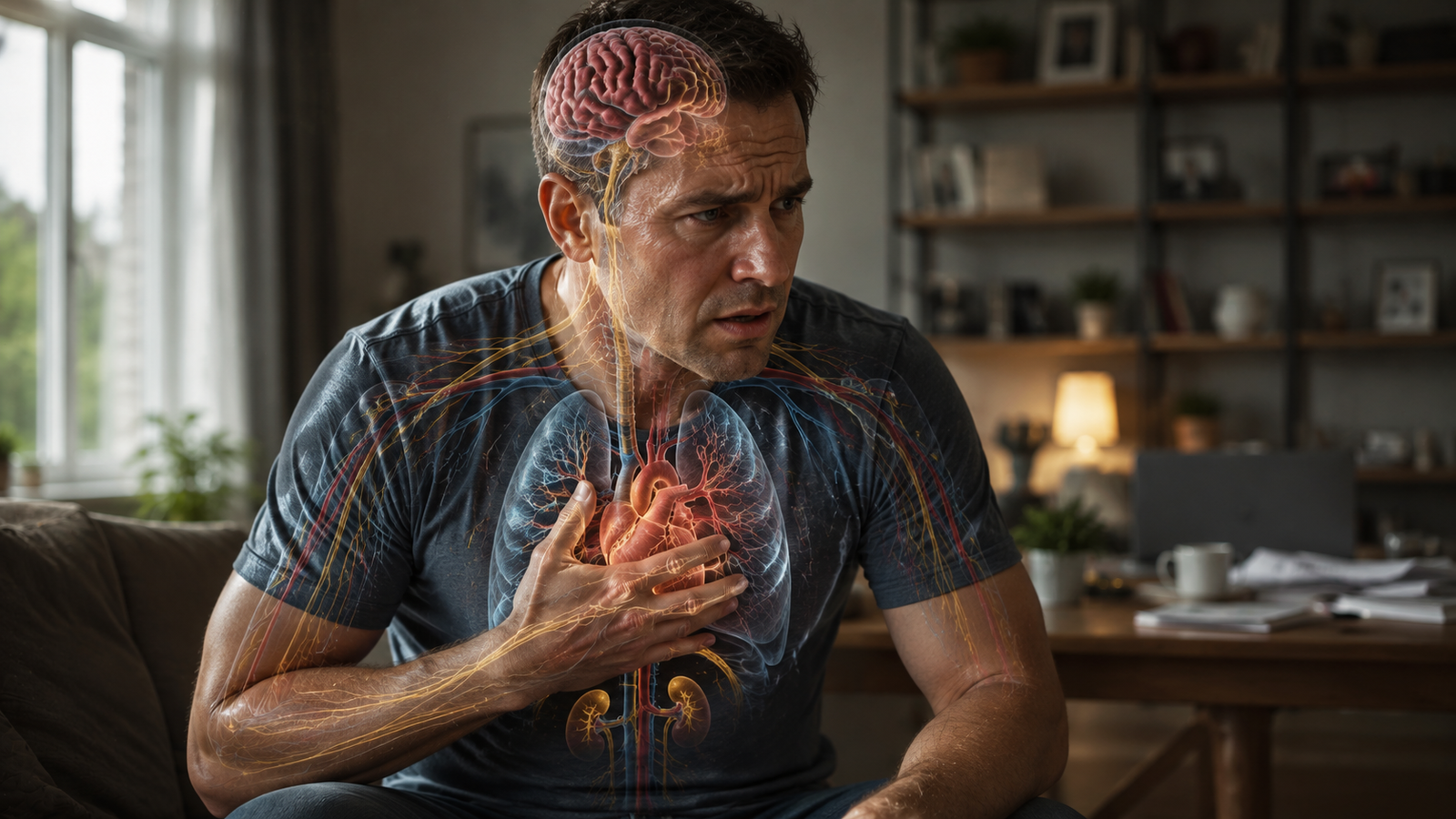
Your heart beats faster. Your muscles tighten. Your breathing changes. Your attention becomes focused.
Nothing has happened directly to your heart or muscles. Your brain has detected a possible threat, and your body begins changing within seconds.
This is the stress response.
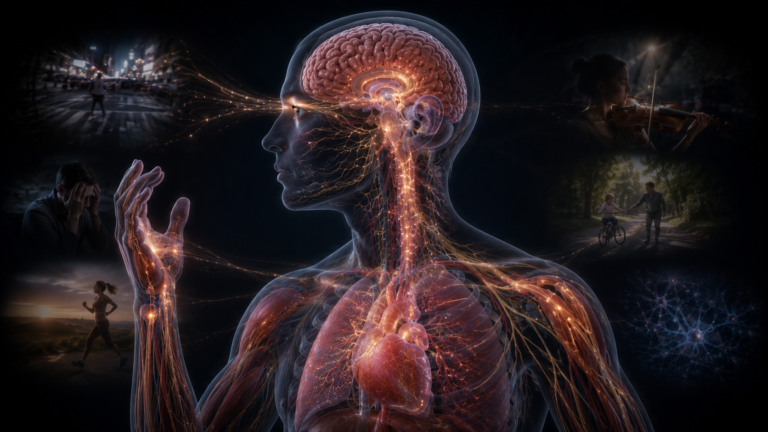
Stress is not simply a feeling in your mind. Your brain communicates with the nervous system, which influences your heart, lungs, blood vessels, muscles, digestive system, and other organs. Hormones enter the bloodstream, energy becomes more available, and attention shifts toward the situation that seems important.
This response can be useful during a real challenge. The problem arises when the same biological system remains activated too often or for too long.
The important question is therefore not whether you experience stress. It is whether your body can activate when needed and return toward recovery afterward.
Your Brain Starts the Stress Response
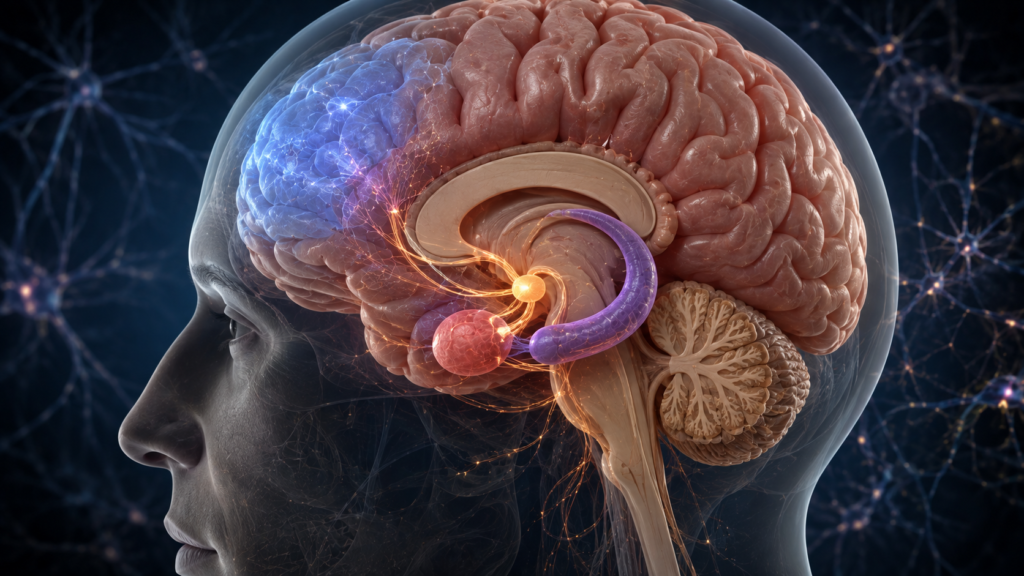
Your brain constantly evaluates information from the environment and from inside your body. It uses sensory information, memories, context, and expectations to estimate what may happen next.
A physical threat can activate the stress response, but physical danger is not required.
An examination, financial problem, conflict, public speaking, difficult diagnosis, or anticipated future event can produce a genuine physiological response.
Several brain regions contribute to this process. The amygdala helps process emotionally significant information and potential threats. The prefrontal cortex contributes to evaluation and decision making. The hippocampus provides contextual information. The hypothalamus helps coordinate the body’s physiological response.
The brain therefore does more than detect danger. It evaluates meaning, uncertainty, context, and possible consequences.
Two Major Stress Pathways
The hypothalamus connects the nervous system with the endocrine system and helps activate two important stress pathways.
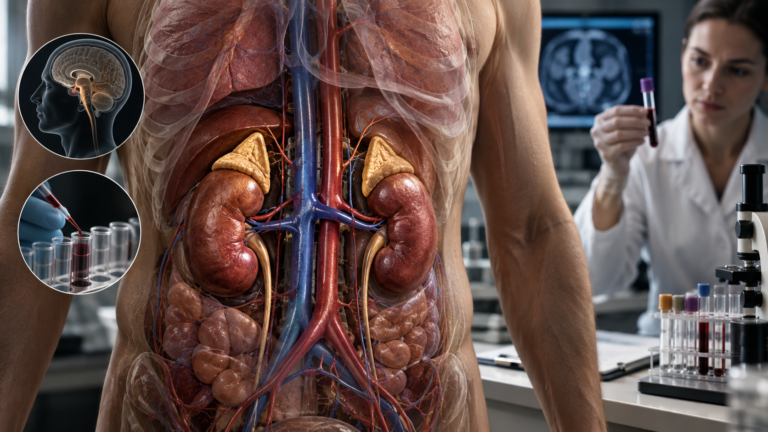
The first is rapid. The sympathetic nervous system activates within seconds and signals the adrenal glands to release adrenaline and noradrenaline.
Heart rate can increase. The heart can contract more strongly. Airways can widen. Blood vessel tone can change. Muscles prepare for action, and attention can become more focused.
This is often called the fight-or-flight response, although that description is incomplete. The body can also prepare you to freeze, escape, seek help, or rapidly assess what is happening.
The second pathway develops more gradually. The hypothalamic-pituitary-adrenal axis, or HPA axis, ultimately leads to cortisol release from the adrenal cortex.
Cortisol helps maintain energy availability and influences glucose metabolism, blood pressure regulation, immune activity, and inflammation.
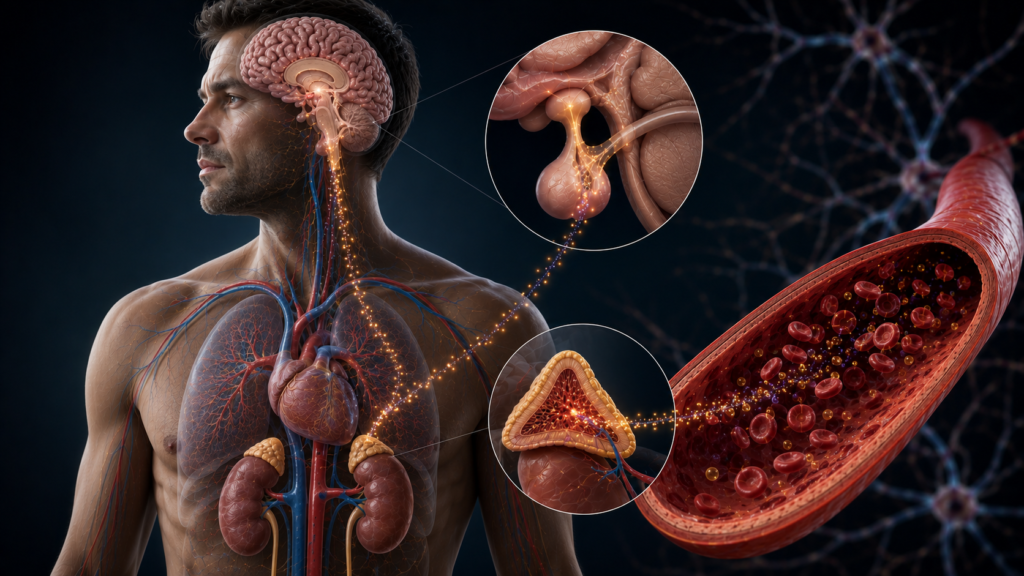
Cortisol itself is not harmful. Your body needs it for normal physiological function. The concern is prolonged or poorly regulated stress activation.
Why Recovery Matters
The stress response should not remain fully activated forever.
When the threat disappears, sympathetic activity decreases, adrenaline levels fall, heart rate moves toward baseline, breathing normalizes, muscles can relax, and parasympathetic influence becomes more prominent.
This ability to activate and recover is essential.
Acute stress usually has a clear beginning and end. An examination, presentation, sudden argument, accident, or frightening event can produce a strong response, followed by recovery when the situation ends.
Chronic stress is different. It occurs when stressors persist or repeatedly return. Financial insecurity, ongoing conflict, excessive working hours, caregiving demands, chronic illness, unsafe environments, and persistent uncertainty can keep activating stress systems.
The problem is therefore not simply stress itself. Persistent activation without adequate recovery can affect health.
When the Brain Cannot Switch Off
Uncertainty can make stress harder to resolve.
If you know when a threat will end, you can prepare for it. When the endpoint is unclear, the brain may continue monitoring the environment.
Rumination can produce a similar effect.
You replay a conversation. You imagine what could go wrong. You repeatedly analyze something that happened hours ago.
Your body may be physically safe, but your brain continues generating threat-related thoughts.
Anticipatory stress works in the same way. An examination tomorrow has not happened yet, but thinking about it can already increase heart rate, muscle tension, stomach discomfort, or difficulty sleeping.
Psychological stress can therefore produce genuine physical responses.
How Stress Affects Your Body
During acute stress, the cardiovascular system prepares for action. Heart rate can increase, the heart can pump more blood, blood vessels can change tone, and blood pressure can rise.
Breathing can also become faster. The airways can widen, preparing the body for increased oxygen demand.
During psychological stress, however, rapid breathing can occur even when you are not exercising. If breathing becomes too rapid, carbon dioxide levels can fall and produce dizziness, tingling, or lightheadedness. These sensations can create fear, which may increase breathing further.
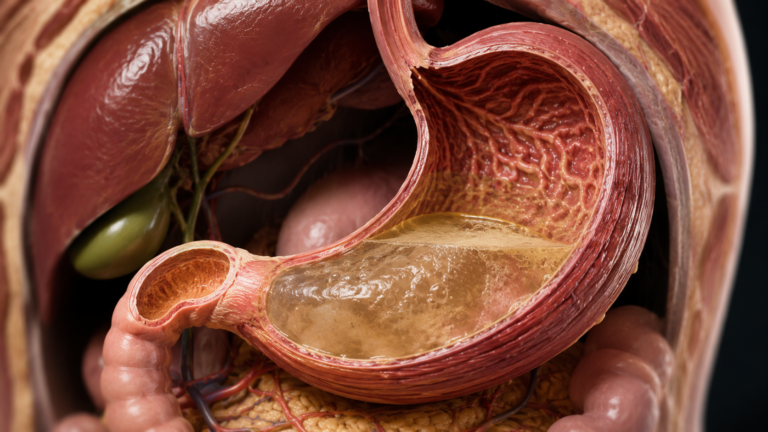
Stress also changes digestion. The body prioritizes systems needed for immediate action, so digestive activity can change. You may experience nausea, stomach discomfort, dry mouth, changes in bowel movements, or appetite changes.
The gut and brain communicate through nerves, hormones, immune pathways, and other chemical messengers. This helps explain why psychological stress can produce real digestive symptoms.
Stress, Immunity, Sleep, and Metabolism

Stress hormones influence immune activity.
During acute stress, immune activity can temporarily change in ways that may help the body respond to injury or infection. Persistent stress is more complicated. Repeated activation can alter immune regulation, and the effects depend on the type, intensity, and duration of stress.
Stress can also interact with inflammatory signaling. This is one possible pathway connecting chronic psychological stress with physical health, but stress remains only one factor within a much larger biological system.
Sleep has a particularly important relationship with stress.
Stress can make it difficult to fall asleep because your body remains physiologically alert and your mind may continue planning or monitoring problems.
Poor sleep can then make stress harder to manage. Emotional reactivity can increase, attention can decline, and decision making can become more difficult.
Stress can therefore disrupt sleep, while poor sleep can increase vulnerability to stress.
Stress also affects metabolism. Stress hormones help make energy available by increasing access to glucose and stored energy. This makes sense during physical danger, but psychological stress can produce similar metabolic changes while you remain physically inactive.
Acute stress can temporarily raise blood glucose. Long-term metabolic health also depends on diet, exercise, sleep, genetics, and body composition.
Stress Can Change Eating and Performance
Stress can affect appetite in different ways.
Some people eat less. Others seek highly palatable foods because eating can provide temporary pleasure or relief.
Stress can influence reward systems and learned associations. Over time, food can become linked with emotional relief, making the behavior more automatic.
Stress can also affect performance.
A moderate level of arousal can increase alertness and focus. Excessive arousal can have the opposite effect. Attention can become too narrow, working memory can suffer, and thinking can become less flexible.
The relationship between stress and performance is therefore not simply linear.
Stress, Muscles, and Pain
Stress prepares the body for action, so muscle tension can increase.
If stress continues, this tension can become habitual and contribute to neck discomfort, shoulder tension, jaw tension, headaches, and other physical symptoms.
Stress can also influence pain through muscle tension, attention, inflammatory signaling, and nervous system processes.
But stress should not automatically be blamed for persistent pain. Pain has many possible causes and may require appropriate assessment.
Why Exercise and Social Connection Can Help
Exercise creates controlled physiological stress.
Heart rate rises. Breathing increases. Muscles use energy. Afterward, recovery mechanisms become active.
This differs from chronic psychological stress because exercise normally has a clear beginning and end, and recovery is expected.
Regular physical activity is associated with better physical and mental health and can support stress regulation.
Social connection can also support recovery. Talking to someone you trust can provide emotional support, practical assistance, perspective, and a sense of safety.
These strategies do not remove every stressor. They can improve your capacity to respond.
Stress Management Is Not Always About Relaxing
Some stressors can be changed.
If your workload is impossible, you may need to renegotiate deadlines or priorities. If a conflict keeps recurring, the conflict may need to be addressed. If an environment is unsafe, external support may be necessary.
Other stressors cannot be immediately changed.
Illness, grief, loss, uncertainty, and other difficult experiences may require adaptation rather than immediate resolution.
This creates two levels of stress management.
The first is regulating your response through sleep, movement, breathing, relaxation, social connection, routines, and problem solving.
The second is changing the source of the stress when that is possible.
Both matter.
Build Conditions That Support Recovery

A predictable routine can reduce unnecessary uncertainty.
Regular sleep, regular meals, movement, work periods, rest periods, and social contact provide structure.
Digital boundaries can help as well. Continuous notifications, work messages, social media, and stressful news can keep attention focused on threats long after the original stressor has ended.
Practical boundaries include turning off unnecessary notifications, taking breaks from news, creating periods without social media, and protecting the period before sleep.
Caffeine, alcohol, and nicotine can also interact with stress and recovery. Late caffeine can interfere with sleep. Alcohol may temporarily reduce tension but can disrupt sleep. Nicotine can create cycles of craving, use, and withdrawal.
The goal is not to create a perfect lifestyle. It is to remove avoidable factors that make recovery harder.
Focus on What You Can Control
Some problems require action, while others require adaptation.
Start by separating what you can influence from what you cannot. If you can influence the situation, identify the next practical step and take it.
If you cannot change the situation immediately, focus on maintaining supportive routines, relationships, and recovery.
Constantly thinking about a problem is not the same as solving it. Writing down the next practical action can be more useful than repeatedly replaying the same problem in your mind.
When Stress Needs Professional Attention
Stress becomes more concerning when it persists, interferes with normal functioning, disrupts sleep, produces overwhelming anxiety, contributes to persistent low mood, or leads to increasing reliance on alcohol or other substances.
Physical symptoms also require appropriate judgment.
A headache may occur during stress, but headaches have many causes. Chest discomfort can occur during anxiety, but chest pain can also have cardiovascular causes. Shortness of breath can occur during panic, but it can also signal a heart or lung problem.
Stress is common.
It is not an explanation for every physical symptom.
Professional care should complement stress management when symptoms require medical or mental health assessment.
The Central Principle
Your body is designed to respond to challenges. Stress increases alertness, mobilizes energy, and changes cardiovascular function, breathing, attention, digestion, and other systems so you can respond when needed.
The goal is not to eliminate stress. Your stress response is a normal and necessary part of human physiology.
The goal is physiological flexibility. Activate when a challenge requires it, then allow your body to recover.
Reduce unnecessary sources of activation when you can. Change chronic stressors when possible. Support your ability to recover through sleep, movement, nutrition, social connection, healthy boundaries, relaxation, and practical problem solving.
Healthy stress regulation is therefore less about avoiding every challenge and more about maintaining the ability to activate when needed and return toward recovery afterward.
Key Takeaways
- Stress is a whole-body physiological response coordinated by the brain, nervous system, and hormones.
- Acute stress is a normal response to challenge.
- Chronic stress with inadequate recovery can affect physical and mental health.
- Adrenaline produces rapid changes that prepare the body for action.
- Cortisol helps regulate energy availability and other physiological processes.
- Stress can influence cardiovascular function, breathing, digestion, immunity, metabolism, muscles, pain, appetite, sleep, and performance.
- Stress and poor sleep can reinforce each other.
- Exercise, sleep, routines, social connection, relaxation, and healthy boundaries can support recovery.
- Some chronic stress requires changing the source of the problem rather than relying only on coping techniques.
- Persistent or disruptive symptoms may require professional assessment.
- The goal is not zero stress. The goal is appropriate activation followed by reliable recovery.
Conclusion
Stress is a biological alarm system that helps your body respond to challenges.
When your brain detects a possible threat, your nervous system responds and your adrenal glands release hormones. Your heart rate can increase, your breathing can change, your muscles can prepare for action, and your attention can become more focused. Stress can also affect digestion, metabolism, immune activity, and sleep.
These changes are part of a normal physiological response. They become more concerning when stress activation continues and the body does not get enough opportunity to recover.
You cannot control every source of stress, but you can influence how you respond. Protecting your sleep, staying physically active, eating regularly, maintaining supportive relationships, setting healthy boundaries, using relaxation techniques, and addressing problems you can change can all support recovery.
Sometimes coping with stress requires changing the source of the problem. In other situations, adaptation and support may be more realistic. Persistent or disruptive symptoms may also require professional help.
The goal is not to eliminate every stress response. It is to maintain the ability to activate when needed and recover afterward.
That flexibility is an important part of healthy stress regulation.
Explore more evidence-based explanations of human physiology, health, and the body in CAVELYRA’s Body & Health collection.