

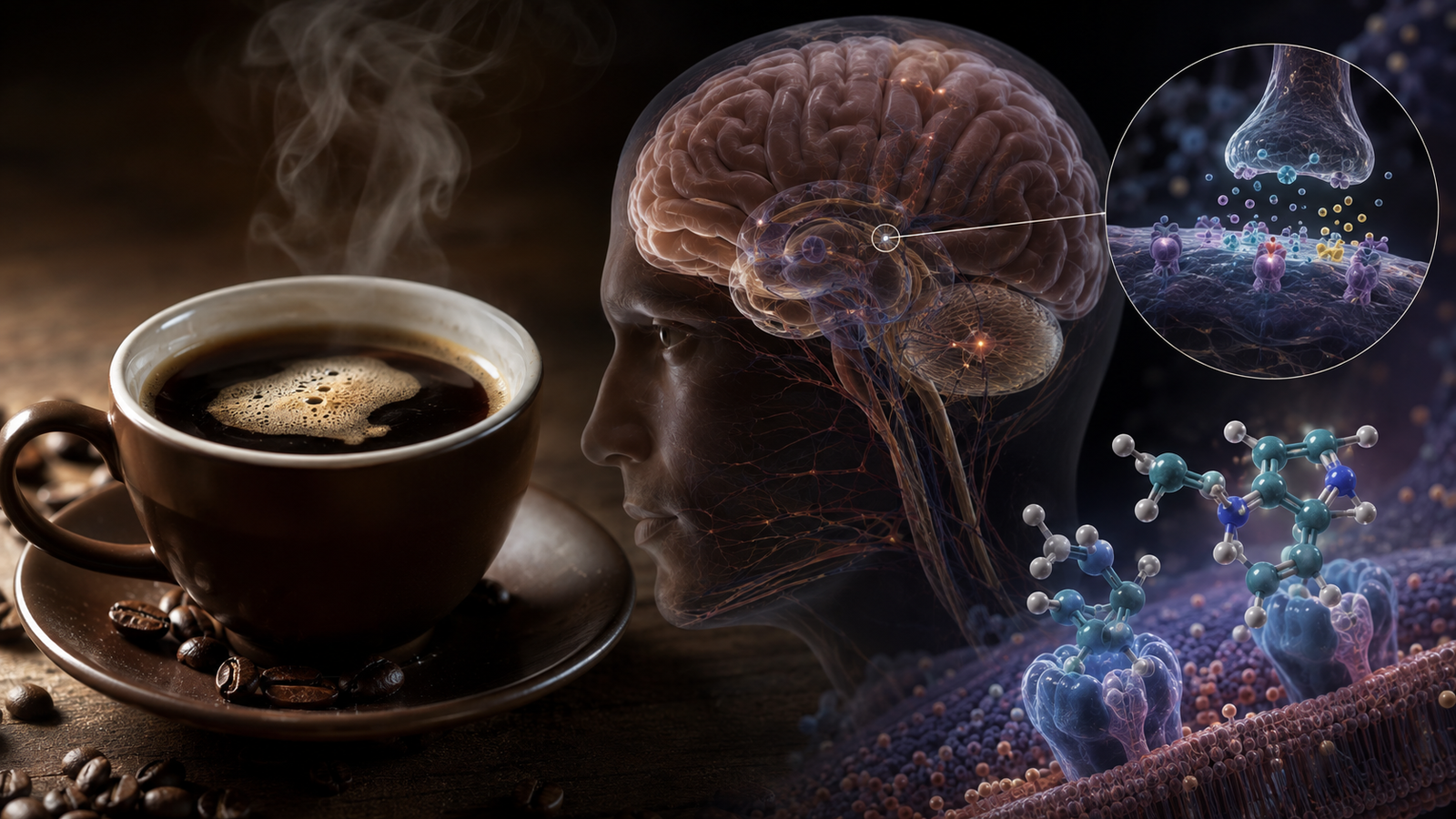
You wake up tired. You make coffee. After a few sips, something changes: your eyes feel more open, your mind feels sharper, and you feel more ready to work.
Quick answers
- Short answer: Coffee wakes you up mainly because caffeine blocks some of the brain’s adenosine signaling, which reduces the sleepiness signal.
- Timing: Caffeine usually becomes noticeable in roughly 15 to 45 minutes. It takes about four to six hours for your body to clear half of it, so an afternoon cup can still affect sleep. [1][2]
- What it does not do: It does not give you energy the way food does, and it does not remove your underlying need for sleep.
So, why does coffee wake you up? The answer begins with caffeine changing how your brain responds to adenosine, a chemical signal associated with sleepiness. Coffee did not give your brain a completely new supply of energy. Something more specific happened: caffeine changed how your brain responded to one of the chemical signals associated with sleepiness. Understanding the relationship between caffeine and adenosine explains why coffee makes you feel more awake, why the effect takes time, why it eventually fades, and why an afternoon cup can sometimes interfere with sleep at night.
Why Does Coffee Wake You Up? The Adenosine Connection
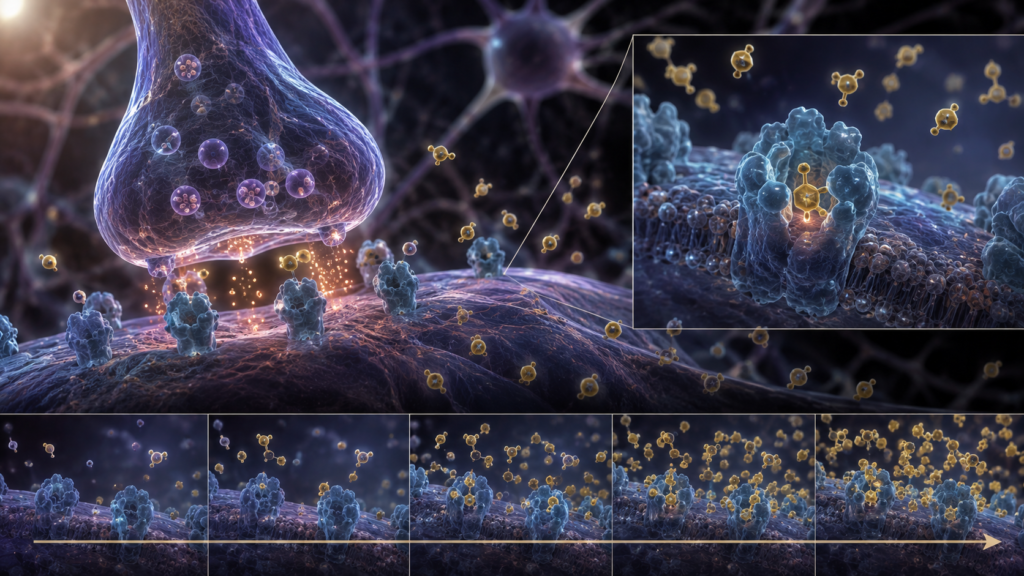
Your brain remains active throughout the day. Neurons communicate continuously, your cells use energy as you stay awake, and as this activity continues, chemical signals change. One of the molecules involved is adenosine. Adenosine is produced as part of normal cellular energy metabolism, and in the brain it can bind to specific receptors and influence neural activity in ways associated with reduced arousal and sleepiness. As you remain awake, adenosine accumulates, contributing to what scientists call sleep pressure: the biological drive to sleep that generally becomes stronger the longer you stay awake. Sleep helps restore the balance of these processes, making adenosine one part of a larger system linking time spent awake with the need for sleep. And this is where caffeine enters the picture.
What Does Caffeine Do in Your Brain?
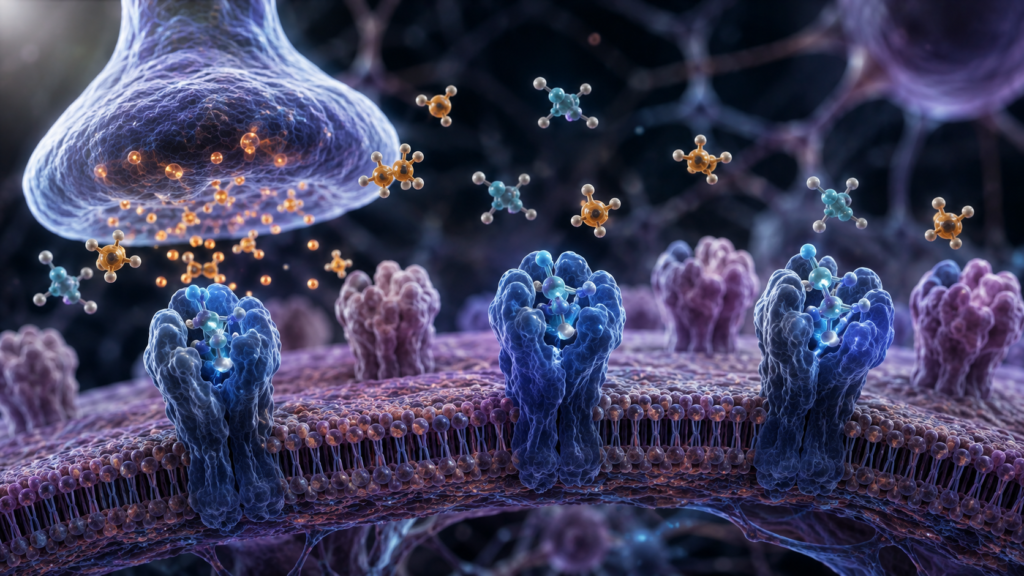
Caffeine is a naturally occurring stimulant found in coffee, tea, cacao, and several other plants. After you drink coffee, caffeine is absorbed into your bloodstream, travels through the body, and can cross the blood-brain barrier, allowing it to reach the brain. Once there, caffeine interacts with adenosine receptors. Its molecular structure is similar enough to adenosine that it can interact with some of the same receptors, but caffeine does not activate those receptors the same way. Instead, it primarily acts as an adenosine receptor antagonist: in simple terms, caffeine occupies some receptors that adenosine would otherwise use. Imagine a parking space. Adenosine normally uses it, but caffeine arrives first and occupies it, leaving adenosine with less access to that receptor.
The important point is that caffeine does not create an opposite “wake up” signal. It mainly reduces some of the normal signaling associated with sleepiness, and you feel more awake.
Does Coffee Actually Give You Energy?
That depends on what you mean by energy. Caffeine does not replace the calories your cells need, and it does not recharge your body the way food provides energy. Instead, caffeine changes neural signaling. By reducing the effects of adenosine, it can increase alertness and reduce your perception of fatigue, which can make you feel more energetic. But your underlying need for sleep has not necessarily disappeared. This distinction explains one of the most important facts about caffeine: it can change how tired you feel without removing the biological need for rest.
Why Does Coffee Make You Feel More Alert?
When caffeine blocks some adenosine signaling, the balance of neural activity changes. Reduced adenosine activity can allow arousal-promoting systems to become more active, and caffeine can also influence other neurotransmitter systems indirectly. The result can include greater alertness, increased attention, and reduced subjective sleepiness. People do not all experience this the same way: one person may feel focused, while another may mainly notice feeling less tired. At higher doses, the experience can change, and instead of useful alertness you may experience nervousness, restlessness, or a rapid heartbeat. More stimulation is not necessarily more useful stimulation.
How Quickly Does Caffeine Work?
Coffee does not usually produce its strongest effect immediately after your first sip. Caffeine needs to be absorbed into the bloodstream before its concentration rises enough to produce a noticeable effect. Many people begin noticing caffeine’s effects within roughly 15 to 45 minutes, although the timing varies with the amount consumed, food intake, individual metabolism, and sensitivity.
You may sometimes feel more alert almost immediately, but that does not necessarily mean the full physiological effect has already occurred. The smell and taste of coffee can become strongly associated with waking up and starting work, and the routine of a coffee break can shape how you feel too, because your expectations can influence subjective experience. So the first sensation of alertness can involve both the developing physiological effect of caffeine and the learned associations surrounding coffee itself.
Why Does Caffeine Eventually Stop Working?
Caffeine does not remain in your body indefinitely, because your liver gradually metabolizes it. As caffeine concentration falls, fewer adenosine receptors remain blocked, and adenosine can increasingly interact with its receptors again. Meanwhile, you have continued to remain awake, and sleep pressure has continued to build, so eventually the balance shifts back toward sleepiness. This is why the alerting effect of caffeine has a natural limit.
How Long Does Caffeine Stay in Your Body?
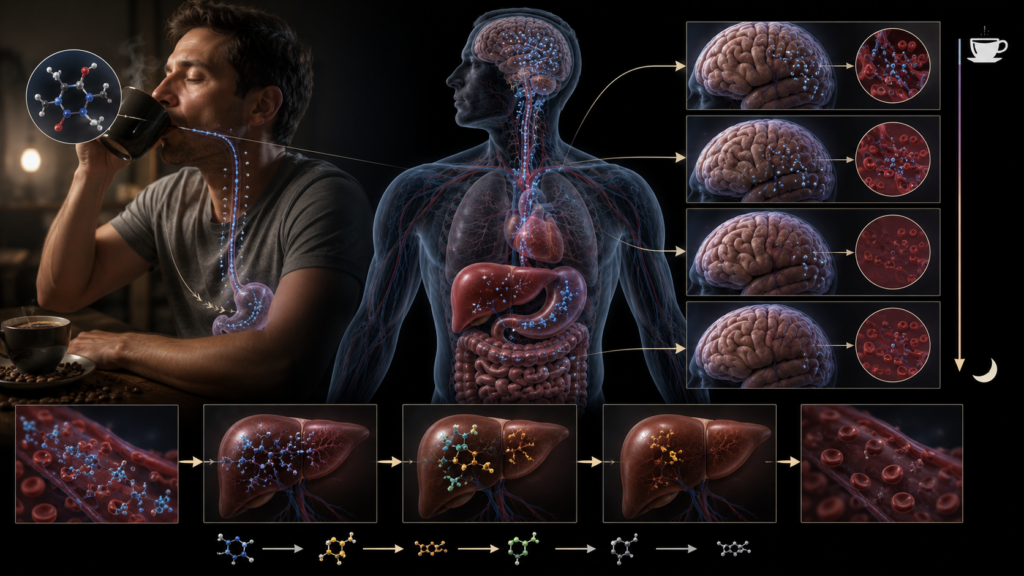
A useful concept here is half-life: how long it takes for the amount of a substance in the body to decrease by approximately half. The FDA notes that the body can take four to six hours to process half of the caffeine consumed, with substantial individual variation. [1] Some people clear caffeine more quickly, and others clear it more slowly. Genetics can influence caffeine metabolism, and so can pregnancy, certain medications, age, and liver function. This explains why two people can drink the same coffee at the same time and experience very different effects later in the day: for one person, the caffeine may decline relatively quickly, while for another, a meaningful amount may remain in the body many hours later.
Why Can Afternoon Coffee Affect Your Sleep?
Imagine you drink coffee at 4 PM. You may feel more alert through the afternoon, and by bedtime you may no longer feel the obvious stimulating effect. But that does not mean all the caffeine has left your body: if you metabolize caffeine slowly, a meaningful amount can remain several hours later, with some still occupying adenosine receptors when you go to bed.
A study of 12 healthy sleepers found that 400 mg of caffeine, taken at bedtime, three hours before bed, or even six hours before bed, significantly disrupted sleep, and caffeine taken six hours before bed reduced objectively measured total sleep time by more than an hour. The participants were largely unaware of the disturbance. [2] The result can include delayed sleep onset, reduced sleep duration, or changes in sleep quality, depending on dose, timing, individual metabolism, and sensitivity. This is why one person can drink coffee after dinner and sleep normally while another struggles to fall asleep after an afternoon cup: the subjective feeling of stimulation can disappear before the physiological effects have completely worn off.
Why Do Some People React More Strongly to Caffeine?
Caffeine does not affect everyone the same way. One major reason is metabolism: the liver uses enzymes, particularly CYP1A2, to break down caffeine, and genetic differences can influence how quickly this happens. Lifestyle factors and medications can also affect caffeine metabolism, pregnancy can slow caffeine clearance, and regular caffeine use can change your response as well. This means the same cup of coffee can produce very different experiences in different people. For one, several hours of noticeable alertness; for another, little benefit but interference with sleep later.
Why Does Caffeine Tolerance Develop?
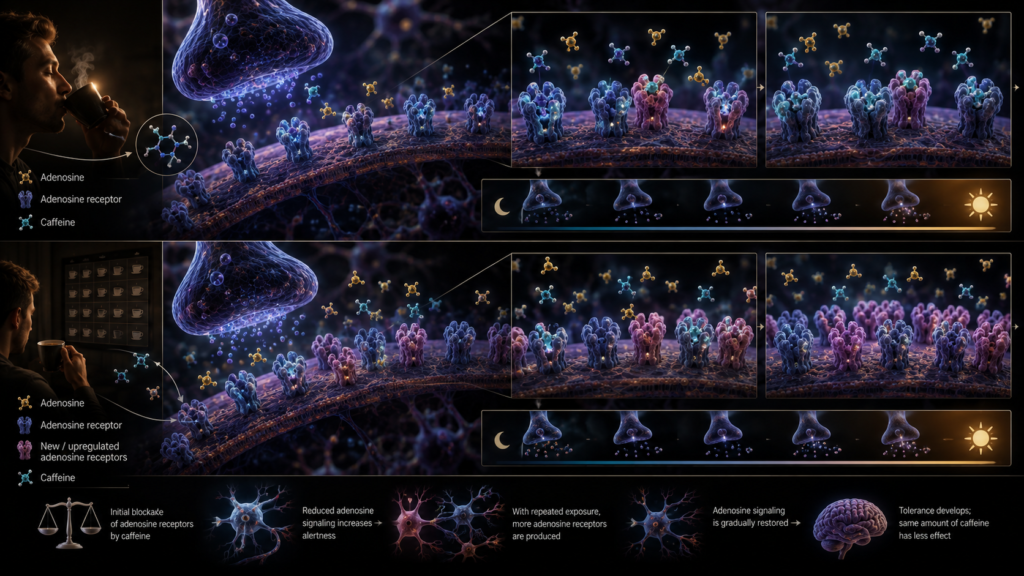
If you consume caffeine regularly, your brain can adapt. Caffeine repeatedly blocks some adenosine receptor signaling, and in response, the nervous system can adjust its own signaling systems. Changes in receptor availability and sensitivity can reduce the subjective effect of the same caffeine dose, which is called tolerance. You may remember a time when one cup of coffee made you feel highly alert, and later needed more to produce a similar effect. That does not mean caffeine has stopped affecting your body. Your response has changed as the nervous system adapts to repeated exposure.
Why Can Stopping Caffeine Cause Headaches?
Regular caffeine use can produce physical dependence, which is different from addiction in the clinical sense. When caffeine intake suddenly stops, the brain no longer receives the same receptor blockade, adenosine signaling can become more prominent, and other physiological systems adjust again. Withdrawal symptoms can include headache, fatigue, sleepiness, difficulty concentrating, and irritability. Symptoms commonly begin within a day after stopping and can last several days, although severity varies, and the FDA advises cutting back gradually instead of stopping abruptly. [1] Withdrawal headaches have a physiological basis: caffeine affects blood vessels and neural signaling, and the body’s adaptation to regular caffeine exposure can contribute to changes when caffeine is suddenly removed.
Why Do You Sometimes Feel a “Caffeine Crash”?
Caffeine can temporarily make sleepiness less noticeable, but adenosine continues to accumulate while you remain awake. Eventually, caffeine concentration falls, more adenosine receptors become available, and the sleep pressure that had become less noticeable can suddenly become much more apparent. You may realize how tired you actually are, which people often call a caffeine crash. However, the sensation may involve more than caffeine alone, because sleep deprivation, circadian rhythms, food intake, and blood glucose changes can all contribute to afternoon fatigue.
Why Can Coffee Make You Jittery, or Affect Your Heart?
Caffeine is a stimulant, and at higher doses it can increase nervous system activity enough to become uncomfortable: restlessness, shaking, anxiety, or a faster heartbeat. Sensitivity varies between people, so the useful dose depends on the individual and the situation. There is a point where increasing caffeine produces more unwanted stimulation without a proportional increase in useful alertness. Caffeine can also affect the cardiovascular system directly, temporarily increasing heart rate or altering blood pressure in some people. A racing heartbeat is not evidence the coffee is “working better.” It can simply mean the amount of caffeine is producing more stimulation than is useful for that person. If you have a heart condition, are pregnant, or take medication, ask your clinician how much caffeine is appropriate for you.
Why Does Coffee Sometimes Make You Need the Bathroom?
Coffee can stimulate gastrointestinal activity. Caffeine can influence the nervous system and intestinal movement, but it is not the only factor: coffee contains other compounds, and the act of drinking a warm beverage can also contribute. This is why some people feel the urge to use the bathroom soon after drinking coffee, though the response varies considerably.
Why Can Caffeine Reduce a Headache, and Does Decaf Have Any?
Caffeine can affect blood vessels and pain pathways, and it can enhance the effects of some pain-relieving medications, which is why caffeine is included in some headache medicines. But frequent caffeine use can also contribute to withdrawal headaches in some people, so its effect depends on dose, frequency, and context. And yes, decaf coffee still contains some caffeine. Most decaffeination processes remove most of it, but a small amount can remain, varying by product and serving size, meaning people highly sensitive to caffeine can still experience effects from decaf.
Why Does Coffee Smell So Stimulating?
Coffee does more than deliver caffeine. Smell has strong connections to memory and learned associations, and if you repeatedly drink coffee when waking up, starting work, or taking a break, the aroma can become associated with those states. Your brain learns the pattern, and over time the smell and routine can influence how you feel before caffeine has even reached its full effect. This is one reason the experience of coffee cannot be reduced to chemistry alone: your expectations, habits, memories, and environment all become part of it.
Does Caffeine Work Better When You Are Sleep Deprived?
Caffeine can improve alertness when you are sleepy. If you begin with high sleep pressure, blocking some adenosine signaling can create a noticeable contrast, and you may feel dramatically more awake. But caffeine does not restore the full benefits of adequate sleep. If you have not slept enough, your brain still lacks the physiological and cognitive benefits that sleep provides. Using caffeine repeatedly to compensate for insufficient sleep can also create a cycle in which late caffeine use interferes with the following night’s sleep.
Is More Caffeine Always Better?
No. The relationship between caffeine and alertness is not simply “more is better.” A moderate amount may increase alertness, while higher amounts can increase unwanted effects such as jitters, anxiety, restlessness, headache, rapid heartbeat, and sleep disruption. The FDA cites 400 milligrams of caffeine a day as an amount not generally associated with negative effects for most healthy adults, and notes that people differ in sensitivity. [1]
The amount of caffeine in coffee also varies substantially. Bean type, roasting, brewing method, serving size, and preparation all influence the final amount, so “one cup” is not a precise measure of caffeine exposure, and two cups of coffee can contain very different amounts.
Why Does Caffeine Feel Different at Different Times?
Your response to caffeine depends partly on your biological state. If you are well rested, the alerting effect may feel relatively modest, and if you are sleep deprived, the contrast may feel much stronger. Your circadian rhythm also influences alertness throughout the day, and caffeine interacts with this existing biological rhythm rather than replacing it. That is why the same cup of coffee can feel different depending on when you drink it and how tired you already are.
The Simple Science of Coffee
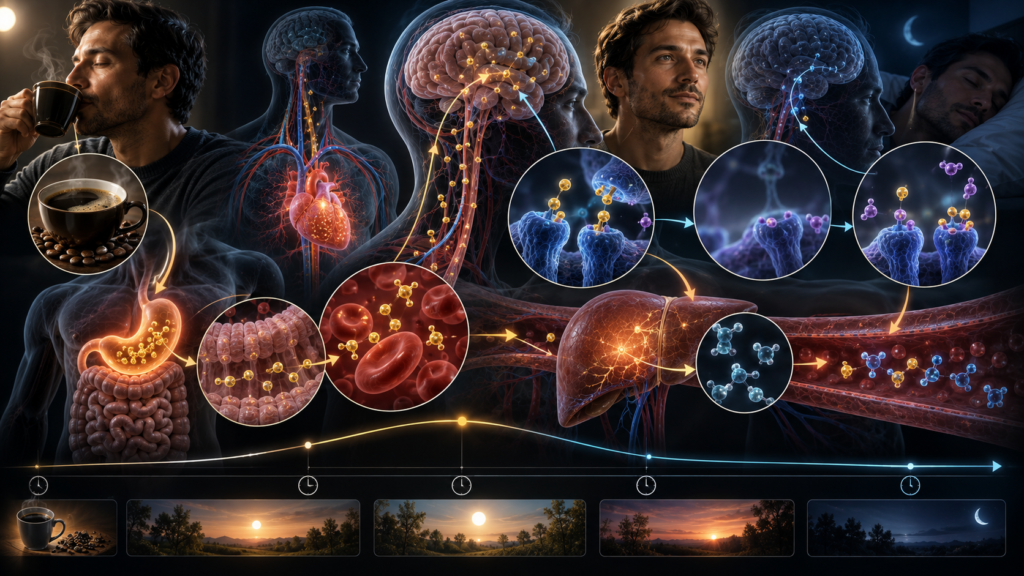
You drink coffee. Caffeine is absorbed into your bloodstream and reaches your brain, where it binds to adenosine receptors, leaving adenosine with less access to those receptors. Some signaling associated with sleepiness is reduced, and you feel more alert. Your liver gradually breaks down the caffeine, its concentration falls, adenosine signaling becomes more noticeable again, and sleepiness returns. If you consumed caffeine late enough, some may still remain when you go to bed, which can result in disrupted sleep. That simple sequence explains most of the everyday experience.
Key Takeaways
- Coffee wakes you up mainly because caffeine blocks some of the brain’s adenosine signaling. Adenosine contributes to sleep pressure, and caffeine can cross the blood-brain barrier and interact with adenosine receptors.
- Caffeine changes neural signaling and reduces the perception of fatigue. It does not provide energy the way food does, and it does not remove your need for sleep.
- Caffeine usually takes roughly 15 to 45 minutes to become noticeable, and it takes about four to six hours for the body to clear half of it.
- Caffeine taken even six hours before bed can reduce sleep, and people often do not notice the effect. [2]
- Regular caffeine use can lead to tolerance, while suddenly stopping can cause withdrawal symptoms such as headaches and fatigue.
- People respond differently to caffeine because of metabolism, genetics, medications, pregnancy, sensitivity, and regular use, and more caffeine does not necessarily mean better alertness.
Conclusion
Coffee wakes you up mainly because caffeine changes how your brain responds to adenosine. Adenosine contributes to sleep pressure as you remain awake, and caffeine reaches the brain and occupies some of the receptors that adenosine would normally use. The result is temporary. You feel more awake because part of the sleepiness signal has been blocked, while the biological need for sleep continues underneath it. Your liver gradually breaks caffeine down, and as its concentration falls, adenosine signaling becomes more noticeable again.
That is the central paradox of coffee: the same substance that helps you feel awake during the day can interfere with sleep later. Caffeine does not remove the need for rest. It simply makes the signal quieter for a while.
Explore more evidence-informed explanations of sleep, energy, and everyday biology in CAVELYRA’s Body & Health collection.
References
- U.S. Food and Drug Administration. “Spilling the Beans: How Much Caffeine Is Too Much?” fda.gov
- Drake C, Roehrs T, Shambroom J, Roth T. Caffeine effects on sleep taken 0, 3, or 6 hours before going to bed. Journal of Clinical Sleep Medicine. 2013;9(11):1195–1200. doi:10.5664/jcsm.3170
- U.S. Food and Drug Administration. “Caffeine Pharmacokinetics in Adults” (Cafcit medical review). accessdata.fda.gov