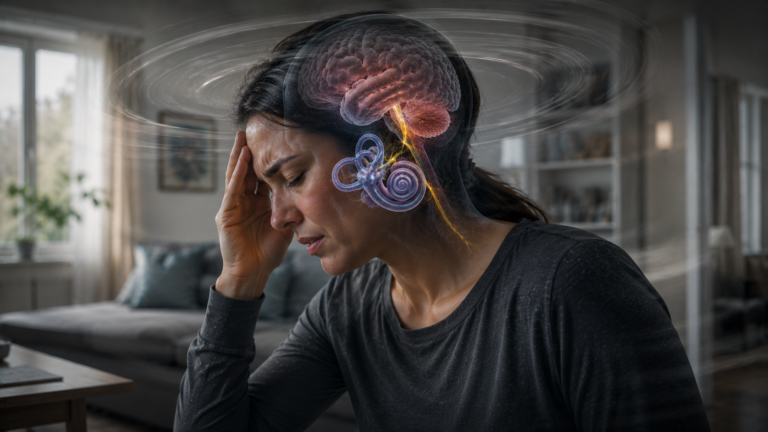
You lie down for a short nap because you feel tired. Instead of waking refreshed, you open your eyes feeling heavy, confused, and slow. Your eyes are open, but your attention and thinking do not feel fully switched on.
This temporary state is called sleep inertia. It is the period after waking when alertness and cognitive performance remain below their usual level. It is common, but its intensity and duration vary with sleep history, nap timing, and individual differences.
Quick answers
- What sleep inertia is: It is the temporary grogginess and reduced alertness you may feel after waking from sleep.
- Why naps can leave you groggy: Waking from deeper sleep, prior sleep loss, and your body clock can affect how quickly alertness returns.
- How to reduce grogginess: Try a short, well-timed nap and allow yourself time to become fully alert before doing demanding tasks.
What Is Sleep Inertia?
Sleep inertia is the temporary reduction in alertness and performance that follows awakening. It can involve sleepiness, slower thinking, reduced attention, disorientation, poorer reaction time, and difficulty making decisions.
It is not, by itself, a disease. It is a normal part of the transition from sleep to wakefulness. However, normal does not mean harmless in every situation. A person may feel awake enough to walk around while still performing below their usual level on a task that requires sustained attention or rapid decisions.
Why Does Sleep Inertia Feel So Bad?
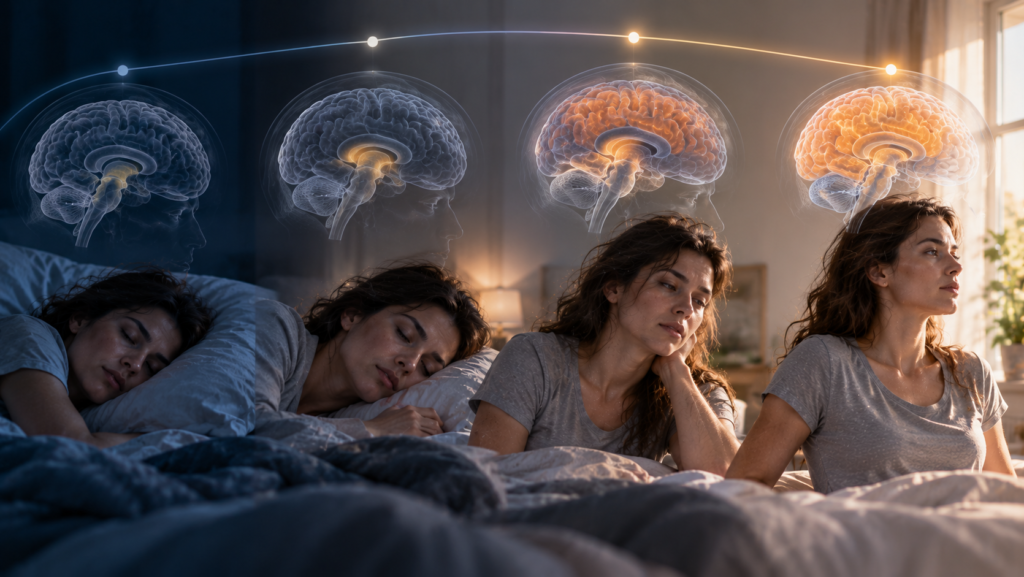
Sleep and wakefulness are not simple on-off switches. After waking, some brain processes return toward their waking pattern faster than others. Studies have measured temporary reductions in attention and cognitive performance immediately after awakening. These effects generally decline as time awake increases.
This explains why the first few minutes after a nap can feel very different from the next half hour. Sleep inertia is a measurable change in performance, not a personal failing or laziness.
Can a Long Nap Make Sleep Inertia Worse?

A longer nap can give you more opportunity to enter deep, slow-wave sleep. Waking from deeper sleep has often been associated with greater sleep inertia, but the evidence is not perfectly consistent. Nap duration alone cannot predict exactly how you will feel.
Sleep depth, prior sleep, time of day, and differences between individuals can interact. It is therefore too simple to say that every long nap is bad or that waking from deep sleep explains every episode of grogginess.
How Sleep Loss Makes It Stronger
Your need for sleep builds the longer you stay awake and decreases while you sleep. This accumulating drive is called homeostatic sleep pressure. When you have slept too little, sleep pressure can be high, and you may enter deeper sleep more readily during a nap.
Research indicates that prior sleep loss can intensify sleep inertia and prolong the period of impaired performance. Two people taking the same nap may therefore feel very different afterward if one has been sleeping adequately and the other has accumulated sleep debt over several nights.
Sometimes the main problem is not the nap. It is the insufficient sleep that made the nap necessary.
Your Body Clock Matters Too

Your circadian system regulates daily patterns in sleepiness and alertness across roughly 24 hours. The same nap may feel different depending on when you take it and when you wake. Sleep inertia can be more pronounced when waking occurs during a circadian low, especially when combined with prior sleep loss.
This is one reason a single nap-duration rule cannot work equally well for everyone or every situation.
How Long Does Sleep Inertia Last?
For many well-rested people, noticeable grogginess fades over about 15 to 30 minutes. Research has also found effects lasting 30 minutes or longer, and sleep loss or circadian timing can prolong impairment. There is no exact timer that applies to everyone.

Subjective alertness and actual performance do not always recover together. You might feel capable of continuing your day while still being slower at a task that requires sustained attention, precise judgment, or rapid responses.
That difference matters when driving, operating machinery, or making safety-critical decisions. Avoid assuming that you are ready for a demanding task simply because you have opened your eyes and feel somewhat better. Allow time to become fully alert.
How Long Should a Nap Be? 20 Minutes Versus 90 Minutes
A nap of roughly 10 to 20 minutes is a reasonable starting point when you want a short boost in alertness and need to get back to work soon. A brief nap may limit the chance of entering deeper sleep, although it cannot guarantee that you will wake without grogginess.
A 90-minute nap gives you more opportunity to pass through several sleep stages. It may be useful in some circumstances, particularly when you need additional sleep, but it can also leave you temporarily groggy. Sleep cycles do not last exactly 90 minutes in every person or every sleep episode, so using a 90-minute timer does not guarantee waking at a particular stage.
Longer naps can still provide benefits after the initial period of sleep inertia passes. The right choice depends on how much sleep you have had, when you nap, how long you can rest, and what you need to do afterward. “Never nap longer than 30 minutes” is a practical rule some people find useful, not a universal law of sleep physiology.
How to Reduce Sleep Inertia After a Nap

- Try a short nap when you need to be alert soon. About 10 to 20 minutes is a useful starting point, although individual responses vary.
- Allow a transition period. When possible, avoid scheduling driving, machinery use, or other demanding tasks for the moment you expect to wake.
- Protect your regular night-time sleep. Naps can help with temporary sleepiness, but they do not reliably replace the benefits of adequate, consistent sleep.
- Consider caffeine carefully. Some research suggests that caffeine taken before a short nap may reduce post-nap impairment. Caffeine can also disrupt later sleep, depending on the dose, timing, and your sensitivity. Do not use it to repeatedly compensate for inadequate sleep.
- Look at the pattern, not one nap. If you regularly wake unrefreshed or struggle to stay awake during routine activities, consider your sleep schedule and seek medical advice when the problem persists.
Is Sleep Inertia a Sleep Disorder?
Sleep inertia itself is a normal phenomenon and does not automatically indicate a sleep disorder. Occasional grogginess after a nap is not unusual.
Persistent daytime sleepiness can have several causes, including insufficient sleep, irregular sleep timing, circadian disruption, medication effects, or an underlying sleep or medical condition. Do not diagnose yourself based on one groggy episode.
Talk with a healthcare professional if you regularly struggle to stay awake during ordinary activities, or if you experience severe or prolonged impairment after waking despite allowing enough time for sleep.
Key Takeaways
- Sleep inertia is a temporary reduction in alertness and performance after waking.
- It can be stronger after sleep loss, at certain circadian times, or after some longer naps.
- Many people improve within about 15 to 30 minutes, but recovery varies.
- A 10 to 20 minute nap is a reasonable starting point when you need to return to alert activity quickly.
- A 90-minute nap does not guarantee waking at the end of a complete sleep cycle.
- Allow recovery time before safety-critical tasks and prioritize adequate regular sleep.
Sometimes the hardest part of a nap is not falling asleep. It is waiting for your brain and attention to catch up after waking.
Related Reading
- Why Do We Yawn? The Science Behind This Strange Reflex
- How Does Your Brain Work? The Science Behind the Human Brain
- Why Do We Snore? The Science Behind Snoring
References
- Hilditch CJ, McHill AW. Sleep inertia: current insights. Nature and Science of Sleep. 2019;11:155-165. doi:10.2147/NSS.S188911.