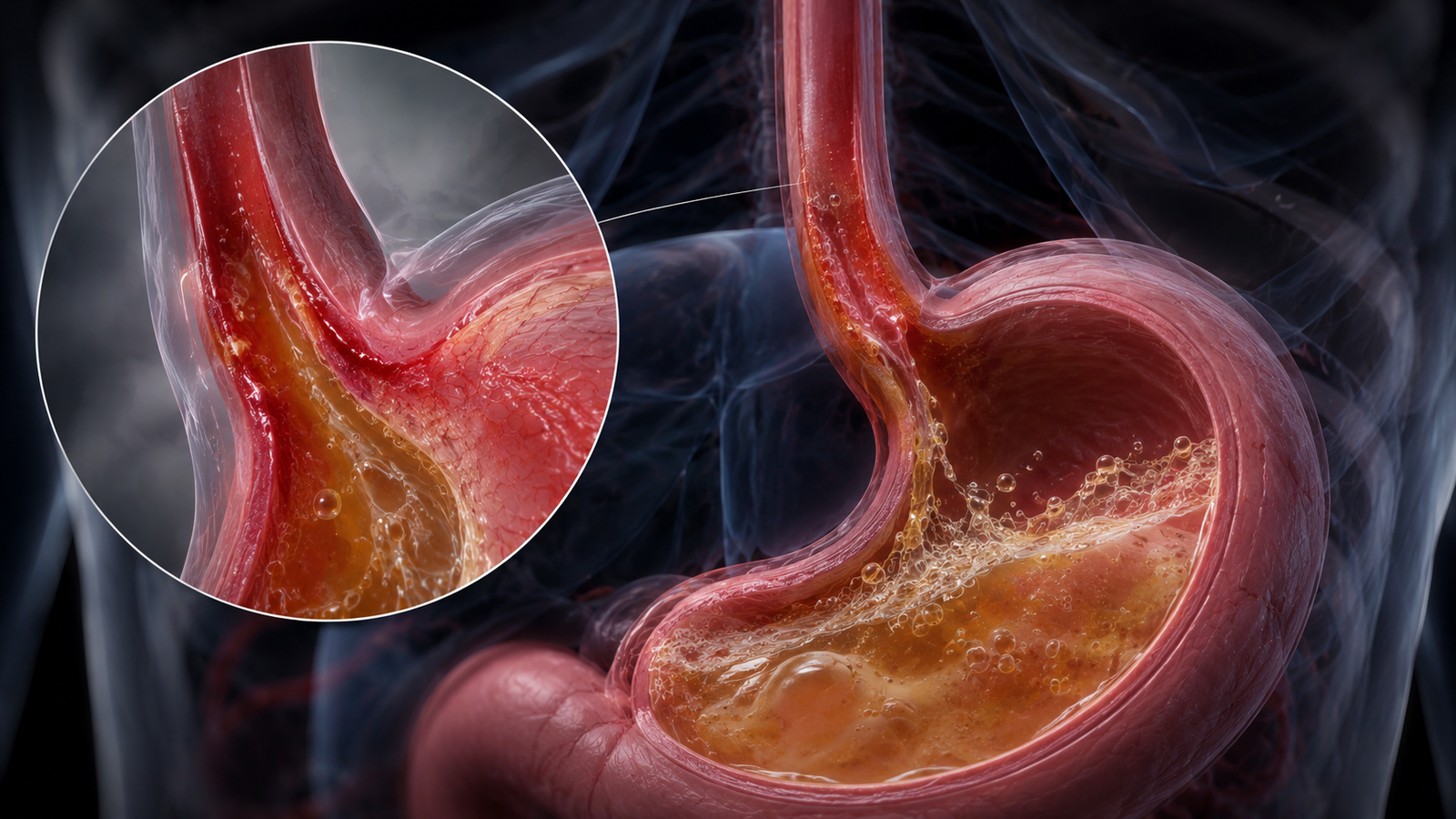
You finish a meal and notice a burning sensation behind your chest. A sour taste may rise toward your throat, or you may feel uncomfortable when you lie down.
Many people call this “acidity.”
But stomach acid itself is not abnormal. Your stomach needs acid to digest food and help protect against many microorganisms.
The problem often begins when stomach contents move in the wrong direction.
When stomach contents flow backward into the esophagus, this is called gastroesophageal reflux, or GER. When reflux becomes recurrent and troublesome or causes complications, it may be gastroesophageal reflux disease, or GERD.
Why Does Stomach Acid Exist?
Your stomach is designed to contain a highly acidic environment.
Specialized cells called parietal cells produce hydrochloric acid. They use proton pumps to secrete hydrogen ions into the stomach. Neural and hormonal signals regulate this process, including signals involving histamine and gastrin.
Acid helps activate pepsin, an enzyme involved in protein digestion. It also contributes to the stomach’s defense against many microorganisms that enter with food.
So the presence of acid is not a disease. It is a normal part of digestion.
Why Doesn’t Stomach Acid Digest the Stomach?

The stomach has several protective mechanisms.
Its lining produces mucus, while bicarbonate helps neutralize acid near the surface. Tight connections between cells limit the movement of damaging substances into deeper tissue. Blood flow supports repair, and stomach cells are continually replaced.
Together, these mechanisms protect the stomach from its own acidic environment.
The esophagus does not have the same protective system. That difference becomes important when stomach contents repeatedly move upward.
What Prevents Acid From Moving Upward?
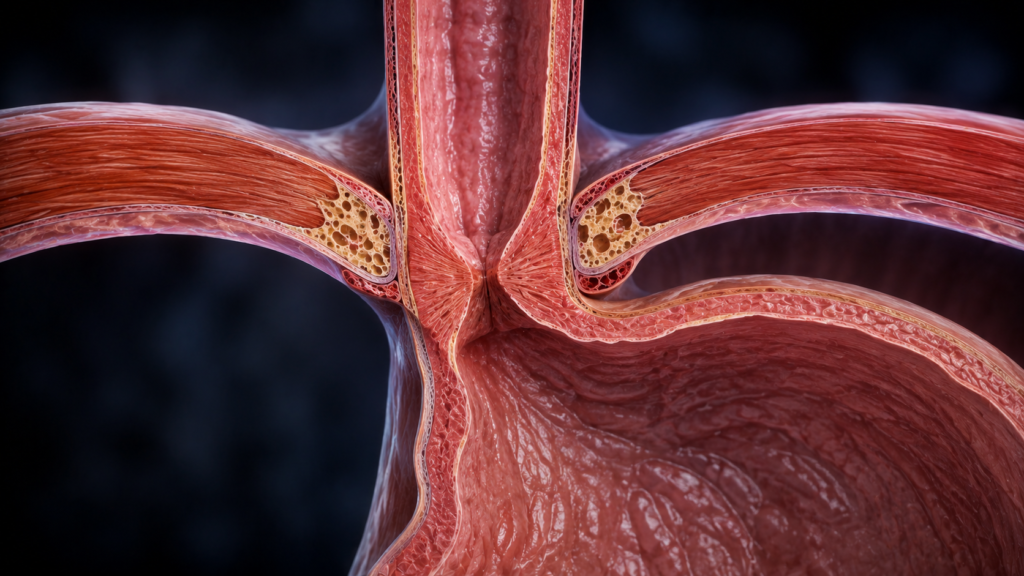
At the lower end of the esophagus is the lower esophageal sphincter.
This ring of muscle relaxes when you swallow, allowing food to enter the stomach. It then helps prevent stomach contents from moving backward.
The barrier is not permanently closed. It can relax briefly at other times, allowing occasional reflux even in healthy people.
The diaphragm also contributes to the anti-reflux barrier. Together, these structures help keep stomach contents where they belong.
Why Does Heartburn Happen?
When stomach contents move into the esophagus, they can irritate its lining.
This can produce a burning sensation behind the breastbone that may move upward toward the throat. If stomach contents reach the mouth, you may notice a sour or acidic taste. These are common symptoms associated with GERD.
The name “heartburn” can be misleading. The sensation occurs in the chest, but it usually comes from the esophagus rather than the heart.
Your stomach needs acid. Your esophagus does not need repeated exposure to it.
Why Is Reflux Often Worse at Night?

Gravity helps keep stomach contents down when you are upright.
When you lie down, that assistance is reduced. A large meal shortly before bedtime can make the situation more noticeable because the stomach is fuller.
For people with nighttime GERD symptoms, finishing meals at least three hours before lying down or going to bed may help. Elevating the head of the bed by about 6 to 8 inches is another option recommended for some people with nighttime symptoms.
What Can Make Reflux More Likely?
Several factors can influence reflux.
Excess body weight can increase pressure within the abdomen and may promote reflux. Pregnancy can also increase reflux because hormonal changes and the growing uterus can affect the digestive system.
Smoking is associated with increased risk of GERD and can affect the lower esophageal sphincter.
Large meals can also increase the volume and pressure within the stomach, making symptoms more likely in some people.
Can Food Cause Acid Reflux?
Some foods and drinks can worsen symptoms in susceptible people.
Commonly reported triggers include:
High-fat foods
Chocolate
Coffee and other caffeine sources
Alcohol
Mint
Spicy foods
Citrus foods
Tomatoes
But these are not universal triggers.
A food that causes symptoms for one person may cause no problem for another. Instead of eliminating every food on a general trigger list, it is more useful to identify what consistently worsens your own symptoms.
Does Stress Cause Acidity?
Stress does not simply mean that your stomach is producing excessive acid.
Your brain and digestive system communicate continuously through nerves, hormones, and other biological signals. Stress can influence gut movement, eating behavior, sensitivity, and how digestive sensations are perceived.
This is especially relevant to functional dyspepsia, a disorder of gut-brain interaction.
The symptoms are real. The biology is simply more complex than stomach acid alone.
“Acidity” Can Mean Different Things
The word “acidity” can describe several different digestive experiences.
Acid reflux is one possibility. Others include indigestion, gastritis, peptic ulcer disease, medication-related problems, or another digestive disorder.
Indigestion, or dyspepsia, can involve upper abdominal discomfort, early fullness, bloating, nausea, and belching. It is different from heartburn, even though the two can occur together.
Gastritis is inflammation of the stomach lining. Peptic ulcers are deeper defects in the gastrointestinal lining, and major causes include H. pylori infection and NSAID use.
These conditions should not automatically be labeled “acidity.”
What Happens When Reflux Continues?
The esophagus is not designed to tolerate repeated exposure to stomach contents.
Persistent reflux can cause inflammation called reflux esophagitis. In some people, long-term GERD can contribute to complications such as esophageal strictures or Barrett’s esophagus.
A stricture develops when inflammation and healing produce scar tissue that narrows the esophagus.
Barrett’s esophagus involves changes in the lining of the lower esophagus and is associated with an increased risk of esophageal adenocarcinoma. The level of risk varies between individuals.
Can Reflux Cause Cough or Hoarseness?
GERD can be associated with cough, hoarseness, and throat irritation.
But these symptoms have many possible causes. Reflux should not automatically be blamed for every chronic cough or throat problem.
Persistent symptoms require appropriate evaluation rather than assuming that reflux is responsible.
How Is Acid Reflux Treated?

Treatment depends on the diagnosis and severity of symptoms.
Lifestyle changes may help. Medical treatment can include antacids, H2 receptor blockers, or proton pump inhibitors. Selected patients may require procedures or surgery.
Antacids neutralize existing stomach acid and can provide relatively quick relief for mild heartburn.
H2 blockers reduce acid production.
Proton pump inhibitors, or PPIs, suppress acid production more strongly and can help heal an inflamed esophageal lining.
These medicines reduce acidity, but they do not necessarily stop stomach contents from physically moving upward.
What Can You Do About Recurrent Reflux?
If reflux keeps occurring, focus on patterns rather than trying to eliminate everything.
Useful steps can include:
Identify foods that consistently trigger your symptoms.
Avoid very large meals if they worsen symptoms.
Avoid lying down soon after eating.
Finish meals at least three hours before bedtime if nighttime reflux is a problem.
Consider elevating the upper body during sleep.
Maintain a healthy body weight if needed.
Avoid smoking.
Reduce alcohol if it triggers symptoms.
Reduce caffeine if it consistently worsens symptoms.
Eat more slowly if rapid eating contributes to discomfort.
Track when symptoms occur and what preceded them.
You do not need to eliminate every food that appears on a reflux list.
If a particular food consistently causes symptoms, reducing it may help. If it does not, unnecessary restriction may provide little benefit.
What About Home Remedies?
Some commonly suggested remedies have limitations.
Water can support hydration and may temporarily help clear refluxed material from the esophagus, but excessive water does not cure GERD.
Milk may temporarily soothe symptoms for some people, but it is not a reliable treatment.
Baking soda can neutralize acid, but repeated use carries risks because of its sodium content and possible effects on electrolyte balance.
Herbal products also vary in evidence and safety. Some can interact with medications or worsen reflux.
Natural does not automatically mean safe or effective.
When Should You Get Evaluated?
Occasional mild heartburn is common.
Persistent or troublesome symptoms deserve attention.
Medical evaluation is particularly important with difficulty swallowing, painful swallowing, persistent vomiting, unexplained weight loss, loss of appetite, persistent or severe abdominal pain, vomiting blood, black tarry stools, or concerning chest pain.
Chest pain deserves particular caution.
Heartburn can feel like chest pain, but heart problems can produce similar sensations. New, severe, exertional, or otherwise concerning chest pain should not automatically be assumed to be “acidity.”
How Is GERD Diagnosed?
Doctors often begin with your symptoms and medical history.
If symptoms persist despite treatment or complications are suspected, additional testing may be needed.
Possible tests include upper gastrointestinal endoscopy, esophageal pH monitoring, and esophageal manometry.
Endoscopy can examine the esophagus, stomach, and duodenum and can identify inflammation, ulcers, strictures, Barrett’s esophagus, and other abnormalities. pH monitoring measures acid exposure in the esophagus, while manometry evaluates pressure and movement within the esophagus.
Key Takeaways
Explore more in Body & Health and learn how digestion works in How Does Your Stomach Work?.
- Stomach acid is normal and necessary for digestion.
- “Acidity” does not automatically mean excessive acid production.
- Acid reflux occurs when stomach contents move backward into the esophagus.
- The lower esophageal sphincter and diaphragm help prevent reflux.
- Large meals, lying down after eating, excess body weight, pregnancy, smoking, and individual food triggers can influence symptoms.
- GERD, indigestion, gastritis, and peptic ulcers are different conditions.
- H. pylori infection and NSAID use are major causes of peptic ulcers.
- Persistent reflux can damage the esophagus.
- Antacids, H2 blockers, and PPIs work differently.
- Persistent or concerning symptoms may require medical evaluation.
Conclusion
Your stomach is supposed to contain acid.
That acid supports digestion and contributes to the stomach’s protective environment. The problem begins when stomach contents move in the wrong direction.
The lower esophageal sphincter normally helps prevent this, while the diaphragm contributes to the barrier. When reflux occurs repeatedly, stomach contents can reach the esophagus, whose lining is less adapted to prolonged exposure.
That irritation can produce the burning sensation commonly called heartburn.
But “acidity” can describe more than reflux. It may refer to indigestion, gastritis, an ulcer, medication effects, or another digestive problem.
Understanding the difference matters because the appropriate response depends on the underlying cause.
If symptoms are occasional and mild, paying attention to meal size, meal timing, body position, personal food triggers, caffeine, alcohol, smoking, and other factors may help.
If symptoms keep returning, disturb sleep, require frequent medication, or come with warning signs, the cause deserves proper evaluation.
Your stomach needs acid.
Your esophagus does not need repeated exposure to it.
That simple difference explains much of what people commonly call acidity.
Explore more evidence-based explanations of digestion, reflux, and human health in CAVELYRA’s Body & Health collection.