
By CAVELYRA Editorial
How does your immune system work? It protects you every day, often without you noticing. Bacteria land on your skin. Viruses enter your nose. A cut can let microbes into tissue that is normally sealed. Most of the time, your immune defences remove these threats before they cause illness or symptoms.
That is the work of your immune system: a network of cells, tissues and organs that finds threats, removes them, and remembers them for next time. [1] It is not a single organ you can point to. It is a system spread through your whole body, on duty every hour of your life.
Quick answers
- How does your immune system work?: Your immune system is a network of cells, tissues and organs that finds and removes germs and other threats. It uses a fast, general defence called innate immunity and a slower, precise one called adaptive immunity that remembers past invaders. [1]
- What are its two layers?: Innate immunity acts within minutes and does not learn. Adaptive immunity takes days to build a tailored response, then remembers it for years. [1][2]
- What are the limits?: The system can be overwhelmed, it can mistake the body's own tissues for threats, and no food or supplement has been shown to make a healthy immune system stronger than normal. [3][4]
Understanding the immune system starts with a simple idea: it has two layers that work together. The first layer is ready from birth and attacks anything foreign. The second layer is slower, but it learns — and that learning is the reason a second infection is often milder than the first, and the reason vaccines work. [1]
This article explains both layers, the cells that do the work, how immune memory forms, why you get a fever, what happens when the system gets it wrong, and what the evidence actually says about “boosting” immunity.
How Does Your Immune System Work?
Your immune system is the network of cells and tissues in your body that work together to defend you from viruses, bacteria, and infection. [3] Its main workers are white blood cells, also called leukocytes — cells that can leave the blood, move into tissues, and carry out defence responses. [2]
These cells patrol the blood and lymph, and they gather in places such as the lymph nodes and the spleen, where adaptive immune responses are generated. [6] The system also includes physical barriers — the skin, the lining of the nose and gut, mucus, and stomach acid — that stop most invaders before the cells ever need to act. [2]
The system has to solve a hard problem: it must attack things that do not belong in the body while leaving the body’s own tissues alone. Most of the time it gets this right. The rest of this article explains how.
What Is Innate Immunity?
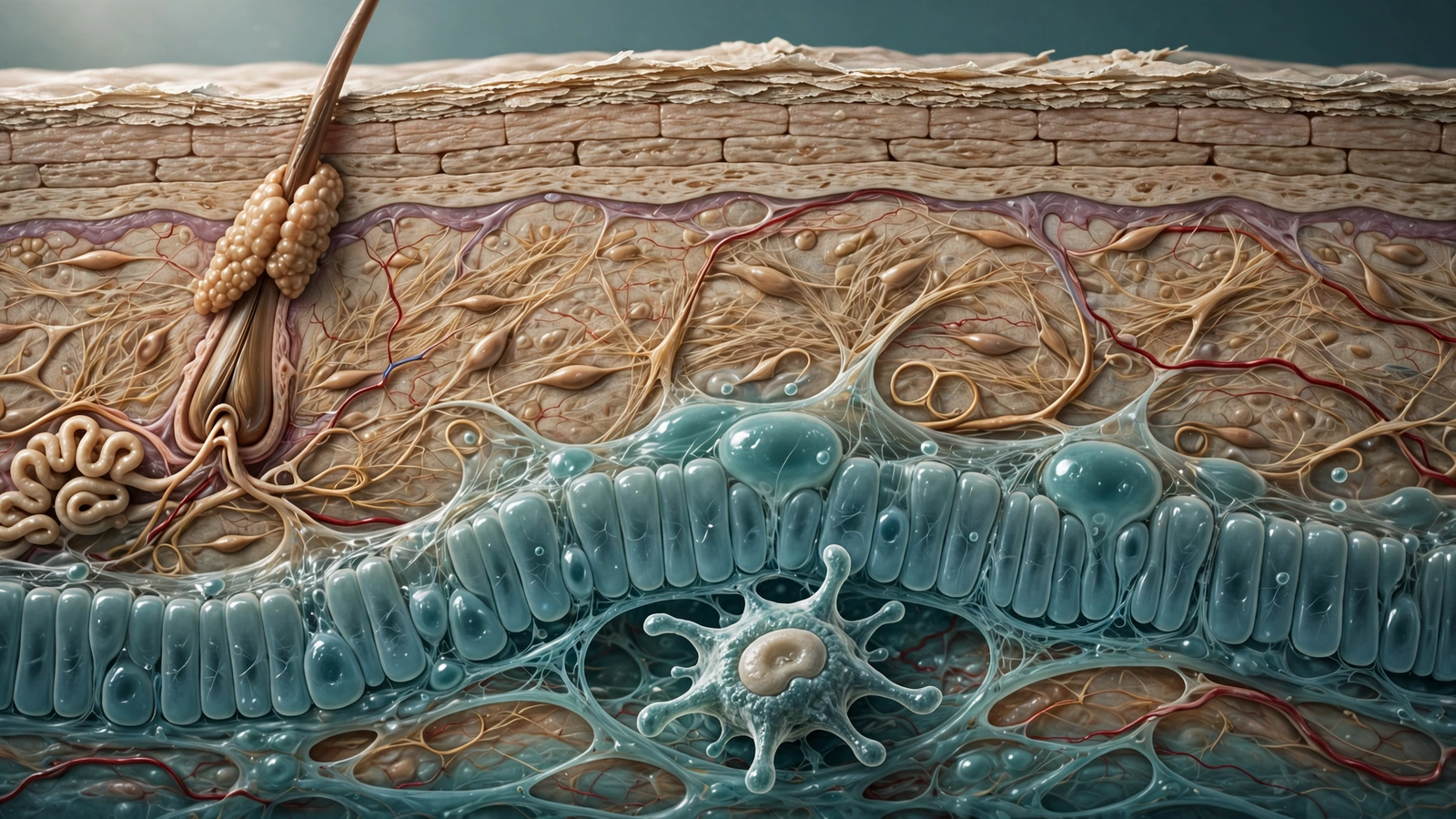
Innate immunity is the defence you are born with. It is not caused by an infection or a vaccination, and it responds in the same way every time a pathogen enters the body. [2] Its first line is physical and chemical barriers: skin with its tough protein keratin, sticky mucus that traps microbes, tiny hairs called cilia that sweep mucus upward, stomach acid, and enzymes in saliva, tears and mucus that break down bacterial cell walls. [2]
When a pathogen gets past those barriers, the second line takes over. White blood cells recognize broad patterns found on microbes but not on healthy human cells, and they respond with inflammation, phagocytosis, and chemical signals. [2] Inflammation — redness, swelling, heat and pain — is the visible sign of this response: blood vessels widen, fluid leaks into the tissue, and immune cells move in. [2]
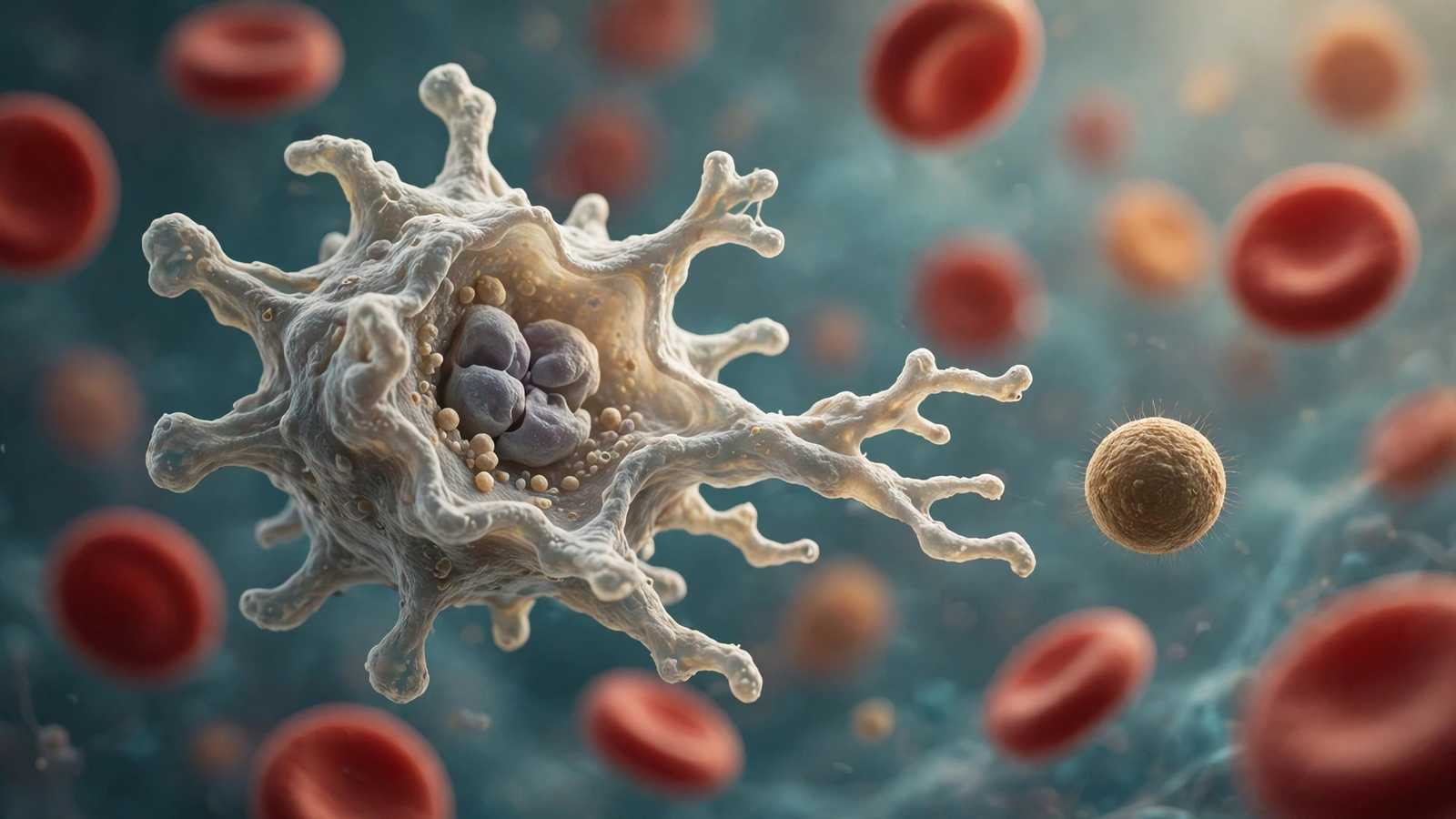
The main cells of this response are neutrophils, the most abundant white blood cells and among the first to arrive at an infected site, and macrophages, large cells that engulf and digest pathogens and clean up debris. [2] They are helped by natural killer cells, which destroy cells infected with viruses, and by the complement system — about 20 proteins in the blood that coat pathogens, mark them for destruction, and can open pores in microbial cell membranes. [2] Chemical messengers called cytokines coordinate the whole response, and one class of them, the interferons, warns nearby uninfected cells about a viral infection. [2]
What Is Adaptive Immunity?
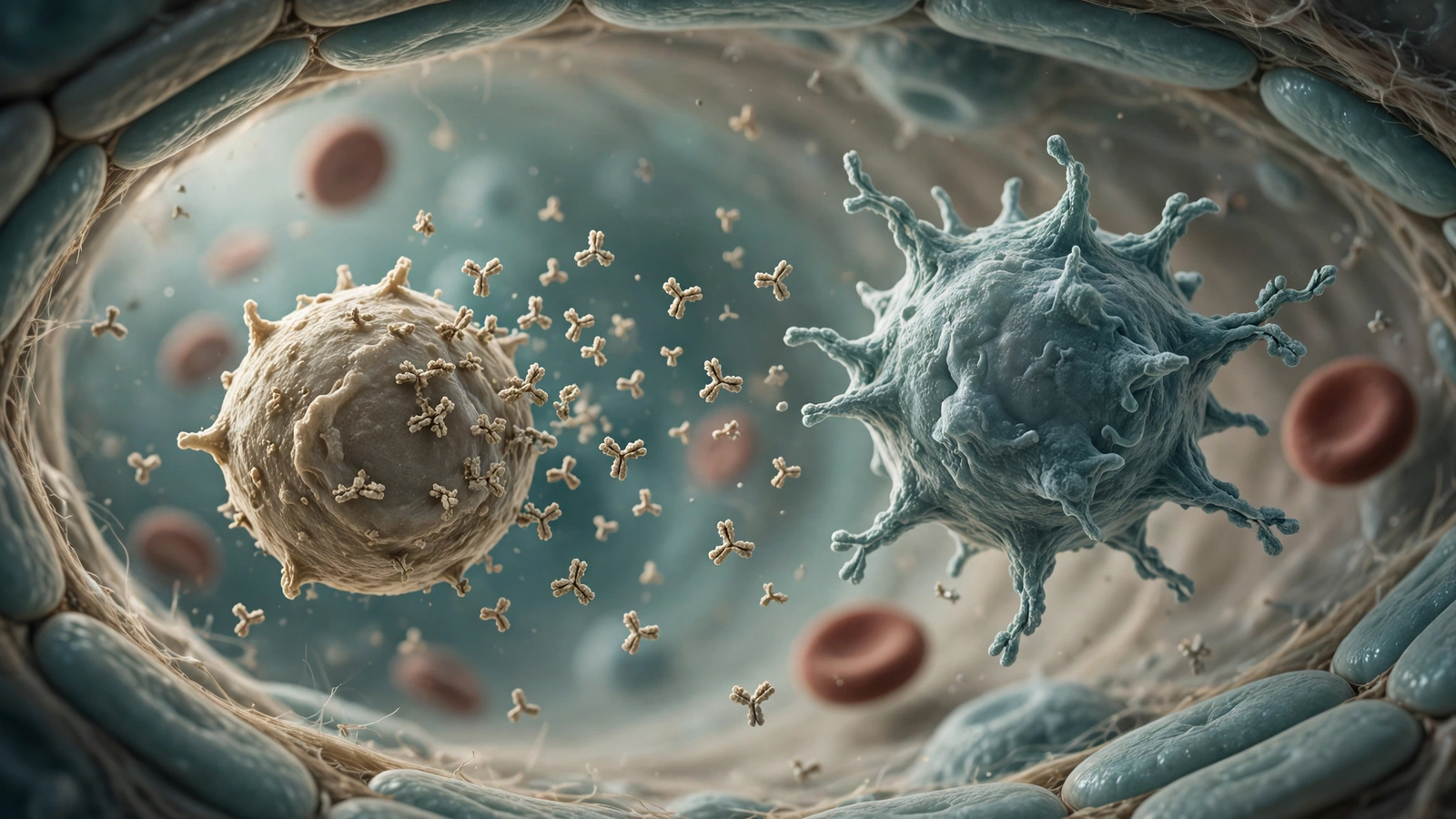
Adaptive immunity is the second layer, and it is far more specific. Each B or T cell carries a unique receptor that recognizes one particular antigen — a molecule that can bind to that receptor. [1] The genes for these receptors are randomly rearranged as the cells mature, so the body can potentially respond to almost any new threat. [1]
When a B or T cell recognizes its antigen and also receives signals from innate cells that something is wrong, it activates, divides, and spreads out to deal with the problem. [1] B cells make antibodies, proteins that neutralize pathogens and mark them for destruction. T cells carry out several jobs, including killing infected cells and activating or recruiting other immune cells. [1]
Adaptive immunity is slower than innate immunity — it takes days to build a response the first time it meets a new germ. But it is precise, and it learns. That learning is the subject of a later section: immunological memory. [1]
How Do White Blood Cells Work?
White blood cells, or leukocytes, are the immune system’s workforce. They are larger than red blood cells, have a nucleus, and can move on their own — which lets them leave the blood and travel into infected tissues. [2] Different types have different jobs, and they work in sequence.
Neutrophils arrive first. They engulf and digest pathogens in a process called phagocytosis, and they are the most abundant white blood cells in the body. [2] Macrophages follow: they take over phagocytosis, clean up cell debris, and help resolve the inflamed site. Monocytes are the circulating form that develops into macrophages after moving into tissue. [2] You can see the same cells at work in wound healing, where neutrophils and macrophages clear damaged material before new tissue is built — see How Does Your Body Heal a Wound?.
Lymphocytes are a different family of white blood cells, recognizable by their large nuclei. [2] Most lymphocytes belong to adaptive immunity — B cells and T cells — but natural killer cells are lymphocytes of the innate system, constantly patrolling for infected or abnormal cells and destroying them. [2] Together, these cells give the immune system both a fast general response and a slow specific one.
What Is Immunological Memory?
Immune memory is a feature of the adaptive immune response. After B or T cells are activated and expand, the problem is resolved, the cells stop dividing — and some are retained in the body as memory cells. [1] If the same pathogen returns, those memory cells respond faster and more strongly than the first time.
That is why a second encounter with the same infection is often milder, and why the adaptive system can protect you for years after a single infection or vaccination. [1][2] The memory is specific: it recognizes the particular pathogen it was trained on, not every germ.
Vaccination is a way to train your immune system against a specific pathogen. It achieves immune memory without an actual infection, so the body is prepared when the real virus or bacterium enters. [1]
Why Do We Get a Fever?
A fever is not the illness itself. It is part of the immune response. When white blood cells recognize a pathogen, they release cytokines — chemical messengers that also send signals to the nervous system and raise the body’s core temperature. [2]
The higher temperature inhibits the growth of some pathogens and speeds up cellular repair processes. [2] That is why suppressing a fever is generally limited to fevers that are dangerously high: a moderate fever is the body working, not the body failing. [2]
Fever usually comes with the other symptoms of feeling sick — tiredness, muscle pain, nausea — and those, too, are largely produced by the same chemical signals. The immune system is telling the rest of the body to slow down while it deals with the threat. [2]
What Happens When the Immune System Gets It Wrong?
A system this powerful can cause harm when it targets the wrong thing. In autoimmune diseases, proteins called autoantibodies target the body’s own healthy tissues by mistake, signaling the body to attack them. [3] There are many different autoimmune diseases, and they can affect almost any part of the body, including the skin, joints and glands. [3]
Allergies are a different kind of mistake. The immune system reacts to a harmless substance — pollen, a food, an insect sting — in the same way it would respond to an infectious agent. [5] The response is real and can be severe, but the trigger is not actually dangerous.
Stress can also influence the system. Stress hormones affect immune activity, and while short-term stress can temporarily change immune responses, persistent stress can alter immune regulation over time — see How Does Stress Affect Your Body?. The details depend on the type, intensity and duration of the stress. The immune system is one part of a much larger biological system, not a switch that stress simply turns on or off.
Can You Boost Your Immune System?
The idea of “boosting” immunity is mostly marketing. The current evidence does not show that taking extra or high doses of nutrients gives a healthy person any additional benefit beyond a normal diet. [4] And boosting is not even necessarily a good goal: an overactive immune system can cause its own problems, including allergies and autoimmune conditions. [4]
What supports normal immune function is less exciting but better supported: adequate sleep, a varied diet, regular movement, and managing stress. [4] The gut plays a part here too — the gastrointestinal tract contains a large and highly active immune system, and diet shapes the environment it works in. See How Your Gut and Brain Communicate.
Supplements have a place when there is a real gap — a deficiency, a poor diet, or a specific medical reason — but they are not a shortcut. There are no magic pills for immunity, and anyone promising one is selling certainty that does not exist. [4]
Key Takeaways
- Your immune system has two layers: fast, general innate immunity and slow, specific adaptive immunity.
- Innate immunity acts within minutes and does not learn; adaptive immunity takes days to respond and remembers.
- B cells make antibodies that neutralize pathogens; T cells kill infected cells and coordinate the response.
- Memory cells let the body respond faster and stronger the second time — this is how vaccines work.
- Fever and inflammation are part of the defence, not the illness itself.
- No food or supplement has been shown to “boost” a healthy immune system beyond normal; sleep, a varied diet, movement and stress management support normal function.
Conclusion
Your immune system is not a single organ or a single cell. It is a network — barriers that block invaders, cells that swallow them, antibodies that mark them, and memory cells that remember them. The fast layer holds the line while the slow layer learns, and the learning is what protects you for years.
The system is powerful, but it is not perfect. It can be overwhelmed, it can mistake your own tissues for threats, and it cannot be “boosted” into something stronger than normal by a pill or a superfood. What it can do, quietly and constantly, is keep most threats from ever becoming an illness — and that is why it is worth understanding.
This article is for general information only and is not a substitute for medical advice. If you have symptoms that worry you, or a condition that affects your immune system, talk to a healthcare provider.
Explore more evidence-based explanations of human physiology, health, and the body in CAVELYRA’s Body & Health collection.
References
- National Institute of Allergy and Infectious Diseases (NIAID). “Features of an Immune Response.” https://www.niaid.nih.gov/research/immune-response-features
- University of Minnesota. Human Biology, 2nd edition, “Innate Immunity.” https://open.lib.umn.edu/humanbiology2e/chapter/2-6-innate-immunity/
- National Institute of Arthritis and Musculoskeletal and Skin Diseases (NIAMS). “Overview of Autoimmune Diseases.” https://www.niams.nih.gov/health-topics/autoimmune-diseases
- Which?. “Are any immunity supplements actually worth buying?” https://www.which.co.uk/news/article/are-any-immunity-supplements-actually-worth-buying-aDIBU1g5cWbb
- Encyclopaedia Britannica. “Human disease: Diseases of immune origin.” https://www.britannica.com/science/human-disease/Diseases-of-immune-origin
- Delves, P. J., & Roitt, I. M. “The Immune System. First of Two Parts.” New England Journal of Medicine, 2000; 343(1): 37-49. http://www.columbia.edu/itc/hs/medical/pathophys/immunology/readings/NEJM_imm_sys01.pdf