
You lie down in the afternoon because you are tired.
You plan to sleep for a little while.
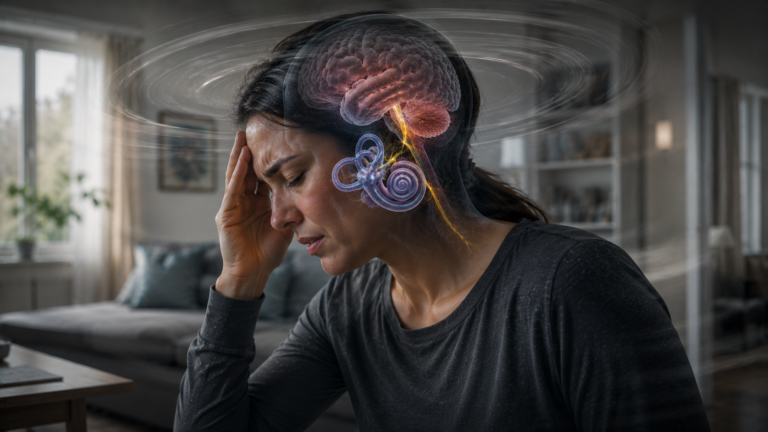
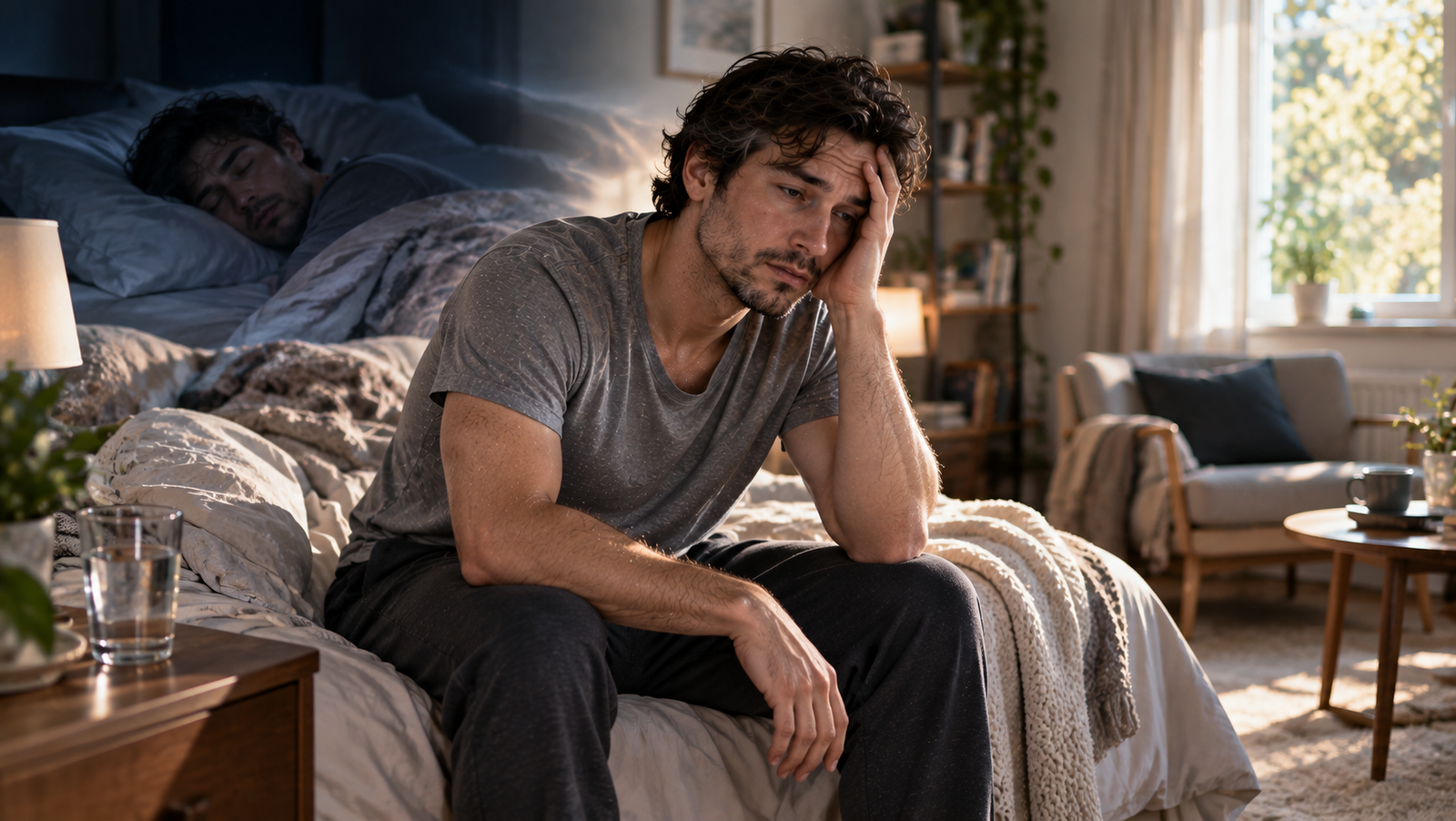
Instead, you wake up later feeling confused, heavy and strangely exhausted.
Your eyes are open.
But your thinking feels slow.
You may struggle to remember what you were doing before the nap. Simple decisions can feel harder. You might even wonder why sleeping made you feel worse.
This experience is called sleep inertia.
It is the temporary period after waking when alertness and cognitive performance remain below their normal waking level. Research has demonstrated these effects in controlled laboratory studies as well as real-world settings. (PubMed Central (PMC))
Sleep inertia is not itself a disease.
It is a feature of the transition from sleep to wakefulness.
But its intensity can vary considerably.
And one of the reasons a longer nap can sometimes leave you groggier is that you may wake at a less favorable point in the sleep-wake transition.
What Is Sleep Inertia?
Sleep inertia is the temporary reduction in alertness and performance that follows awakening.
It can involve:
- Sleepiness
- Slower thinking
- Reduced attention
- Disorientation
- Poorer reaction time
- Difficulty making decisions
- A subjective feeling of grogginess
The important word is temporary.
Your brain does not instantly move from one state to another when you open your eyes.
Sleep and wakefulness are not simply two switches.
The transition between them involves multiple physiological systems, and different aspects of performance can recover at different speeds. (PubMed Central (PMC))
That helps explain the familiar experience of waking up and thinking:
“I am awake, but I am not really functioning yet.”
Why Does Waking Up Feel So Difficult?
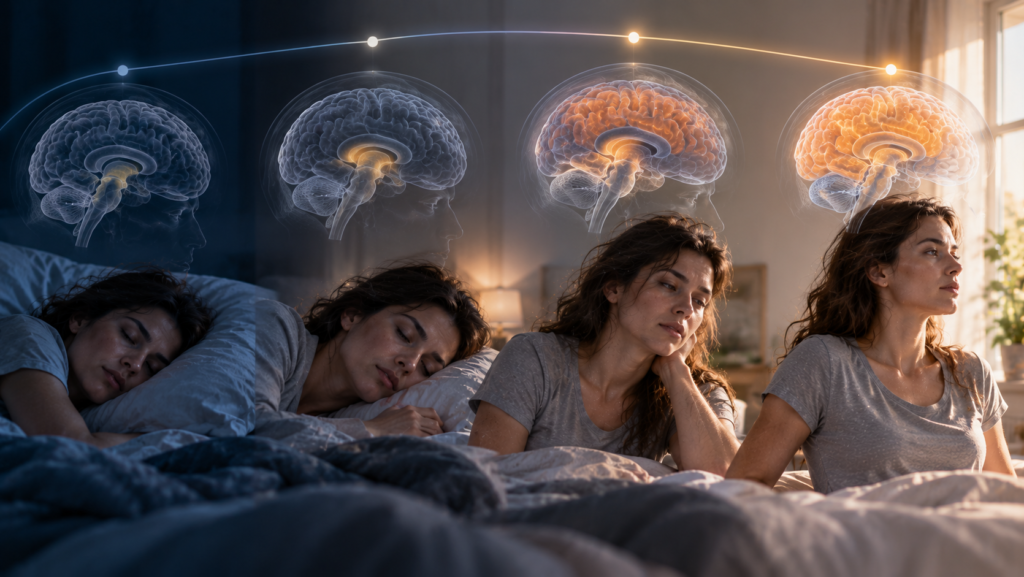
During sleep, the brain is operating in a different physiological state.
When you wake, that state has to transition toward normal waking function.
The process is not instantaneous.
Research on sleep inertia has found measurable impairments in attention and cognitive performance immediately after awakening. These effects generally become smaller as time awake increases. (PubMed Central (PMC))
This is why the first few minutes after waking can feel very different from the next 20 or 30 minutes.
You may initially struggle to think clearly.
Then, without doing anything special, you gradually become more alert.
Sleep inertia is therefore not simply “being lazy after a nap.”
It is a measurable part of the sleep-wake transition.
Why Can a Long Nap Make It Worse?
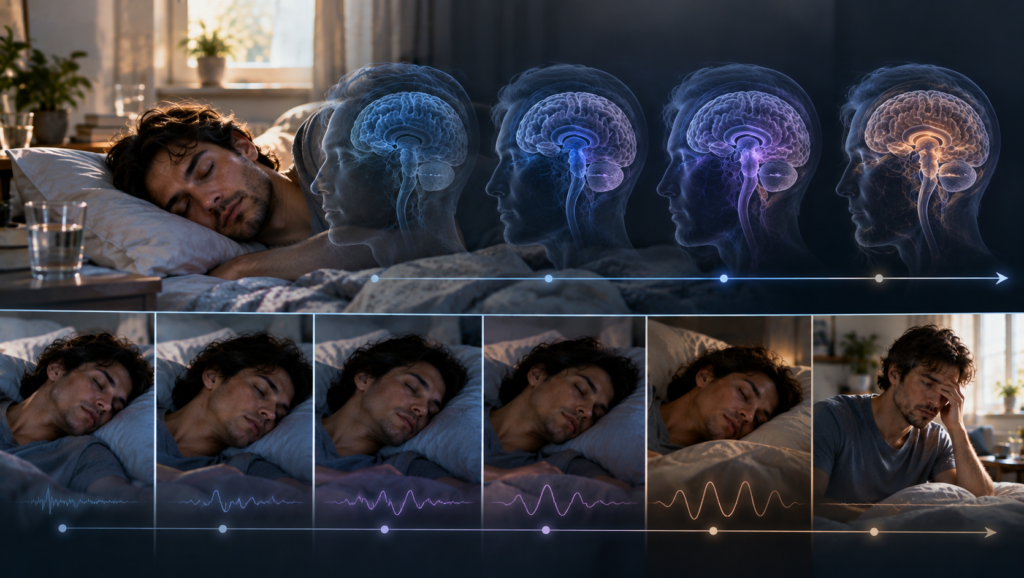
The relationship between nap length and sleep inertia is more complicated than simply saying:
Long nap equals bad nap.
But longer naps can increase the opportunity to enter deeper sleep.
Sleep researchers have paid particular attention to slow-wave sleep, often called deep sleep.
When people sleep for longer periods, they are more likely to spend time in deeper stages of non-REM sleep.
Waking from deeper sleep has often been associated with stronger sleep inertia.
However, the evidence is not perfectly consistent.
Some studies find relationships between sleep depth and post-awakening impairment. Others do not. Differences in study design, prior sleep, time of day and the way sleep depth is measured can produce different findings. (PubMed Central (PMC))
So it would be too simplistic to say:
“You feel groggy because you woke from deep sleep.”
A better explanation is that sleep depth, sleep pressure, nap duration and circadian timing can interact to influence the transition back to wakefulness.
The Role of Sleep Pressure
Your need for sleep changes depending on how long you have been awake and how much sleep you have recently obtained.
This is sometimes described as homeostatic sleep pressure.
The longer you remain awake, especially when you are already sleep deprived, the stronger the pressure to sleep becomes.
If you then take a nap, your brain may enter deeper sleep more readily.
That creates an important paradox.
A nap can be useful precisely because you are tired.
But being very sleep deprived can also make the transition out of that sleep more difficult.
Research has consistently found that prior sleep loss can increase the severity of sleep inertia. (PubMed Central (PMC))
In one set of experimental findings summarized in a major review, participants who had experienced greater prior sleep loss showed worse performance after waking from naps.
Chronic sleep restriction can also prolong the period during which performance remains below baseline after waking. (PubMed Central (PMC))
So if you are severely sleep deprived, a nap does not necessarily produce an immediate burst of full alertness.
The recovery benefit may take time to emerge.
Your Body Clock Matters Too

Sleep inertia is also influenced by circadian timing.
Your circadian system regulates changes in alertness and sleep propensity across roughly a 24-hour cycle.
That means the same nap may not produce exactly the same experience at every hour of the day.
Research indicates that sleep inertia can become more pronounced when waking occurs during a circadian low in alertness. The interaction between circadian timing and prior sleep loss can be particularly important. (PubMed Central (PMC))
This helps explain why waking at some times can feel much harder than waking at others.
It also explains why advice about naps cannot be reduced to a single universal number of minutes.
The timing of the nap matters.
So does the amount of sleep you had beforehand.
Why 20 Minutes Can Feel Different From 90 Minutes
Consider two hypothetical naps.
The first lasts about 20 minutes.
The second lasts 90 minutes.
They are not simply the same experience at different lengths.
A very short nap may end before substantial deep sleep develops.
A longer nap provides more opportunity for progression through different sleep stages.
If you wake during or shortly after deeper sleep, you may experience more pronounced sleep inertia.
This is one reason short daytime naps are often recommended when the goal is rapid recovery of alertness.
But even here, the evidence requires some caution.
A review specifically examining short naps found mixed results concerning sleep inertia and the development of slow-wave sleep. The authors concluded that recommendations about short naps depend on factors such as time of day and the person’s prior sleep-wake history. (PubMed)
So “never nap longer than 30 minutes” is not a universal law of sleep physiology.
It is a practical strategy that may reduce the risk of prolonged grogginess for many people.
How Long Does Sleep Inertia Last?

There is no single duration that applies to everyone.
Research has reported a wide range of durations depending on the study, task and circumstances.
In otherwise well-rested people, sleep inertia commonly decreases substantially within the first part of the waking period. Some studies have observed meaningful effects for around 30 minutes or longer, while more extreme conditions can produce longer-lasting impairment. (PubMed Central (PMC))
One reason the answer varies is that different abilities recover at different rates.
You might feel awake enough to walk around the house while still performing below your normal level on a demanding attention task.
Subjective alertness and objective performance do not always recover at exactly the same speed.
This matters when the task requires precision.
Driving immediately after waking is different from slowly making breakfast.
Operating machinery is different from checking your phone.
A person may feel “mostly awake” while still experiencing measurable impairment.
Why Sleep Deprivation Can Make the Problem Bigger
Imagine two people taking the same two-hour nap.
One slept normally the previous night.
The other has been sleeping only a few hours for several nights.
Their post-nap experiences may be very different.
The sleep-deprived person has greater accumulated sleep pressure.
That can increase the likelihood of deeper sleep and can intensify the impairment that occurs immediately after awakening. (PubMed Central (PMC))
This creates an important distinction.
Sometimes the real problem is not the nap.
It is the sleep debt that made the nap necessary in the first place.
A nap can temporarily improve alertness.
But it is not always an equivalent replacement for adequate nighttime sleep.
Is Sleep Inertia a Sleep Disorder?
No.
Sleep inertia itself is not a disease.
It is a normal phenomenon that can occur after ordinary nighttime sleep as well as after naps. Researchers have observed it even in people who were not significantly sleep deprived. (PubMed Central (PMC))
That distinction matters because persistent daytime sleepiness has many possible causes.
If someone regularly wakes feeling extremely impaired, struggles to remain awake during the day, or experiences severe sleepiness despite apparently adequate sleep, the issue may deserve a broader evaluation.
Sleep inertia is one possible explanation for difficulty waking.
It is not an explanation for every form of daytime fatigue.
When Grogginess May Point to Something Else
Occasional grogginess after a nap is generally not surprising.
But repeated or unusually severe problems deserve context.
For example, consider whether you are regularly:
- Getting too little sleep
- Waking at highly irregular times
- Sleeping at times that conflict with your circadian rhythm
- Taking very long or frequent naps
- Experiencing excessive daytime sleepiness
- Struggling to stay awake during routine activities
A persistent problem can have many potential explanations, including insufficient sleep or an underlying sleep disorder.
The important point is not to diagnose yourself from one episode of grogginess.
Sleep inertia is a phenomenon.
It is not a diagnosis.
Can You Reduce Sleep Inertia?

You cannot guarantee that a nap will produce a perfectly clear-headed awakening.
But several strategies have some evidence behind them.
Keep the Nap Short When Rapid Alertness Matters
Short naps can reduce the opportunity for entering deeper sleep.
Research on napping has found that shorter naps can provide alertness benefits while reducing the period of post-awakening impairment compared with longer naps. But the exact optimal duration varies with circumstances. (PubMed)
A short planned nap is therefore often a reasonable starting point if you need to return to normal activities quickly.
Avoid Treating a Nap as a Substitute for Regular Sleep
If you are chronically sleep deprived, the problem is larger than the nap itself.
Adequate regular sleep reduces the sleep pressure that can intensify sleep inertia.
A nap can help manage short-term sleepiness.
It does not remove the underlying need for sufficient sleep.
Give Yourself a Transition Period
If possible, do not schedule the most demanding task of the day for the exact minute you expect to wake.
Allow some time for alertness to return.
This is particularly important before tasks that require rapid decisions, sustained attention or physical safety.
Be Careful With Caffeine Timing
Caffeine has been studied as a possible countermeasure.
Research summarized in the sleep inertia literature suggests that consuming caffeine before a short nap can reduce some post-nap impairment. (PubMed Central (PMC))
But this is not a universal solution.
Caffeine can interfere with later sleep depending on dose, timing and individual sensitivity.
Using it to compensate repeatedly for inadequate sleep can also miss the underlying problem.
Why “Just Nap for 30 Minutes” Is Not the Whole Story
The popular advice to keep naps below 30 minutes has some scientific basis.
But sleep research does not support treating 30 minutes as a magical boundary.
Studies have produced mixed results.
The likelihood of sleep inertia depends on more than the clock.
It can depend on:
- How much sleep you had beforehand
- How long you have been awake
- The time of day
- How long you actually sleep
- Your sleep stage when awakened
- Your individual response
- What you need to do immediately afterward
A 20-minute nap after severe sleep deprivation may not behave exactly like a 20-minute nap after a normal night of sleep.
That is why sleep researchers emphasize context rather than one universal rule. (PubMed)
The Paradox of the Long Nap
Long naps illustrate something interesting about sleep.
The same biological process that makes a nap restorative can temporarily make waking difficult.
You sleep because your brain needs recovery.
As sleep deepens, the transition back to wakefulness may become harder.
So you can wake up feeling worse before you feel better.
That does not necessarily mean the nap was useless.
Longer naps can produce short-term sleep inertia while still providing later improvements in alertness and cognitive performance. (PubMed)
The timing of the benefit matters.
A nap may not be ideal immediately before a demanding task if you have no time to recover from the sleep-wake transition.
The Practical Lesson
If you wake from a nap feeling unusually groggy, there may be a simple explanation.
Your brain has not completely transitioned from sleep to wakefulness.
The effect can be stronger after longer naps, greater sleep deprivation, unfavorable circadian timing or certain stages of sleep.
But the science is more complicated than the popular rule that “long naps are bad.”
Sleep inertia is a temporary physiological and cognitive state.
It is not a disease.
It does not mean that your sleep was necessarily poor.
And it does not mean that sleeping longer always makes you more tired.
The most useful approach is to think about the entire context.
How much did you sleep last night?
How long have you been awake?
When did you nap?
How long did you sleep?
And how soon after waking do you need to perform at your best?
A short nap may be useful when you need a quick boost in alertness.
A longer sleep episode may be appropriate when your body genuinely needs recovery.
But if you need to be immediately alert, the transition out of sleep matters just as much as the sleep itself.
That strange period when your eyes are open but your brain feels several steps behind has a scientific explanation.
It is sleep inertia, and sometimes the hardest part of a nap is not falling asleep. It is waking back up.
Explore more evidence-based explanations of sleep, health, the brain, and everyday human behavior with CAVELYRA’S Body & Health collection.