
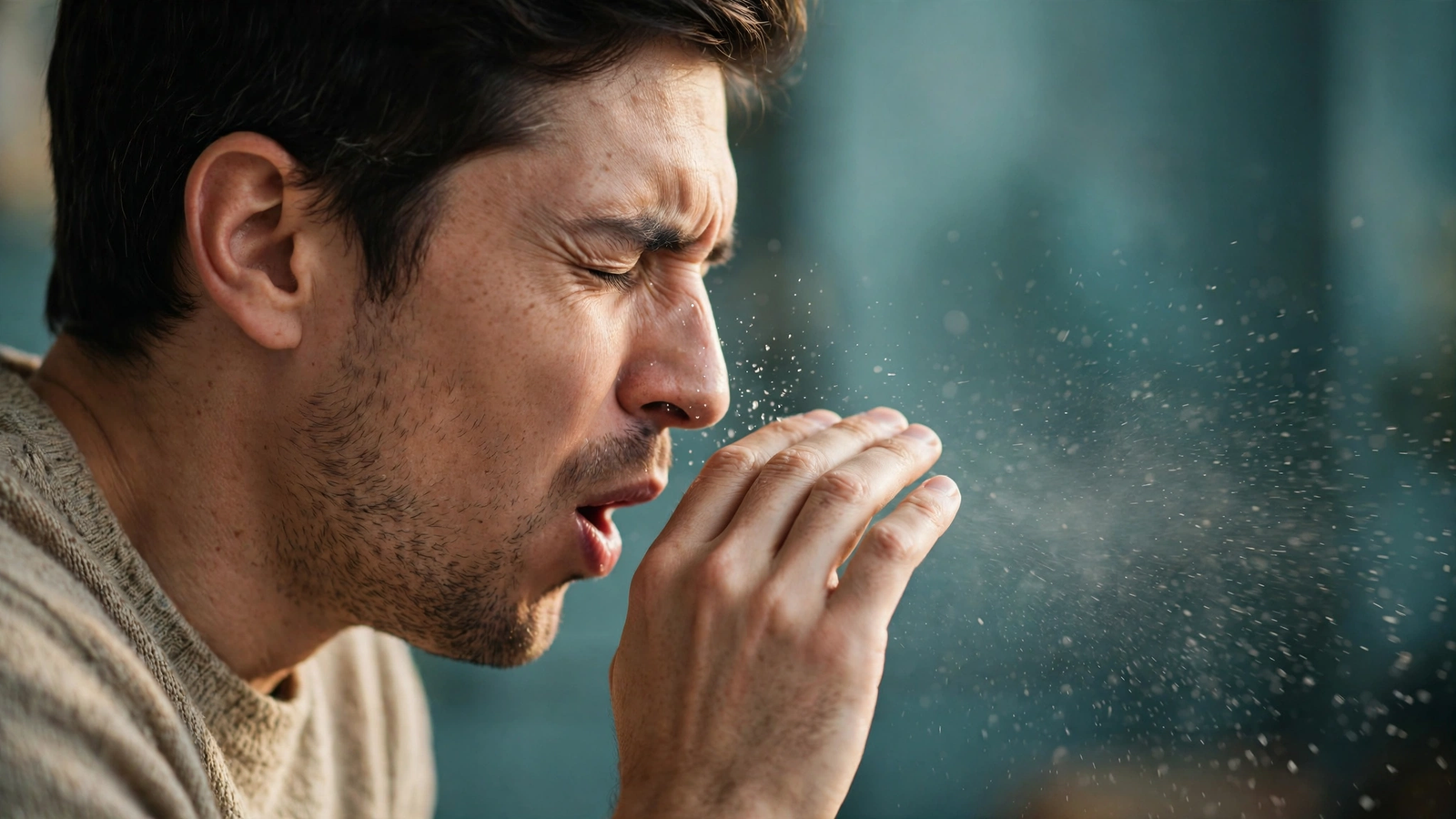
It starts as a tickle, deep inside your nose. You feel it building, you take a sharp breath in — and then, whether you want it or not, the sneeze explodes out of you. It is one of the most familiar sensations in the body, and one of the least controlled: once it starts, you cannot stop it.
Sneezing is so ordinary that we rarely ask what it is for. Behind that brief, violent burst is a precisely coordinated reflex — nerves, brain and muscles working together in a fraction of a second to protect your airways.
Quick Answers
- Why do we sneeze?: Sneezing is a protective reflex that clears irritants, dust, pollen and germs out of your nose before they can reach your lungs. [1]
- What happens during a sneeze?: Irritated nerves in the nose signal the brainstem, which orders a deep breath in, then forces air out at nearly 100 kilometres per hour — while your eyes close by reflex. [1][3]
- Is it safe to hold in a sneeze?: No. Blocking the pressure can rupture an eardrum or damage blood vessels in the eyes or brain — let it out instead. [3][4]
Your nose is the entrance to your airways, and it is also their first line of defence. Every breath you take pulls in dust, pollen, smoke and microbes along with the air. Most of the time, the nose deals with these quietly. [1]
But sometimes an irritant gets past that first defence and stimulates the sensitive nerves in the lining of the nose. When that happens, your body does not wait for you to decide what to do. It sneezes — a reflex that clears the nose in a single powerful blast. Like yawning, sneezing is an involuntary reflex: your nervous system runs it without asking your permission.
This article explains what triggers a sneeze, what happens inside your nose when one fires, why your eyes close, whether you can stop one, and whether the old stories about sneezing — that your heart stops, or your eyes might pop out — are true.
What Triggers a Sneeze?
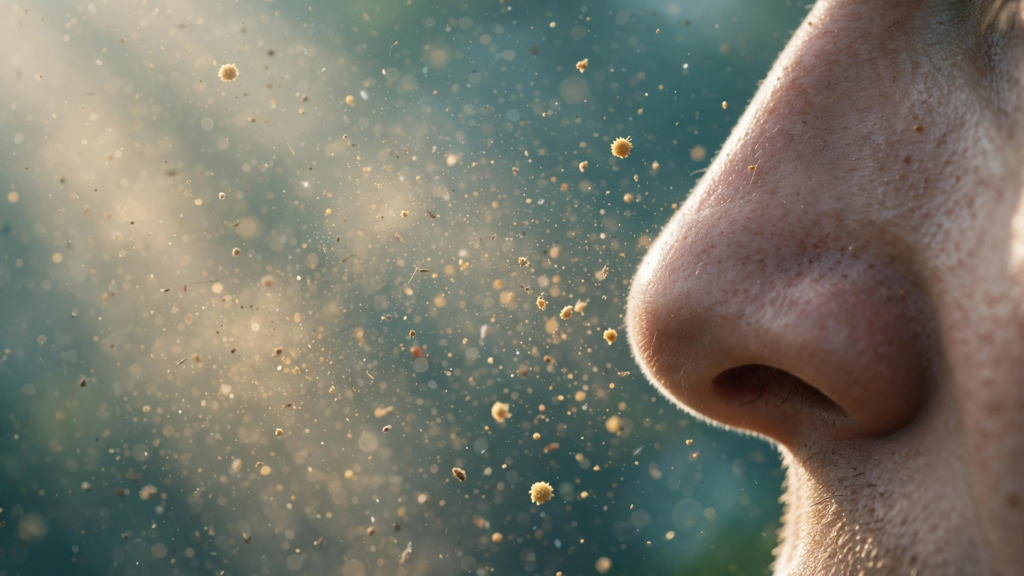
The most common triggers are things floating in the air. Dust, pollen and smoke are the usual suspects: when they land on the lining of the nose, they stimulate receptors in the mucous membrane, and those receptors send the signal that starts a sneeze. [1] Strong smells can do the same — irritating molecules such as capsaicin, the compound that makes chillies hot, and ammonia stimulate the trigeminal nerve, the main sensory nerve of the face, producing sensations of stinging, burning or pain that can set off a sneeze. [1]
Allergies and infections are the other major triggers. In an allergic reaction, allergens such as dust mites or animal dander damage the lining of the nose and activate immune cells, which release chemicals like histamine; the resulting inflammation stimulates the same nerves and triggers the reflex. [1] During a cold or flu, the infection itself inflames the lining of the nose, which is why sneezing often comes with a cold — and why a single sneeze can release up to 40,000 virus-laden droplets into the air. [1]
Some triggers are stranger. Sudden exposure to bright light makes some people sneeze — the photic sneeze reflex, covered later in this article — and a sudden change in temperature, cold or hot, can stimulate the same nasal receptors. [1] In some unlucky people, a full stomach after a large meal can bring on uncontrollable bouts of sneezing, an inherited condition that has been named snatiation, from “sneeze” and “satiation”. [2] Exercise can also trigger sneezing, probably because heavy breathing dries the nose, which then starts to drip. [2] And eyebrow-plucking can do it too: plucking a hair irritates nerve endings in the face, and that irritation fires an impulse to the nasal nerve. [2][3]
What Happens Inside Your Nose When You Sneeze?
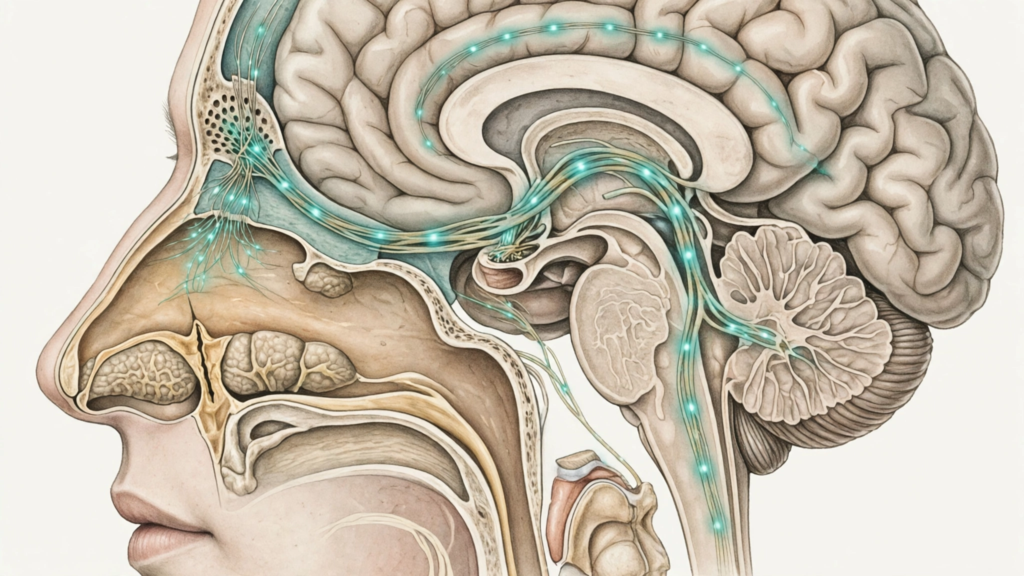
A sneeze is a two-part reflex: a sensory phase and a motor phase. It begins when chemical or mechanical irritants stimulate the sensory nerve endings in the lining of the nose. Those signals travel along the trigeminal nerve to the brainstem, where a region known as the sneeze-evoking zone integrates them and decides to fire the reflex. [1] Researchers have even identified specific “sneeze neurons” in the nose that respond to capsaicin, histamine, allergens and the influenza virus, and pass the message on to the brainstem. [1]
Once the brainstem gives the order, the motor phase takes over. The body takes a deep breath in, the throat closes, and then the chest muscles contract strongly while the throat relaxes — forcing air out through the nose and mouth at nearly 100 kilometres per hour. [1][2] The same upper airway that carries that blast is the one that, during sleep, can vibrate and produce snoring. A single sneeze can release up to 40,000 droplets, which can travel 7 to 8 metres through the air and stay suspended for up to 10 minutes. [1]
The purpose of all that force is protection. The blast expels mucus containing the foreign particles and irritants, clearing the nasal cavity and keeping harmful material out of the lower airways, where it could cause infection. [1] Sneezing is not only a response to local irritation — it is also connected to the body’s wider immune response, helping to manage infections and inflammation. [1]
Why Do Our Eyes Close When We Sneeze?
Your eyes close during a sneeze because the sneeze includes a reflex that closes them. It is an autonomic reflex — a motor action your body makes in response to a stimulus, without a conscious decision on your part. [3]
It is possible to sneeze with your eyes open, but most people have to make a conscious effort to override the reflex. [3] The effort is the hard part, not the danger: your eyes will not pop out of your head. [3][4]
What scientists cannot yet tell you is exactly why the eyes close at all. There is no definitive clinical data explaining the reason. [3] The honest answer is that the reflex is real, its purpose is not fully settled, and the old schoolyard warning is a myth.
Can You Stop a Sneeze?
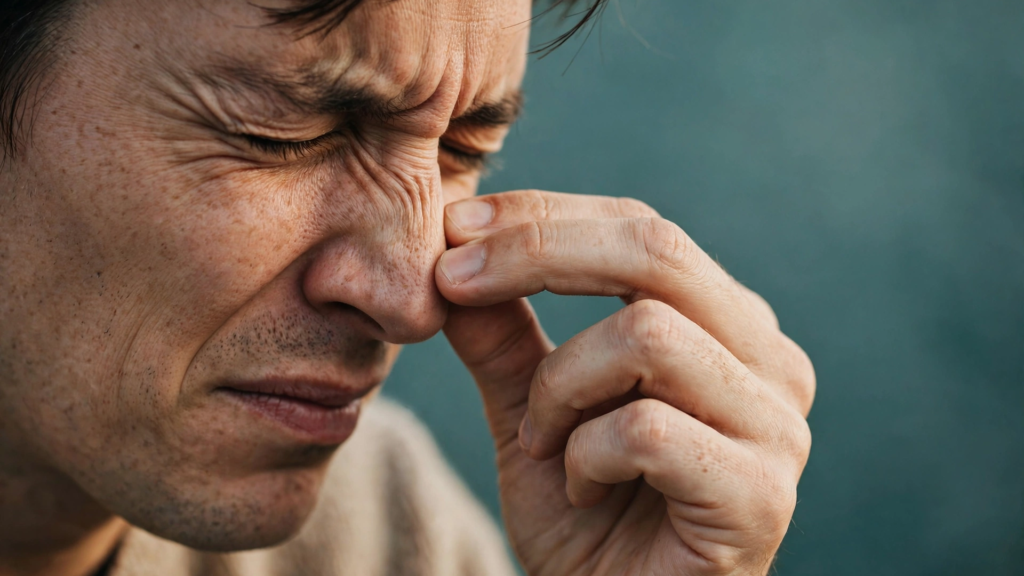
Once the reflex has fired, the sneeze runs its course. The sequence — the deep breath, the closed throat, the forced exhalation — is coordinated by the brainstem and happens automatically, which is why a sneeze that has started cannot simply be cancelled by willpower. [1][2]
What you should never do is block a sneeze that is already happening — by pinching your nose shut and keeping your mouth closed, for example. The pressure a sneeze generates has to go somewhere, and if you block its exit, it is forced into other parts of the head. That can rupture an eardrum, injure the diaphragm, or rupture blood vessels in the eyes or brain. [3] An ear, nose and throat specialist puts it plainly: blocking the release of pressure can cause a rupture of the eardrums, irritation of the throat, and, in severe cases, rupture of blood vessels in the eyes or brain. [4]
The safe thing to do is let the sneeze out. Covering your mouth and nose loosely with a tissue or your hand reduces the droplets that escape without blocking the release of pressure from the nasal airway. [4] A sneeze is loud and sometimes inconvenient — but it is far safer out than in.
Is It True Your Heart Stops When You Sneeze?
No. Your heart does not stop when you sneeze — that is a myth, and it is one of the most persistent ones about the body. [4]
What doctors do report is the feeling. According to cardiologist Dr. Richard Conti, the idea that the heart stops may come from the sense that our heart skips a beat during a sneeze. [3] That skipped-beat feeling is most likely where the myth began.
The important part is what does not change: the heart keeps beating through the whole sneeze. You may feel as though a beat has been skipped, but your heart does not stop. [3][4]
Why Do Some People Sneeze in Bright Light?
Step out of a dark room into bright sunlight and some people sneeze — sometimes two or three times in a row. This is the photic sneeze reflex, also called photoptarmosis or sun sneezing, and in its inherited form it has the splendid name ACHOO syndrome: Autosomal dominant Compelling Helio-Ophthalmic Outburst syndrome. [2]
The reflex is inherited in an autosomal dominant manner and is relatively common — the Pharmaceutical Journal puts it at between one-sixth and one-third of people worldwide. [1][2] Its precise mechanism is still not fully understood, but the most likely explanation is a cross-wiring effect: the nerves connected with sight sit close to the nerves of the nose, so a strong signal from the eyes can spill over and trigger the sneeze reflex. [1][2]
For most people it is a curiosity. But it can matter: sufferers tend to experience two or three violent sneezes within a few seconds of the bright light, and because the eyes naturally close during a sneeze, the reflex has caused accidents when drivers emerge from a long tunnel into sunlight. [2] If you are one of the people who sneezes at the sun, it is worth knowing — especially before you drive out of a tunnel.
Key Takeaways
- Sneezing is a protective reflex that clears irritants and germs out of your nose.
- Irritated nerves in the nose signal the brainstem, which coordinates the whole sneeze.
- A sneeze forces air out at nearly 100 kilometres per hour, carrying up to 40,000 droplets.
- Your eyes close by reflex during a sneeze — they will not pop out, and some people can keep them open.
- Your heart does not stop when you sneeze; it can feel as though a beat has been skipped.
- Never block a sneeze in progress — the trapped pressure can rupture an eardrum or damage blood vessels.
Conclusion
A sneeze looks like a single, simple explosion. In reality it is a chain of events: an irritant touches the lining of the nose, a signal races along the trigeminal nerve to the brainstem, and the brainstem orders a coordinated sequence of muscles to clear the airway — all in a fraction of a second, and all without your conscious involvement. [1]
That is why the old stories about sneezing are so misleading. The sneeze is not a sign that your body is failing; it is a sign that your body is defending itself. The eyes close, the heart keeps beating, and the air rushes out carrying the irritants with it. The only real danger is trying to stop it.
Explore more evidence-based explanations of the body in CAVELYRA’s Body & Health collection.
This article explains how sneezing works. It is not medical advice. If sneezing is constant, painful, or comes with other worrying symptoms, speak to a doctor.
References
- Rui R, Xin T, Chen Y, Xiang B, Chen C, Dong R, Chen Z. The sneeze reflex in physiological and pathological states: a mini review. Frontiers in Neuroscience. 2025;19:1598027. https://pmc.ncbi.nlm.nih.gov/articles/PMC12098519/
- The Pharmaceutical Journal. What makes us sneeze? https://pharmaceutical-journal.com/article/opinion/what-makes-us-sneeze (DOI: 10.1211/PJ.2015.20067881)
- Healthline. Can You Sneeze with Your Eyes Open? Will You Hurt Yourself? https://www.healthline.com/health/can-you-sneeze-with-your-eyes-open
- Banner Health. Don’t Stifle Your Sneeze. https://www.bannerhealth.com/healthcareblog/teach-me/dont-stifle-your-sneeze