
You fall asleep, your breathing continues, and then a familiar sound begins.
Snoring.
It can be soft or surprisingly loud. It may happen occasionally or almost every night.
But where does the sound actually come from?
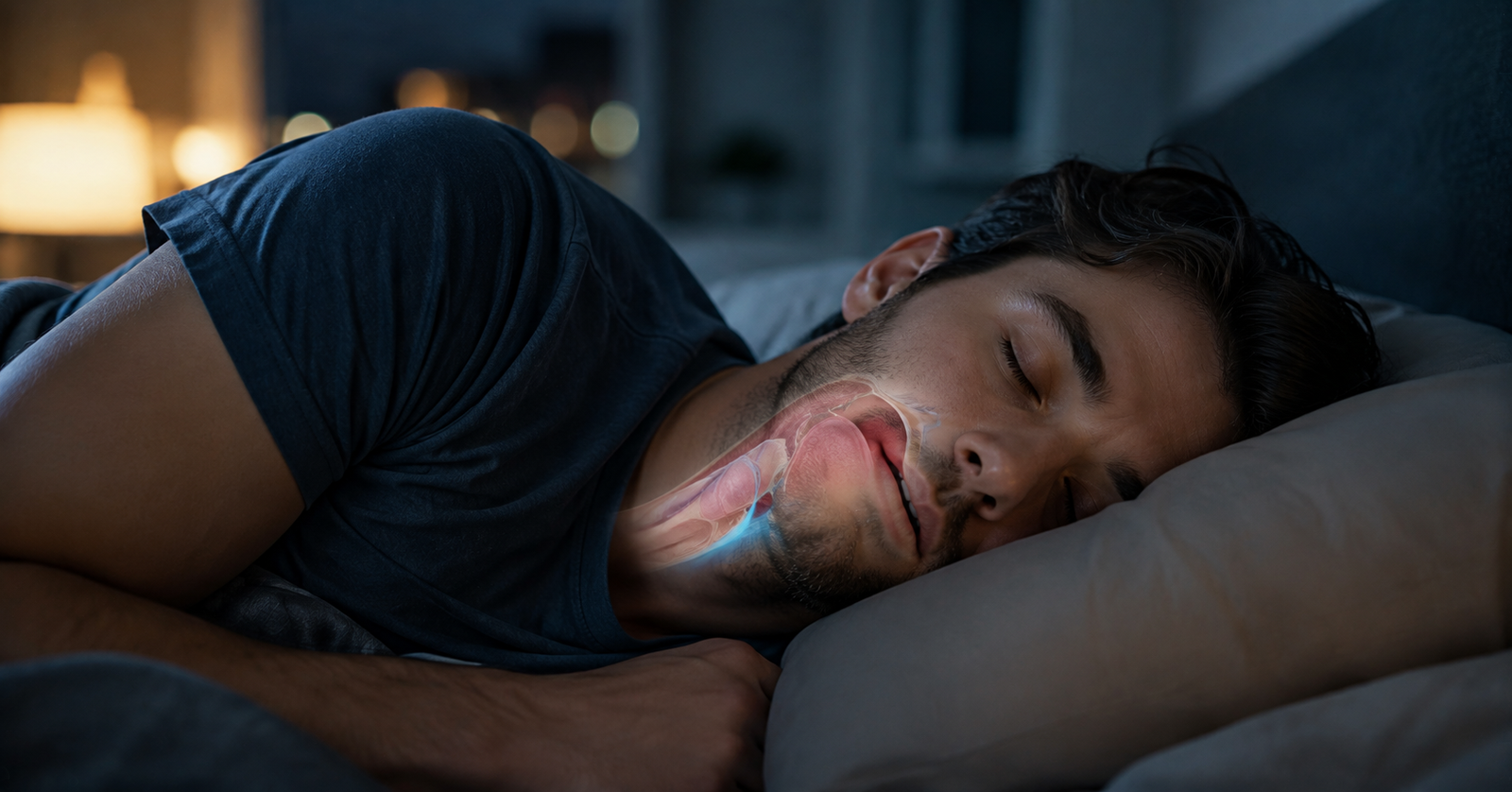
Snoring does not come from the lungs. It usually begins in the upper airway, where relaxed tissues vibrate as air moves through a narrowed passage during sleep.
For many people, occasional snoring is harmless.
But persistent or loud snoring can sometimes be associated with obstructive sleep apnea, a condition in which the upper airway repeatedly becomes narrowed or blocked during sleep.
So understanding snoring requires more than asking how to make the noise stop.
The more useful question is:
Why is the airway vibrating in the first place?

What Actually Causes the Sound?
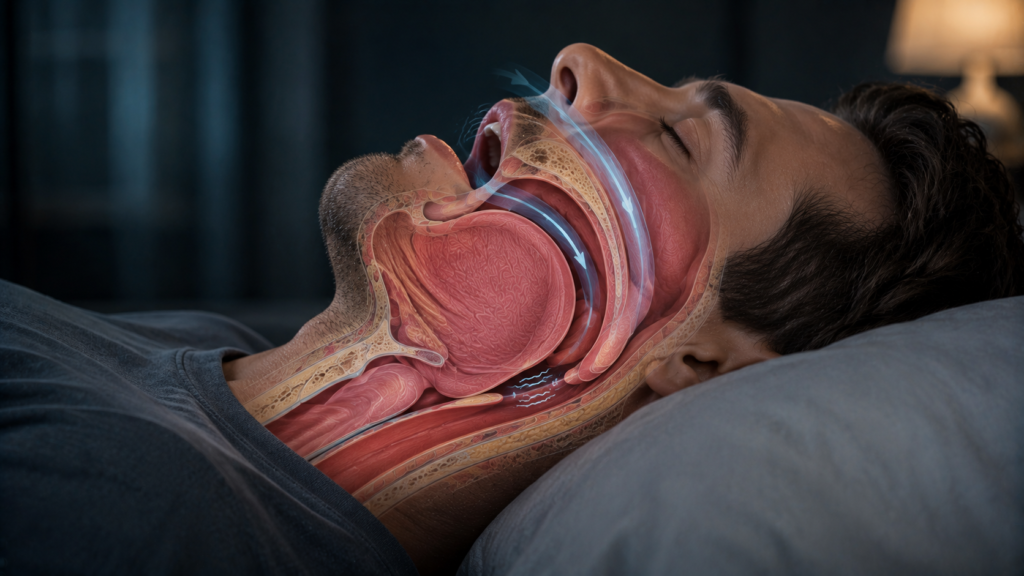

When you are awake, muscles around your throat help keep your upper airway open.
When you fall asleep, those muscles relax.
For most people, that change does not cause a serious problem. But in some people, the airway becomes narrower as the surrounding tissues relax.
Air can still move through the passage.
But now it is moving through a smaller space.
The soft palate, tongue, throat tissues, and uvula can vibrate as air passes through the narrowed airway. That vibration produces the sound we recognize as snoring.
A useful way to picture it is to think about air moving through a flexible tube.
When the passage changes shape, airflow changes with it.
The surrounding tissues can begin to vibrate.
That vibration becomes sound.
So snoring is essentially an airflow-and-tissue-vibration problem in the upper airway.
Why Do We Snore More When We Are Asleep?
The biggest difference between being awake and asleep is muscle activity.
While you are awake, muscles supporting the tongue, soft palate, and throat help maintain the shape of the airway.
Sleep changes that activity.
The tissues become more relaxed.
For some people, the airway becomes narrow enough for vibration to occur.
This explains why someone can breathe normally while awake but begin snoring soon after falling asleep.
The airway itself has not necessarily developed a new problem.
Its behavior has changed because the muscles supporting it are now more relaxed.
That distinction is important.
Snoring is not simply a problem with the lungs or breathing effort.
It is often a problem involving the upper airway.
Why Is Snoring Worse When You Sleep on Your Back?
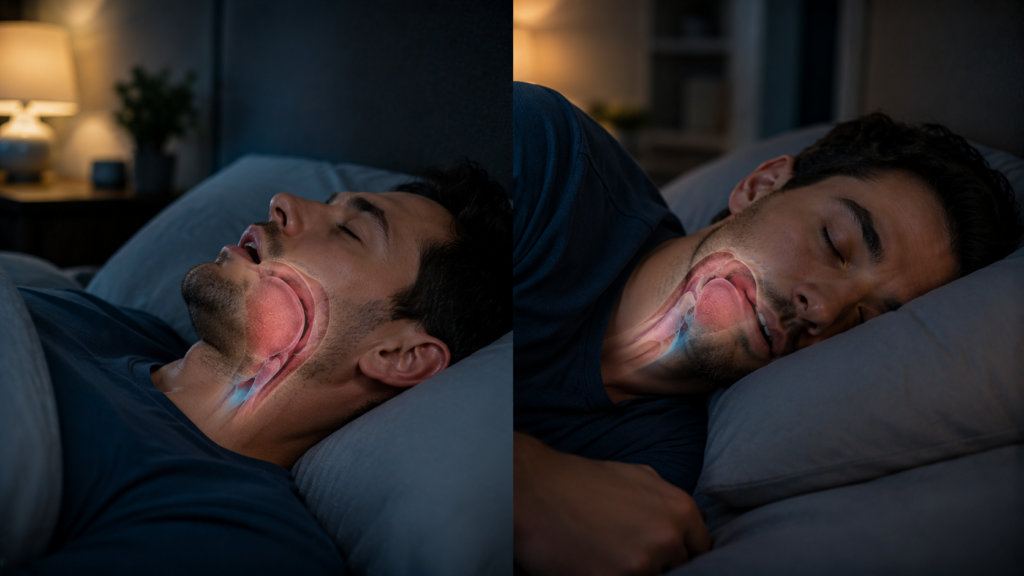

Your sleeping position can change the shape of the upper airway.
When you lie on your back, gravity can allow the tongue and other soft tissues to move backward.
For some people, that makes the airway narrower and increases the likelihood of snoring.
This is why changing sleep position can sometimes make a noticeable difference.
If someone mainly snores while sleeping on their back, sleeping on their side may reduce the problem.
But this is not a universal solution.
If an underlying airway problem or obstructive sleep apnea is present, changing position alone may not be enough.
That is why it is useful to understand why someone is snoring rather than assuming that every case has the same cause.
Can a Blocked Nose Cause Snoring?
Yes.
Your nose is part of the breathing pathway.
When nasal airflow is restricted by a cold, allergies, chronic congestion, or a structural problem such as a deviated nasal septum, breathing through the nose can become more difficult.
You may then breathe more through your mouth during sleep.
That can contribute to the conditions that produce snoring.
This also explains why snoring can temporarily become worse when you have a cold.
The underlying airway conditions have changed.
If congestion is temporary, the snoring may improve when the illness or allergy settles.
Persistent nasal obstruction is different and may need medical assessment.
Why Does Alcohol Sometimes Make Snoring Worse?
Alcohol can relax the muscles of the throat.
That can make the upper airway more likely to narrow during sleep.
As the airway becomes narrower, the surrounding tissues can vibrate more easily.
The result can be louder or more frequent snoring after drinking alcohol close to bedtime.
This is particularly relevant for people who already have other risk factors for obstructive sleep apnea.
If you notice a consistent relationship between drinking alcohol and worse snoring, avoiding alcohol close to bedtime may reduce one contributing factor.
But it is not a treatment for sleep apnea.
Can Lack of Sleep Make Snoring Worse?
It can.
Sleep deprivation can contribute to greater relaxation of throat tissues, which may increase the tendency to snore.
This can create an unpleasant cycle.
You sleep poorly.
Your airway may become more prone to narrowing.
Your snoring becomes worse.
And your sleep can become even more disturbed.
Getting enough sleep is therefore part of basic snoring management.
But persistent snoring should still be considered in its broader context rather than being blamed entirely on sleep deprivation.
Does Body Weight Affect Snoring?
Body composition can influence the upper airway.
Additional tissue around the neck and upper airway can contribute to airway narrowing, increasing the likelihood of snoring and obstructive sleep apnea.
But this does not mean that everyone who snores has excess weight.
People can snore for many different reasons.
Airway anatomy, nasal obstruction, sleep position, alcohol, sleep deprivation, and other factors can all contribute.
When excess weight is contributing to airway narrowing, weight reduction may improve snoring and can also help reduce the risk or severity of obstructive sleep apnea.
The important point is to treat body weight as one possible factor, not as an explanation for every case.
Is Snoring the Same as Sleep Apnea?
No.
This is one of the most important things to understand about snoring.
Snoring occurs when airflow causes vibration in the upper airway.
Obstructive sleep apnea involves repeated episodes in which the upper airway becomes significantly narrowed or blocked, reducing or temporarily stopping airflow during sleep.
Not everyone who snores has sleep apnea.
But persistent or loud snoring can be one warning sign.
The concern becomes greater when snoring occurs alongside symptoms such as:
- witnessed pauses in breathing
- gasping or choking during sleep
- excessive daytime sleepiness
- morning headaches
- difficulty concentrating
- restless sleep
- waking with a dry mouth
These symptoms should not simply be dismissed as ordinary snoring.
What Happens During Obstructive Sleep Apnea?
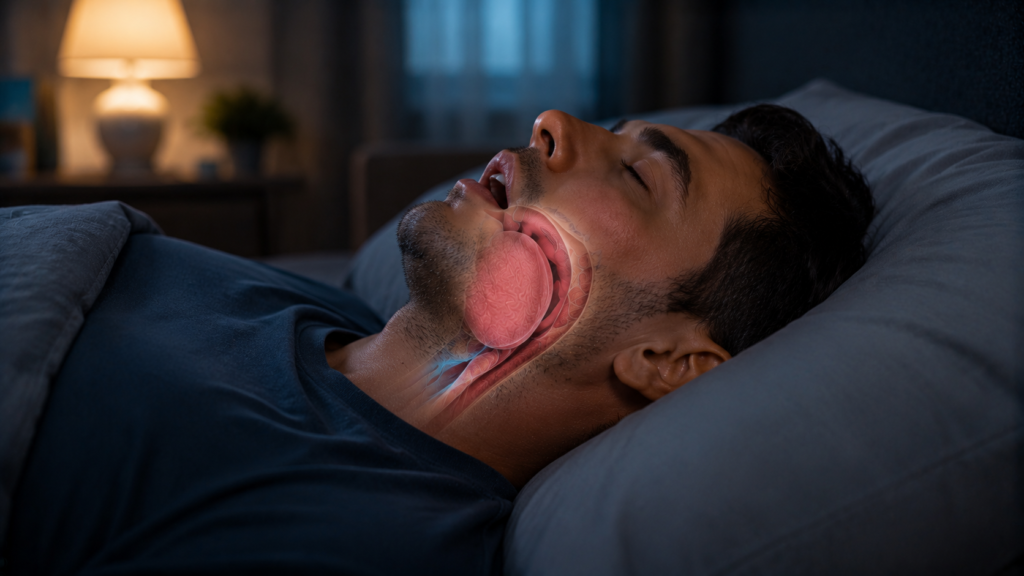

During obstructive sleep apnea, the muscles supporting the upper airway relax and the airway can become severely narrowed or blocked.
Airflow decreases or temporarily stops.
As the breathing disruption occurs, the body's oxygen level can fall.
The brain detects the problem and briefly activates the body, helping reopen the airway.
A person may then snort, gasp, or choke before breathing resumes.
These events can happen repeatedly throughout the night.
The person experiencing them may not remember waking up.
That is one reason sleep apnea can go unnoticed.
Someone sharing the bedroom may actually notice the breathing pauses and gasping before the person with the condition realizes anything is wrong.
Can You Tell How Serious the Problem Is by How Loud the Snoring Sounds?
Not reliably.
It is tempting to assume that louder snoring means more severe airway obstruction.
But snoring volume alone does not reliably measure the severity of sleep apnea.
This is an important distinction.
Someone can produce very loud snoring without having severe sleep apnea.
Someone else may have relatively quiet snoring while still experiencing significant sleep-disordered breathing.
The important question is not:
How loud is the snoring?
It is:
What is happening to the person's breathing while they sleep?
That requires looking beyond the sound itself.
Why Can Snoring Make You Tired?
Snoring itself can disturb sleep.
But the bigger concern is snoring associated with obstructive sleep apnea.
Repeated interruptions in breathing can produce repeated brief arousals from sleep.
A person may not remember these awakenings, but the normal organization of sleep can still be disrupted.
The result can be poor-quality sleep and daytime symptoms such as:
- sleepiness
- difficulty concentrating
- irritability
waking feeling unrefreshed
If you regularly wake feeling exhausted despite spending enough time in bed, persistent snoring deserves more attention.
The problem may be more than the noise.
What Can You Do to Reduce Ordinary Snoring?
The best approach depends on the cause.
If you mainly snore while sleeping on your back, try sleeping on your side.
If nasal congestion contributes to the problem, addressing the congestion may improve airflow.
If alcohol consistently makes your snoring worse, avoiding it close to bedtime may help.
If insufficient sleep contributes to the problem, getting adequate sleep may reduce one factor that promotes greater throat relaxation.
And when excess weight contributes to airway narrowing, gradual weight reduction may improve snoring.
These measures can help some people with ordinary snoring.
But they should not be treated as substitutes for medical evaluation when symptoms suggest sleep apnea.
What About Nasal Strips and Other Anti-Snoring Products?
Some products can make breathing through the nose easier.
External nasal strips and nasal dilators may help people whose snoring is related to nasal airflow problems.
But they do not treat obstructive sleep apnea.
Why?
Because nasal strips work at the nose.
Sleep apnea can involve collapse or significant narrowing farther down in the upper airway.
A product that makes snoring quieter is therefore not necessarily treating the underlying problem.
If sleep apnea is suspected, proper evaluation matters more than simply reducing the sound.
How Is Persistent Snoring Evaluated?
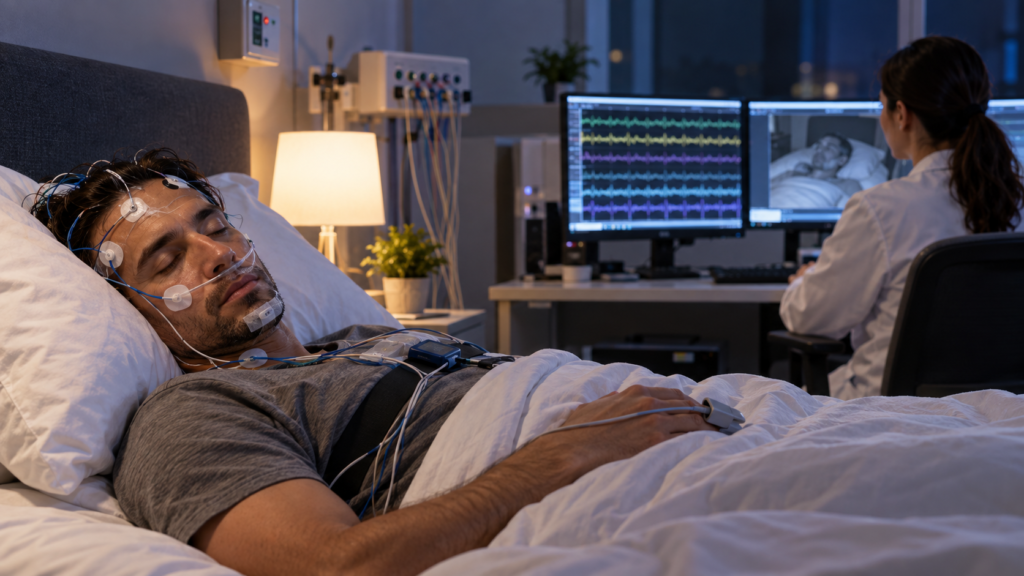

A healthcare professional will usually consider several things:
- your symptoms
- medical history
- airway anatomy
- sleep patterns
- information from someone who observes your sleep
A person who shares your bedroom can provide particularly useful information.
They may notice:
- loud snoring
- breathing pauses
- gasping
- choking
- unusual breathing patterns
If sleep apnea is suspected, a sleep study may be recommended.
Depending on the situation, testing can take place in a sleep center or, for some people, at home.
Sleep studies can measure breathing patterns, blood oxygen levels, heart rate, and other physiological signals during sleep.
The purpose is to determine what is actually happening while you sleep.
That is much more informative than judging the problem by sound alone.
How Is Snoring Treated When Sleep Apnea Is Present?
Treatment depends on the diagnosis and its severity.
Some people benefit from lifestyle changes.
Selected patients may benefit from oral appliances that alter the position of the jaw or other structures to help keep the airway open.
Continuous positive airway pressure, or CPAP, is a commonly used and highly effective treatment for obstructive sleep apnea. It provides pressure that helps keep the upper airway open during sleep.
Some people may require other treatments, including surgery or additional airway therapies, depending on their anatomy and condition.
The important point is that treatment should follow an appropriate evaluation.
There is no single anti-snoring solution that works for everyone.
When Should You Take Snoring Seriously?
Occasional snoring is usually not a major concern.
But persistent snoring deserves more attention when it appears alongside other symptoms.
Pay particular attention to:
- repeated pauses in breathing
- gasping or choking during sleep
- excessive daytime sleepiness
- morning headaches
- difficulty concentrating
- restless sleep
- waking with a dry mouth
These symptoms can occur with obstructive sleep apnea and should be discussed with a healthcare professional.
Regular snoring in children also deserves attention.
Children can develop sleep-disordered breathing for different reasons, including enlarged tonsils or adenoids and differences in airway anatomy.
Snoring Is a Sound, but It Can Also Be a Signal
Snoring sounds simple.
Air moves.
Tissues vibrate.
A noise comes out.
But the reason that happens can vary considerably.
For one person, the main factor may be sleeping position.
For another, it may be nasal congestion.
For another, alcohol or insufficient sleep may make an existing tendency worse.
And for some people, persistent snoring may be associated with obstructive sleep apnea.
That is why the most useful question is not simply:
“How do I stop snoring?”
It is:
“Why am I snoring?”
Once the underlying cause is understood, the appropriate response becomes much clearer.
Why Do We Snore?
Snoring is produced by a relatively simple physical event.
Air moves through a narrowed upper airway, and relaxed tissues vibrate.
But the reason the airway becomes narrow can vary from person to person.
Sleep position, nasal congestion, alcohol, insufficient sleep, airway anatomy, and body composition can all play a role.
Sometimes the cause can be addressed with a relatively simple change.
But persistent snoring can also be a sign that breathing is being repeatedly disrupted during sleep.
That is why the sound itself is not the whole story.
Snoring may be nothing more than a nighttime nuisance.
Or it may be a clue that something important is happening to your breathing while you sleep.
Key Takeaways
- Snoring usually occurs when relaxed upper-airway tissues vibrate as air moves through a narrowed passage.
- The soft palate, tongue, throat tissues, and uvula can all contribute to the sound.
- Sleep naturally relaxes muscles that help support the upper airway.
- Sleeping on your back can increase airway narrowing in some people.
- Nasal congestion and structural nasal problems can contribute to snoring.
- Alcohol can relax throat muscles and make snoring more likely.
- Insufficient sleep can also increase the tendency to snore.
- Body composition can influence airway narrowing, but excess weight is not the only cause of snoring.
- Not everyone who snores has obstructive sleep apnea.
- Snoring loudness alone does not reliably indicate the severity of a breathing problem.
- Snoring accompanied by breathing pauses, gasping, choking, or significant daytime sleepiness deserves medical evaluation.
- Treatment depends on the underlying cause, which is why persistent or concerning snoring should be properly evaluated.
Conclusion
Snoring is produced by a relatively simple physical event: air moves through a narrowed upper airway, and relaxed tissues vibrate.
But the reason that airway becomes narrow can vary.
Sleep position, nasal congestion, alcohol, insufficient sleep, airway anatomy, and body composition can all contribute.
Sometimes a relatively simple change can reduce the problem.
But persistent snoring can also be a sign that breathing is being repeatedly disrupted during sleep.
That is why the sound itself is not the whole story.
Snoring may be a nighttime nuisance, or it may be a clue that something important is happening to your breathing while you sleep.
Your body often gives you clues before you understand what they mean.
CAVELYRA explores the science behind those everyday signals, from sleep and breathing to the remarkable systems that keep the human body working.
Explore more CAVELYRA’s Body & Health collections to understand the science behind sleep, breathing, and the everyday processes that keep your body functioning.