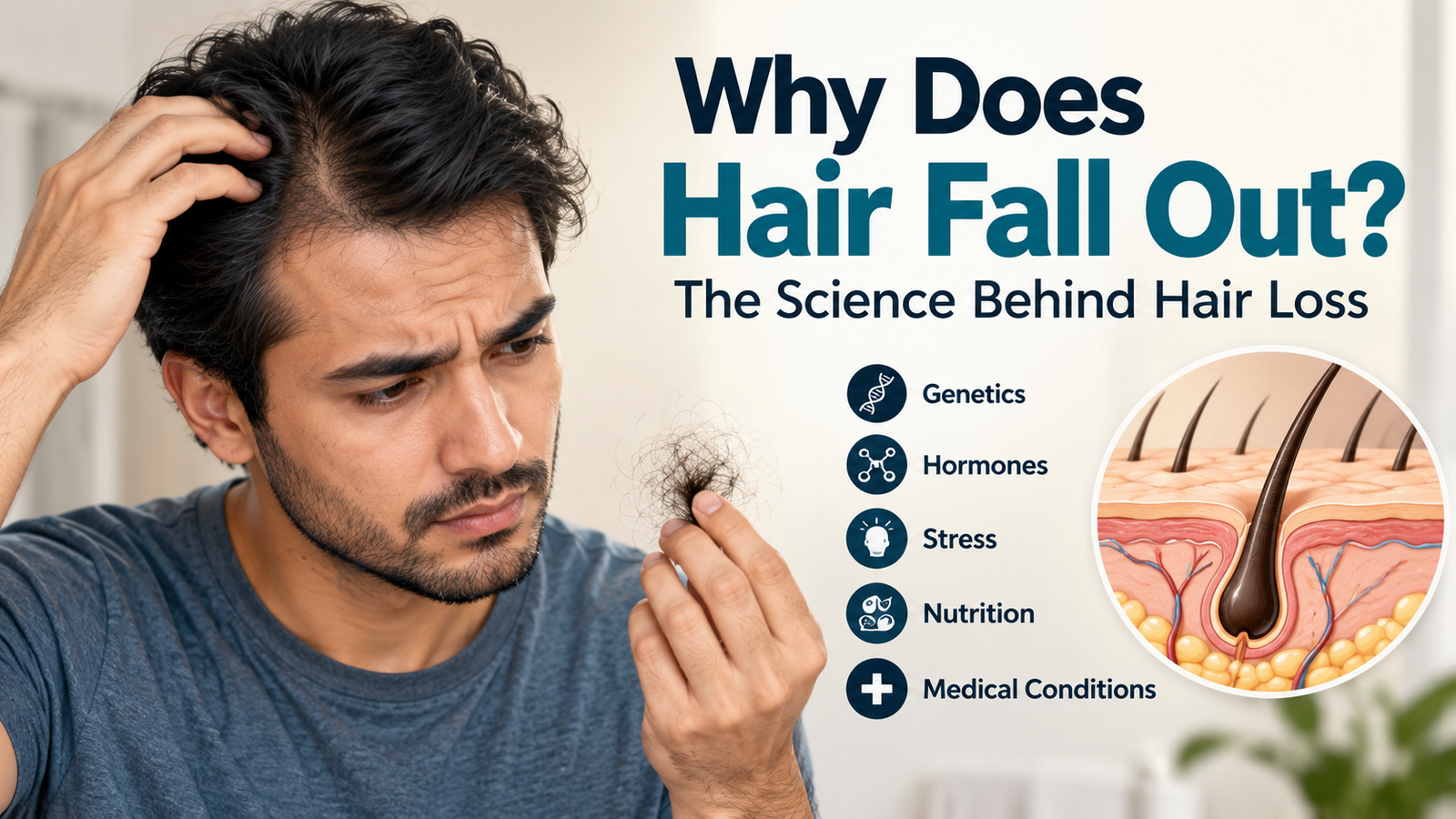
You wake up and notice several hairs on your pillow.
Quick answers
- Is some shedding normal? Yes. Hair follicles cycle naturally, so some shedding is expected; a noticeable change in pattern or amount deserves attention.
- What causes hair loss? Common causes include hereditary pattern hair loss, illness or stress, hormonal or nutritional problems, autoimmune conditions, tight hairstyles, medications, and hair-shaft breakage.
- What should you do? Note when the loss began and its pattern, then seek an appropriate assessment because treatment depends on the cause.
You shower and see more strands in the drain. You brush your hair and find more in the brush.
A few hairs are normal. Your scalp constantly sheds old hairs as part of the natural hair cycle. The more important question is whether that balance has changed.
Are you shedding more than before? Is your hair becoming thinner? Is your part getting wider? Is your hairline changing? Are smooth bald patches appearing?
These patterns can provide important clues.
Hair loss is not one condition with one cause. It can result from changes in the hair growth cycle, inherited follicle sensitivity, immune activity, hormonal disorders, nutritional problems, illness, medications, physical damage, or destruction of the follicle itself.
Your Hair Grows From a Follicle
The visible hair shaft is only part of the system.
Hair grows from a microscopic structure called a hair follicle, which sits inside the skin. Cells within the follicle divide and produce keratin as the growing hair is pushed upward and eventually emerges from the scalp.
This distinction matters because cutting or shaving your hair does not change the follicle itself. The living machinery responsible for hair production remains beneath the skin.
The Hair Growth Cycle
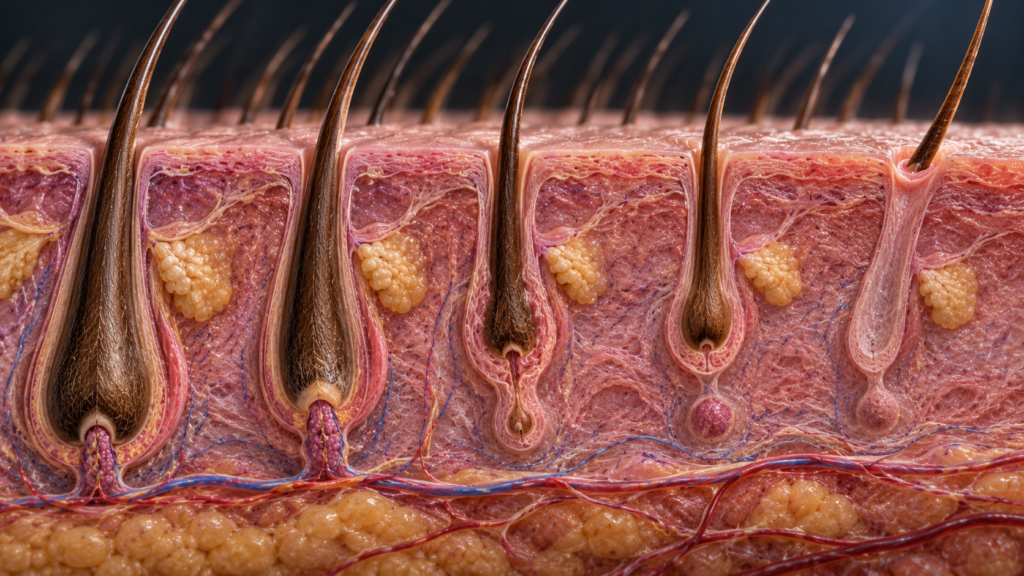
Each follicle moves through a repeating cycle.
During anagen, the active growth phase, cells divide rapidly and the hair grows. Catagen is a shorter transition phase in which growth slows and the follicle changes. During telogen, the follicle rests and eventually releases the old hair.
Because individual follicles are at different stages, your entire scalp does not shed at once. Some hairs are growing while others are resting or being released.
Shedding is therefore a normal part of hair biology. The problem occurs when the balance changes.
Why Can Hair Suddenly Start Shedding?
Telogen effluvium occurs when an unusually large number of follicles enter the resting and shedding phase around the same time.
Possible triggers include major illness, high fever, surgery, rapid weight loss, childbirth, and significant psychological stress.
One of the confusing features is the delay. You may recover from an illness and feel completely normal before increased shedding begins months later.
The delay reflects the hair cycle. A physiological stressor can shift follicles toward the resting phase, but the affected hairs may not be released immediately.
Postpartum shedding follows a similar principle. Hormonal changes during and after pregnancy can shift many follicles into the resting phase, leading to noticeable shedding several months after delivery. The follicles can remain capable of producing new hair.
Hereditary Hair Loss Works Differently
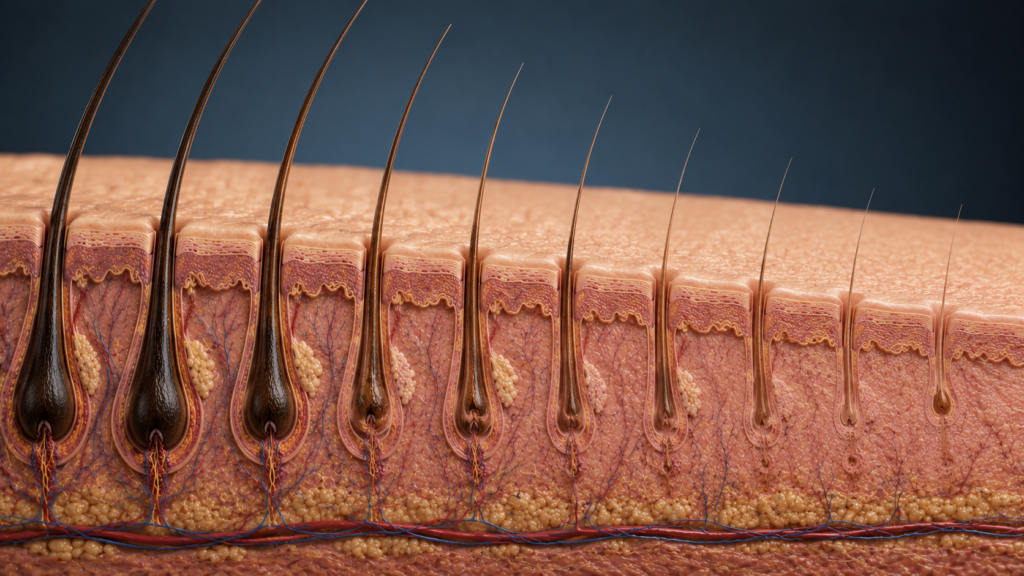
Androgenetic alopecia, or pattern hair loss, involves gradual miniaturization of genetically susceptible follicles.
The follicles become progressively smaller and produce hairs that are thinner, shorter, and less pigmented. Over repeated growth cycles, visible hair density decreases.
In men, the process commonly involves recession at the temples or thinning around the crown.
In women, the part may become wider and overall density may decrease, while the frontal hairline is often relatively preserved.
Dihydrotestosterone, or DHT, is an androgen derived from testosterone. In genetically susceptible scalp follicles, androgen signaling can contribute to miniaturization.
This does not simply mean that pattern hair loss results from having too much testosterone. Genetic sensitivity of the follicles matters. The same hormonal environment can produce different effects in different body regions and in different people.
Other Conditions Can Cause Hair Loss
Alopecia areata has a different mechanism. It is an autoimmune condition in which the immune system attacks hair follicles. It can produce sudden, smooth, round bald patches and may also affect eyebrows, eyelashes, beard hair, or other areas.
Scarring alopecia is another important category. In some inflammatory conditions, the follicle can be permanently destroyed and replaced by scar tissue. Once the follicle is destroyed, that site cannot produce a new hair.
Repeated tension can also damage follicles. Tight ponytails, braids, cornrows, extensions, and other hairstyles that continuously pull on the scalp can cause traction alopecia. Early damage may improve when the tension stops, but long-term traction can cause permanent follicle damage.
Pain or tenderness after styling can be a warning that the tension is excessive.
Hair Breakage Is Different From Hair Loss
Sometimes the follicle remains healthy but the hair shaft breaks.
Heat, chemical treatments, harsh hair care, and mechanical damage can weaken the shaft. The result can look like thinning even though the follicle continues producing hair.
This distinction matters.
Hair shedding means a hair leaves the follicle. Hair breakage means the shaft breaks. Hair loss can involve reduced production, follicle miniaturization, or permanent follicle destruction.
Different mechanisms require different approaches.
Can Health Problems Affect Hair?
Yes.
Thyroid disorders can affect hair growth and may cause noticeable thinning or increased shedding.
Iron deficiency can also be associated with hair loss. If a deficiency exists, correcting it may help. But taking iron without establishing a deficiency is not automatically appropriate.
Severe protein deficiency can affect hair because the body needs amino acids to produce keratin. Rapid weight loss can create an energy deficit and reduce nutrient intake, which can affect hair growth and lead to increased shedding months later.
Severe zinc deficiency can also contribute to hair loss. The important point is that nutritional problems should be identified rather than assumed.
More Supplements Are Not Always Better
Biotin deficiency can cause hair loss, but true deficiency is uncommon. Taking large doses without evidence of deficiency is not a universal solution.
Excessive vitamin A can contribute to hair loss, and excessive selenium can cause hair loss and toxicity.
A nutrient can therefore be essential at normal levels and harmful at excessive levels.
Hair-loss supplements cannot correct every possible cause. They cannot reverse genetic follicle sensitivity, automatically correct autoimmune disease, repair every damaged follicle, or restore a follicle destroyed by scarring.
Illness, Infection, and Inflammation
Severe illness and major surgery can place substantial physiological stress on the body and may trigger telogen effluvium.
Scalp infections can cause another pattern of hair loss. Scalp ringworm, for example, can produce scaling, inflammation, broken hairs, and patches of hair loss.
Hair loss accompanied by redness, scaling, itching, pain, burning, or crusting can provide important clues about an underlying scalp disorder.
Eyebrow loss and nail changes can also provide additional information in some autoimmune or scarring forms of alopecia.
Hormones Can Provide Additional Clues
Hair follicles respond to hormonal signals. Hair loss can therefore occur alongside other hormonal symptoms.
In some women, irregular menstrual cycles, increased facial hair, acne, or other signs of androgen excess can suggest a hormonal disorder such as PCOS.
Hair loss may therefore be one part of a broader hormonal pattern rather than an isolated problem.
The Pattern Often Provides the Biggest Clue
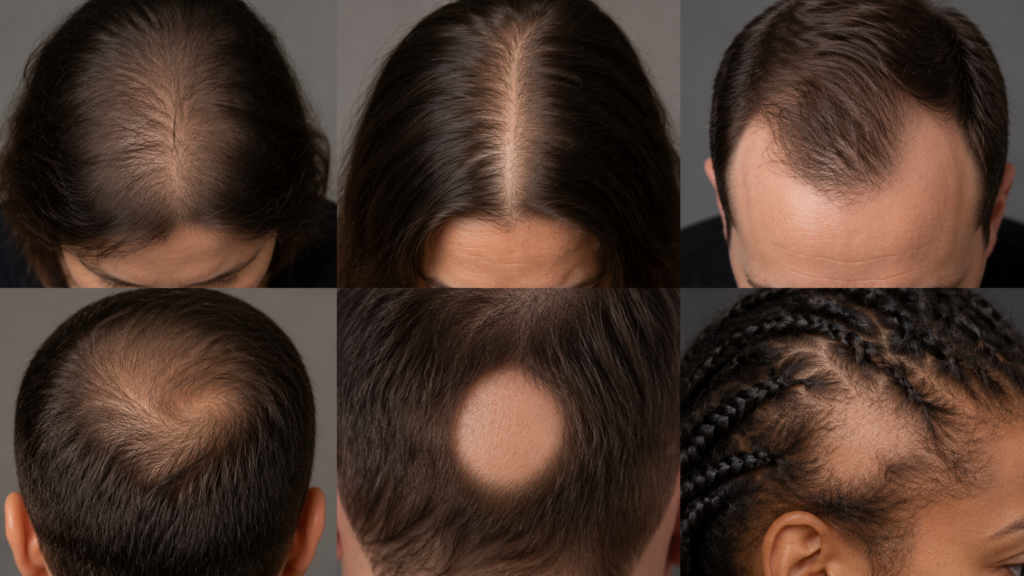
The location and pattern of hair loss can help narrow down its possible cause.
A gradually receding hairline or thinning around the crown can suggest pattern hair loss. A widening part may be an early sign of female pattern hair loss.
Diffuse shedding can occur with telogen effluvium, nutritional deficiency, thyroid disease, medications, or systemic illness.
A smooth, round bald patch can suggest alopecia areata. Hair loss accompanied by scalp inflammation may point toward an inflammatory or scarring condition. Hair loss associated with repeated tension from tight hairstyles can suggest traction alopecia.
The pattern of hair loss can therefore provide more useful information than simply counting how many hairs you notice on a particular day.
How Is Hair Loss Diagnosed?
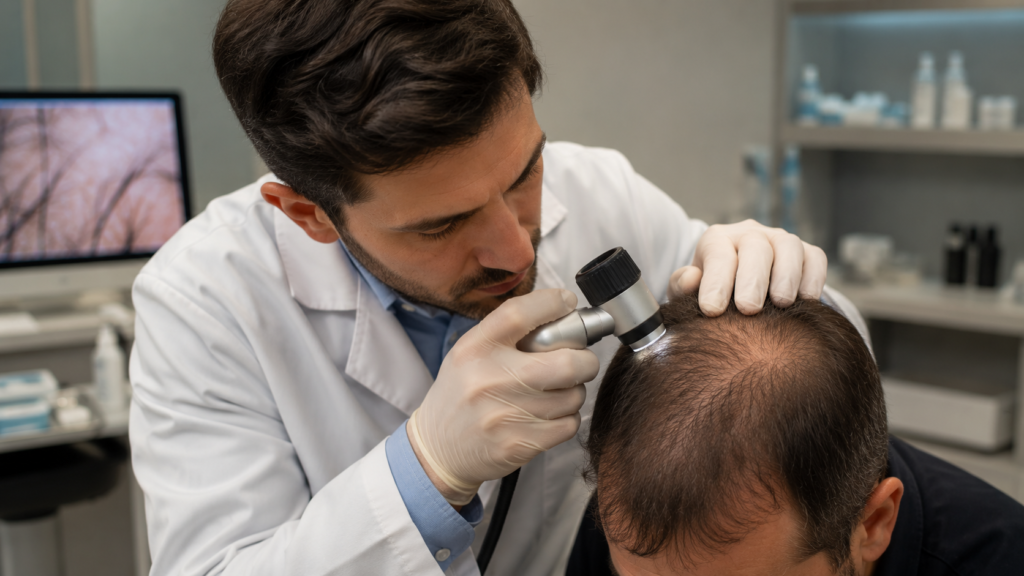
Diagnosis begins with the history and scalp examination.
A clinician may ask when the hair loss began, whether it was sudden or gradual, whether it is diffuse or patchy, and whether you recently experienced illness, fever, surgery, major stress, rapid weight loss, childbirth, medication changes, or changes in hairstyle.
Family history can also provide important information.
A dermatologist may examine hair density, individual shafts, follicular openings, scalp skin, and hair shaft diameter. Dermoscopy can reveal structures that are difficult to see with the naked eye.
A hair pull test may provide information about active shedding. Blood tests may be considered when nutritional, hormonal, thyroid, or systemic causes are suspected. A biopsy may occasionally be necessary.
There is no universal blood-test panel for hair loss. Testing should be guided by the history and examination.
Why Early Diagnosis Matters
Treatment depends on the cause.
Some forms of hair loss improve when the underlying trigger is removed or treated. Other forms require longer-term treatment to slow progression or encourage regrowth.
In hereditary hair loss, follicles can gradually become smaller. Once a follicle becomes severely miniaturized, regrowth can become more difficult.
The issue is even more important in scarring alopecia. If inflammation destroys a follicle, that follicle cannot produce a new hair.
Early assessment can therefore help identify conditions where additional follicle damage may be preventable.
What Treatments Are Available?
There is no universal hair-loss treatment.
Minoxidil is an established treatment for some forms of hair loss. It can slow hair loss and promote some regrowth in certain people, but results vary and continued use is generally needed to maintain benefits.
Finasteride is used for male pattern hair loss. It reduces the conversion of testosterone to DHT and can slow follicle miniaturization in susceptible follicles. It is a prescription medicine and is not appropriate for everyone.
Treatment for women depends on the underlying cause, age, pregnancy status, hormonal factors, medical history, and diagnosis.
Anyone who is pregnant, planning pregnancy, or breastfeeding should discuss treatment with a healthcare professional.
What About Hair Transplants?
A hair transplant moves existing follicles from one part of the scalp to another.
It does not create new follicles.
The outcome depends on the type and extent of hair loss, the available donor follicles, and the long-term pattern of the condition.
Understanding the underlying cause remains important even when transplantation is being considered.
Common Hair-Loss Myths
Shaving does not make hair grow back thicker. A freshly cut hair can look temporarily thicker because its tip is blunt, but the follicle has not changed.
Washing your hair does not normally cause permanent hair loss. Washing can simply make already detached hairs visible at the same time.
Gentle brushing can remove hairs that are already detached or ready to shed. Aggressive brushing, however, can cause hair-shaft breakage.
Chemical treatments and repeated high heat can weaken the hair shaft and increase breakage.
Scalp massage may feel relaxing, but evidence for major hair regrowth from massage alone is limited. It should not replace evaluation when a medical cause is possible.
What Should You Do If You Notice Hair Loss?
Start with the pattern and timing.
Consider whether the shedding began after an illness, surgery, childbirth, major stress, rapid weight loss, or medication change.
Look for scalp symptoms such as redness, scaling, pain, burning, or crusting.
Notice whether the loss is diffuse, concentrated around the temples or crown, centered on a widening part, or occurring in smooth patches.
Family history can provide another useful clue.
The goal is not to guess the cause from the number of hairs in your brush. The goal is to identify which biological process has changed.
Key Takeaways
Explore more in Body & Health and learn how stress can affect the body in How Does Stress Affect Your Body?.
- Hair shedding is a normal part of the hair growth cycle.
- Hair grows from follicles beneath the skin.
- The hair cycle includes growth, transition, and resting phases.
- Telogen effluvium can cause increased shedding after illness, surgery, major stress, rapid weight loss, or childbirth.
- Androgenetic alopecia involves gradual miniaturization of genetically susceptible follicles.
- Alopecia areata involves an autoimmune attack on hair follicles.
- Scarring alopecia can permanently destroy follicles.
- Tight hairstyles can cause traction alopecia.
- Hair breakage is different from follicle loss.
- Thyroid disease, nutritional deficiencies, medications, illness, and hormonal conditions can affect hair.
- The pattern and timing of hair loss provide important diagnostic clues.
- Treatment depends on the underlying cause.
- Early diagnosis matters when follicles are being progressively damaged.
References and Further Reading
For reliable information on hair loss, its causes, diagnosis, and treatment, consult these dermatology and medical resources:
- American Academy of Dermatology: 18 Causes of Hair Loss
- American Academy of Dermatology: Hair-Loss Diagnosis and Treatment
- National Institute of Arthritis and Musculoskeletal and Skin Diseases: Alopecia Areata
- American Academy of Dermatology: Tips for Healthy Hair
Conclusion
A few hairs on your pillow do not automatically mean that you are going bald.
Hair is constantly moving through growth, transition, resting, and shedding phases. Some hairs fall out while other follicles continue producing new ones.
The important question is whether that balance has changed.
A widening part, receding hairline, diffuse shedding, smooth bald patches, scalp inflammation, or progressive thinning can point toward very different biological processes.
The cause might involve genetics and androgen signaling. It might follow an illness, surgery, major stress, rapid weight loss, or childbirth. It might involve the immune system, hormones, nutrition, medication, physical tension, or damage to the hair shaft.
That is why hair loss should not automatically be blamed on shampoo, stress, or a vitamin deficiency.
Your hair follicles are living biological structures. They respond to hormones, immune activity, nutrition, systemic health, and physical conditions.
When hair changes, the most useful question is not simply, “How can I make my hair grow faster?”
It is, “Why is my hair falling out?”
Once the underlying cause is understood, the appropriate treatment becomes much clearer.
Explore more evidence-based explanations of human physiology, health, and the body in CAVELYRA’s Body & Health collection.