
Déjà vu creates one of the strangest experiences the human mind can produce. You enter a place you have never visited, hear a conversation you have never heard, or experience a situation that should be completely new. Yet something inside you says that you have experienced it before.
The feeling can be remarkably convincing. Then, often within seconds, it disappears.
Déjà vu means “already seen” in French. Scientists generally describe it as a strong feeling of familiarity during an objectively new experience, without a clear memory that explains where that familiarity comes from.
That contradiction is what makes déjà vu so interesting. You know the moment is new, but it feels familiar. Understanding that conflict gives us a useful way to understand how the brain recognizes experiences and retrieves memories.
Familiarity Is Not the Same as Remembering
We often treat recognition and memory as the same thing, but the brain can separate them.
Imagine seeing someone’s face in a crowded supermarket. You immediately feel that you know the person, but you cannot remember where you met them. You have a sense of familiarity without being able to retrieve the source.
Now imagine that a few seconds later you remember meeting that person at university three years ago. You remember the room, the conversation, and the people who were there.
That is recollection.
Familiarity gives you a general sense that something has been encountered before. Recollection retrieves information about the earlier experience.
Research in cognitive neuroscience has found evidence that these processes involve partly different functions within the medial temporal lobe. The hippocampus has an important role in recollection, while nearby regions contribute to familiarity-based recognition.
This distinction helps explain why déjà vu can feel so convincing. You can experience familiarity without retrieving a specific memory.

Your Brain Is Constantly Checking for Familiarity
Every moment contains enormous amounts of information.
Your brain processes faces, sounds, objects, movement, language, locations, and spatial relationships. At the same time, it compares incoming information with what it already knows.
Most of this happens without conscious effort.
You see your front door and recognize it immediately. You hear a familiar person’s voice and know who is speaking. You enter your bedroom and automatically know where the furniture is.
This rapid recognition makes everyday life possible.
You do not need to consciously analyze every object before deciding whether you have encountered it before. The brain can make recognition judgments extremely quickly.
But a fast recognition system can also produce unusual experiences when signals become slightly mismatched.
One Explanation: A Timing Error in Memory Processing
One influential explanation suggests that déjà vu may occur when information reaches memory-related processing systems with a very small timing difference.
Imagine hearing a sentence. Your brain processes the sound almost instantly, but different aspects of that experience move through different neural pathways.
If one pathway registers familiarity just before the rest of the experience is fully integrated, the brain may briefly interpret the current moment as something previously experienced.
This is sometimes described as a processing-delay or timing-discrepancy explanation.
The important point is that the brain would not need to retrieve a hidden memory. A mismatch in processing could be enough to create the sensation of familiarity.
Another Explanation: The Brain Detects a Familiar Pattern
Another leading idea is that déjà vu can happen when a new environment or situation resembles something stored in memory without being consciously recognized as the source.
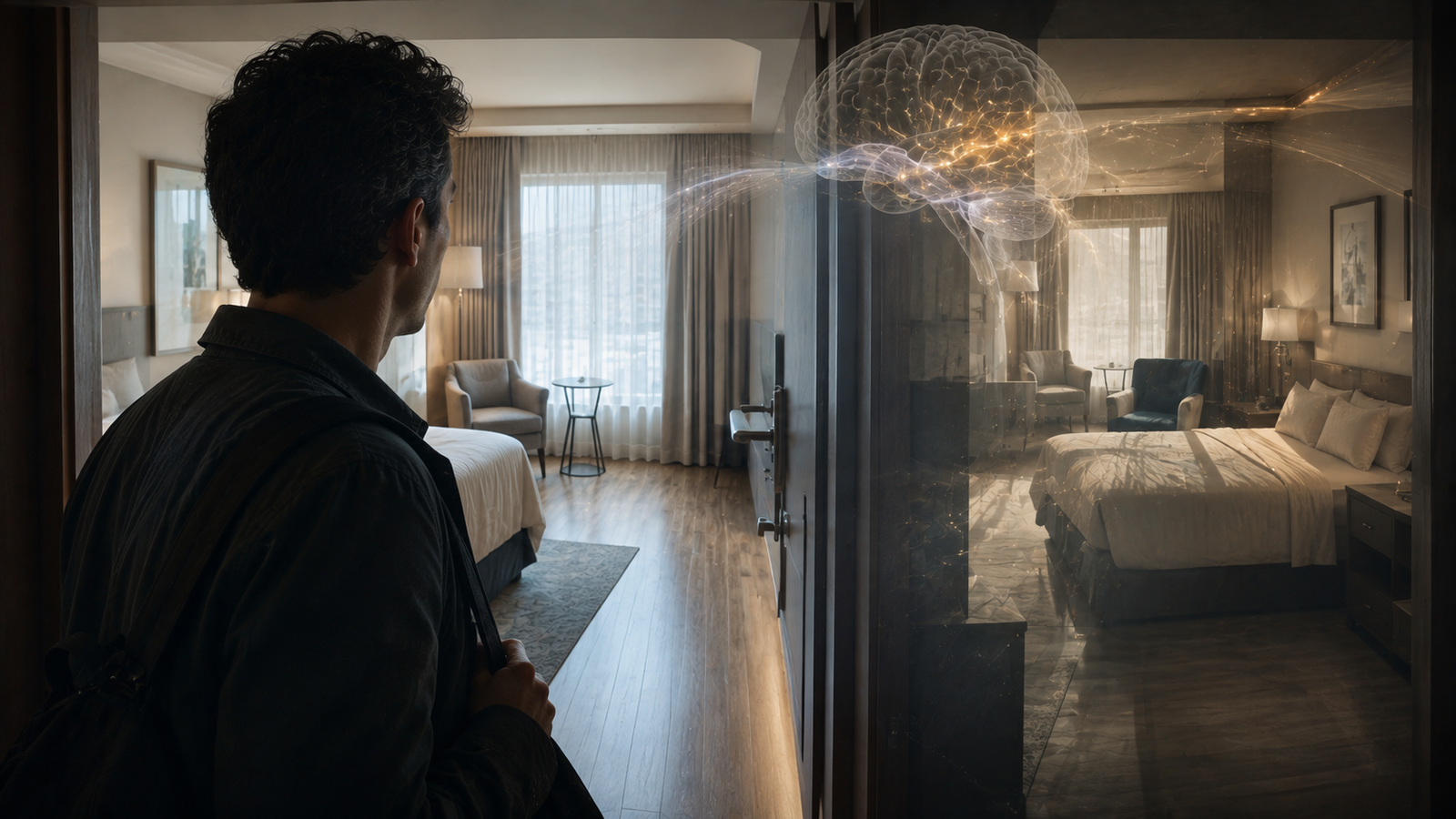
For example, you might walk into an unfamiliar hotel room and suddenly feel that you have been there before. The room may share a particular arrangement of furniture, lighting, proportions, or spatial relationships with another place you have experienced.
You may not consciously remember the earlier setting. Yet your brain can detect similarities between the two.
That partial match may produce a powerful feeling of familiarity even though you cannot identify the original memory.
Why Does Déjà Vu Feel So Real?
The strength of déjà vu is one reason it can seem mysterious.
A normal memory usually gives you some information about the past. You may remember a person, location, conversation, smell, or event.
Déjà vu is different. It often produces the feeling of recognition without the supporting details.
That can make the experience feel like a warning, prediction, or glimpse of the future. But the feeling itself does not establish that you have actually seen the event before.
The brain’s familiarity signal can be compelling even when the source of that familiarity cannot be consciously retrieved.
The Role of the Medial Temporal Lobe
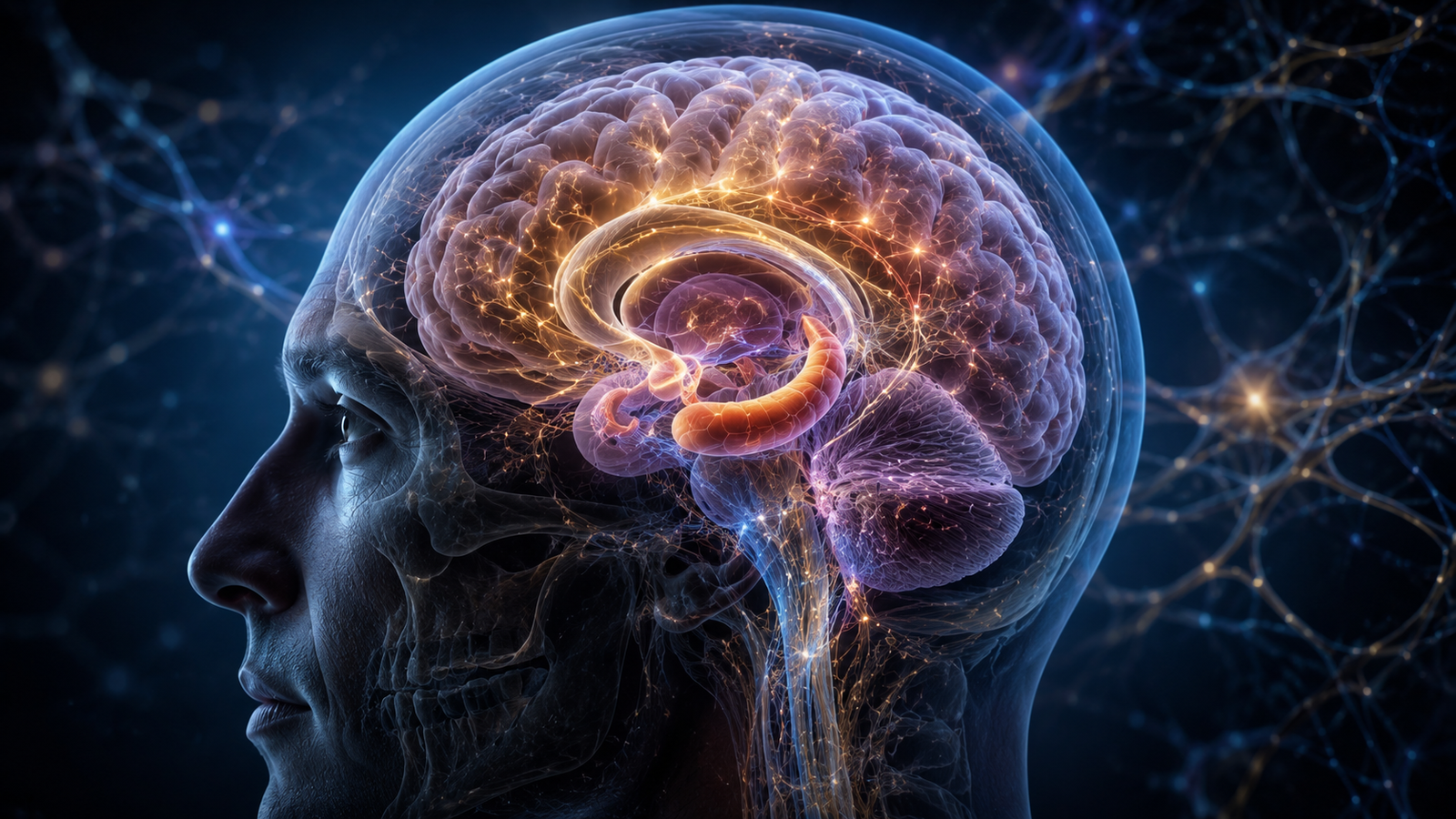
Memory researchers have paid particular attention to the medial temporal lobe, a group of structures that includes the hippocampus and surrounding regions.
These structures are important for forming and retrieving memories and for recognizing previously encountered information.
The hippocampus is especially important for linking details of an experience into a coherent memory. Other medial temporal regions are involved in familiarity and recognition.
This does not mean that there is one single “déjà vu center” in the brain. The experience appears to emerge from interactions among multiple memory and recognition systems.
Déjà Vu and Temporal Lobe Epilepsy
Déjà vu is usually a normal experience. Many healthy people report it occasionally.
However, déjà vu can also occur as part of temporal lobe seizures. In people with temporal lobe epilepsy, unusual feelings of familiarity can sometimes occur during seizure activity.
Researchers have studied these experiences because they provide clues about the brain systems involved in memory and recognition.
This does not mean that ordinary déjà vu is evidence of epilepsy. Occasional déjà vu by itself is generally not a sign of a neurological disorder.
Repeated, intense episodes accompanied by other unusual symptoms are different and may warrant medical evaluation.
Can Déjà Vu Predict the Future?
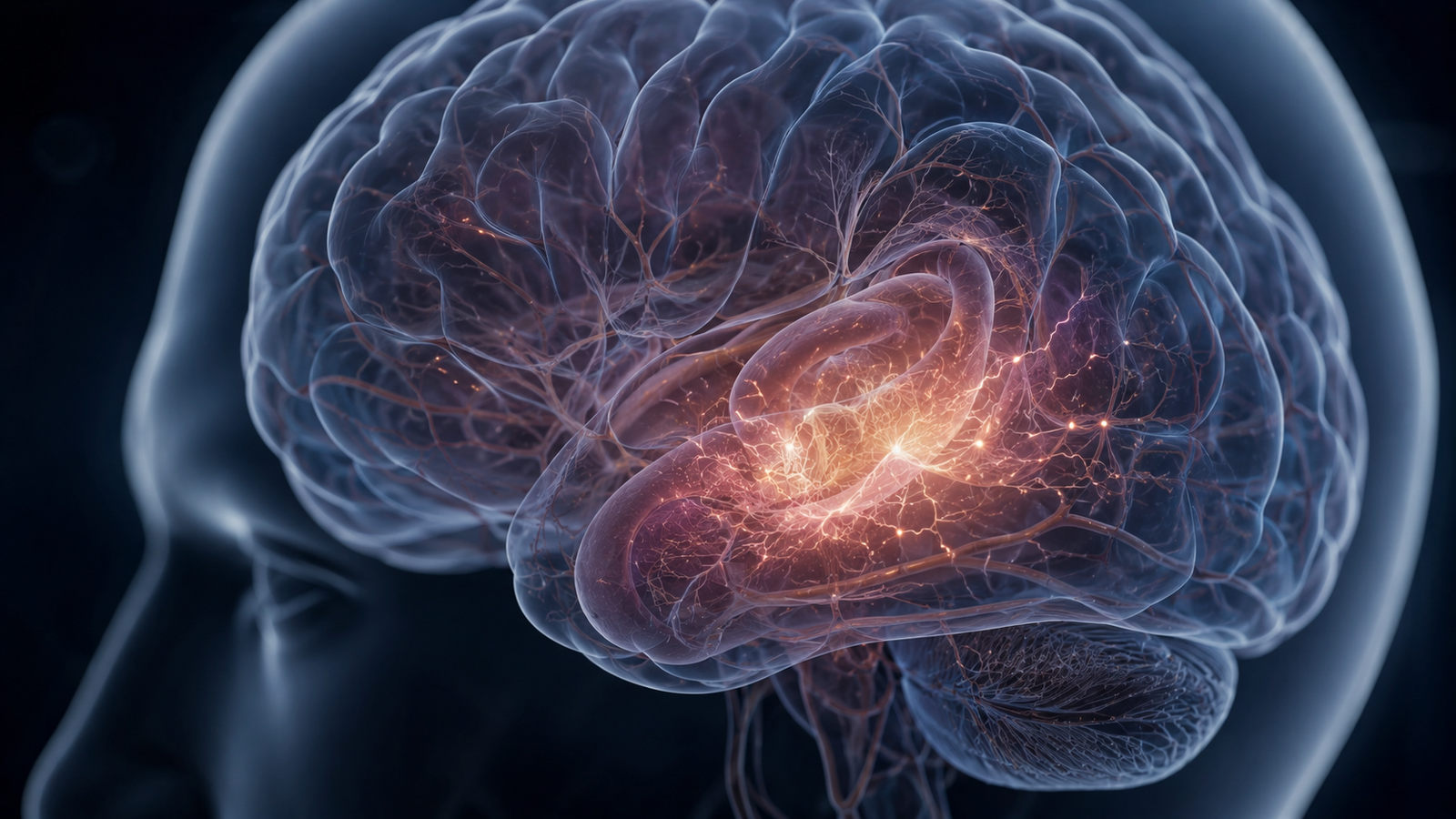
Déjà vu can feel strangely predictive.
You may experience a moment and feel certain that you know what will happen next. Sometimes the next few seconds even seem to unfold exactly as expected.
But this sensation does not provide reliable evidence of future knowledge.
One reason it can feel predictive is that familiarity can influence expectations. Once the brain labels a situation as familiar, you may unconsciously anticipate what comes next.
If the prediction happens to be correct, the experience can strengthen the impression that you somehow knew the future.
Why Déjà Vu Becomes More Interesting When You Think About Memory
Déjà vu reveals something important about memory: remembering is not a single process.
Your brain is constantly making judgments about whether something feels familiar, whether it can retrieve a specific source, and whether the current situation matches previous experiences.
Most of the time these systems work together smoothly.
Déjà vu is interesting because it exposes a moment when they appear to come apart.
You get the feeling of recognition without a clear recollection.
That small mismatch gives us a window into how the brain constructs the sense that something has happened before.
When Déjà Vu Is Worth Discussing With a Doctor
Occasional déjà vu is common and usually harmless.
It may be worth discussing with a healthcare professional if episodes are very frequent, unusually intense, or occur alongside other symptoms such as loss of awareness, confusion, unusual smells or tastes, sudden fear, repetitive movements, or gaps in memory.
Those features can occur with temporal lobe seizures and other neurological conditions. Only a qualified clinician can determine whether further evaluation is appropriate.
Key Takeaways
- Déjà vu is a strong feeling of familiarity during an objectively new experience.
- Familiarity and recollection are related but partly distinct aspects of memory.
- Possible explanations include timing differences in processing and detection of familiar patterns.
- The medial temporal lobe plays an important role in memory and recognition.
- Déjà vu can occur normally, but it can also occur during temporal lobe seizures.
- The feeling of prediction that sometimes accompanies déjà vu is not evidence of precognition.
Conclusion
Déjà vu feels mysterious because the brain creates a powerful sense of recognition without giving you a clear memory to explain it.
Rather than requiring a supernatural explanation, the experience may reflect the complexity of ordinary memory systems. Familiarity, recollection, perception, and expectation normally work together so smoothly that we rarely notice them.
Déjà vu gives us a brief glimpse of what happens when those systems do not line up perfectly.
And that is what makes this strange little experience so scientifically useful: it turns an everyday feeling into a window on how the brain remembers.
Explore more stories about memory, perception, and the hidden processes that shape everyday experience with CAVELYRA’s Brain & Mind collection. You can also explore how the human brain works.