
Why Is the Sky Blue?
Look up on a clear day.
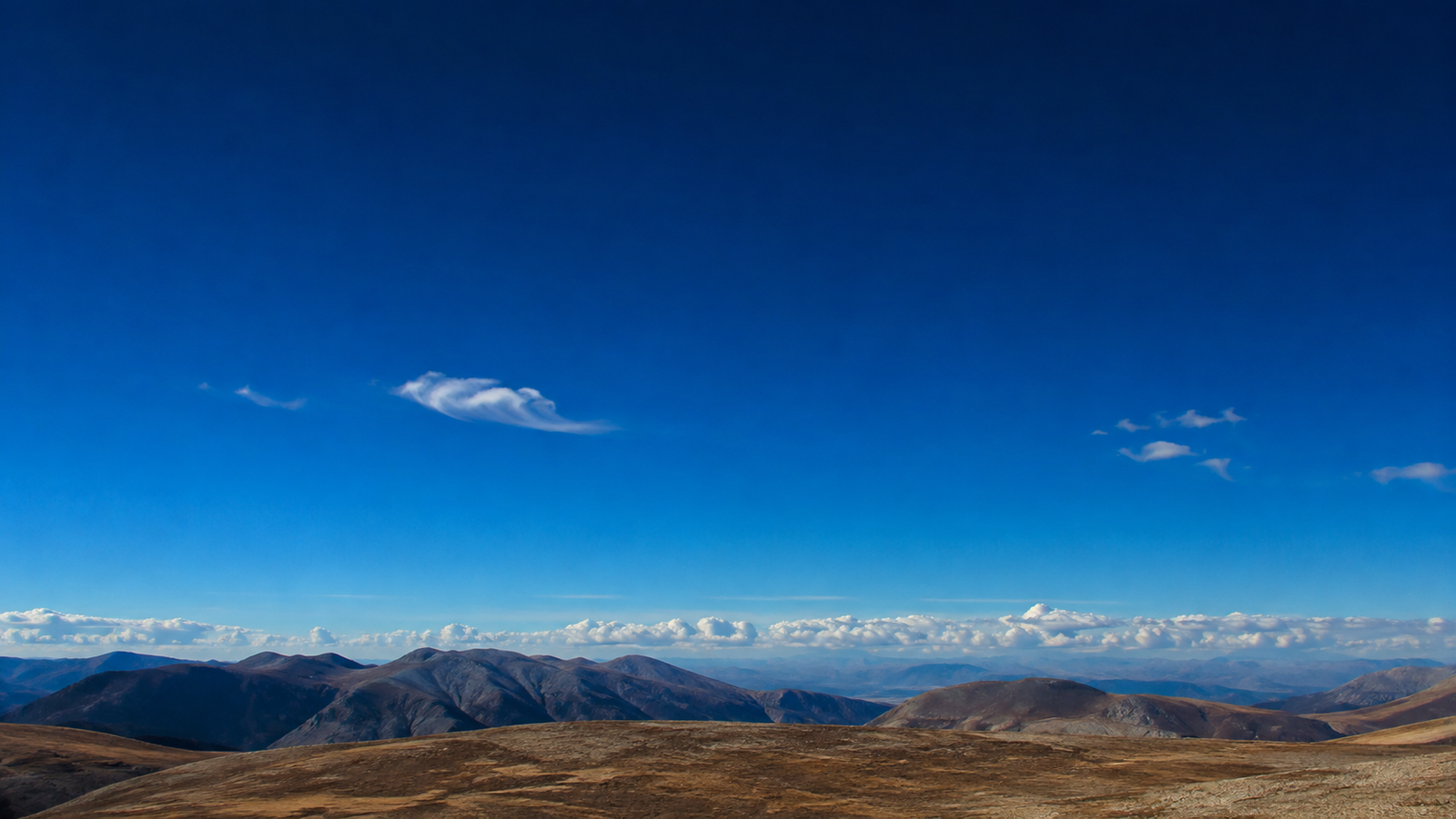
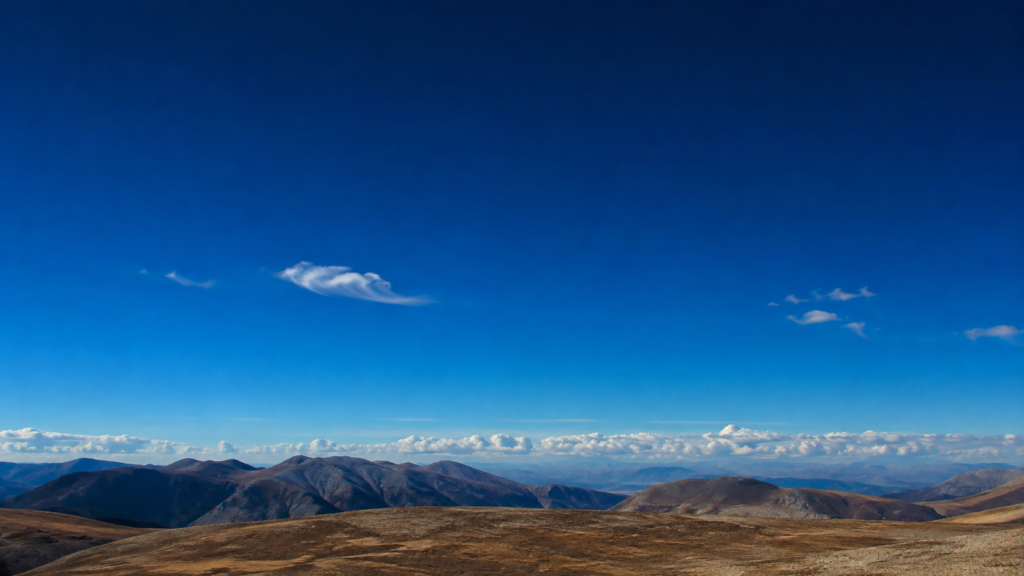
The sky appears blue.
It seems so ordinary that you may never stop to question it.
But sunlight itself is not blue. Sunlight contains a broad range of visible wavelengths that our eyes perceive together as white light.
So why is the sky blue?
The answer is Rayleigh scattering.
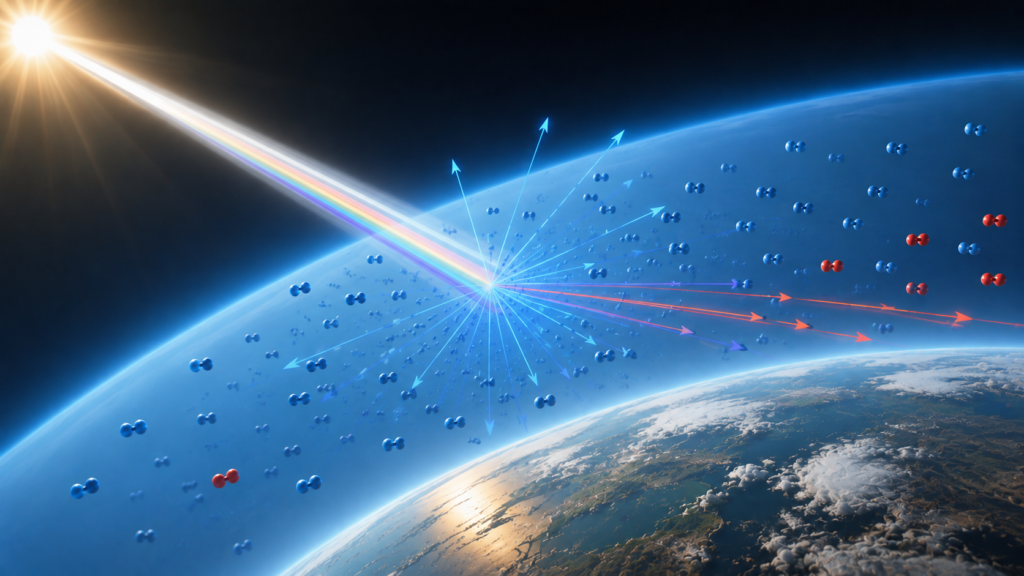
As sunlight enters Earth’s atmosphere, it interacts with tiny molecules of gases such as nitrogen and oxygen. These molecules scatter shorter wavelengths of visible light more strongly than longer wavelengths. Blue light is therefore scattered throughout the atmosphere much more efficiently than red light. (NASA Science)
That scattered blue light reaches your eyes from many directions.
The result is the blue sky you see above you.
The blue appearance of the daytime sky comes mainly from the wavelength-dependent scattering of sunlight by molecules in Earth’s atmosphere.
What Is Sunlight Made Of?
Sunlight looks white when it reaches your eyes directly.
But white sunlight contains many wavelengths of visible light.
Red light has a longer wavelength.
Blue and violet light have shorter wavelengths.
When these different wavelengths travel through Earth’s atmosphere, they do not interact with air molecules in exactly the same way.
This difference is essential to the color of the sky.
The atmosphere is not simply a transparent window.
It changes the direction of some of the incoming sunlight.
That process is called scattering.
What Is Rayleigh Scattering?
Rayleigh scattering occurs when light interacts with particles that are much smaller than the wavelength of the light.
The gas molecules in Earth’s atmosphere are extremely small compared with visible wavelengths.
They scatter shorter wavelengths much more strongly than longer wavelengths. NASA notes that air molecules scatter blue light about four times more strongly than red light. (NASA Science)
This wavelength dependence is the key reason the sky appears blue.
The atmosphere is constantly redirecting small amounts of sunlight in different directions.
Because blue light is scattered more efficiently, blue wavelengths become especially prominent when you look away from the direct path of the Sun.
Tiny atmospheric molecules scatter shorter wavelengths of sunlight more efficiently than longer wavelengths.
Why Does Scattered Light Make the Sky Blue?
Imagine sunlight entering the atmosphere above you.
Some sunlight continues toward Earth’s surface.
Some interacts with gas molecules.
When the light is scattered, it changes direction.
Blue wavelengths are scattered strongly enough that blue light reaches your eyes from many different parts of the sky.
You are therefore not seeing sunlight coming directly from the Sun.
You are seeing sunlight that has been redirected by the atmosphere.
This is why the entire sky can appear blue even when you are looking far away from the Sun.
Why Isn’t the Sky Violet?
This is an interesting question.
Violet light has an even shorter wavelength than blue light, so Rayleigh scattering affects violet strongly.
If scattering were the only factor involved, you might expect the sky to look violet.
But human vision is more sensitive to blue than violet.
Some violet light is also absorbed in the upper atmosphere.
The combination means that the sky appears predominantly blue to human observers. (NOAA Satellite Service)
Our eyes therefore matter.
The color we perceive is determined by both the physical light reaching us and the way our visual system responds to different wavelengths.
Why Does the Sky Look Lighter Near the Horizon?
Look toward the horizon on a clear day.
The sky often appears paler there than directly overhead.
The reason is partly the longer path sunlight takes through the atmosphere before reaching your eyes.
Light traveling through more atmosphere undergoes more scattering.
Multiple scattering events can redistribute the light and make the sky near the horizon appear lighter or whitish compared with the deeper blue overhead. (NOAA Satellite Service)
Atmospheric haze and aerosols can strengthen this effect.
Dust, pollution, water droplets, and other particles can scatter light differently from the tiny gas molecules responsible for Rayleigh scattering.
That is why a hazy sky often looks pale blue, gray, or whitish.
Why Are Clouds White Instead of Blue?
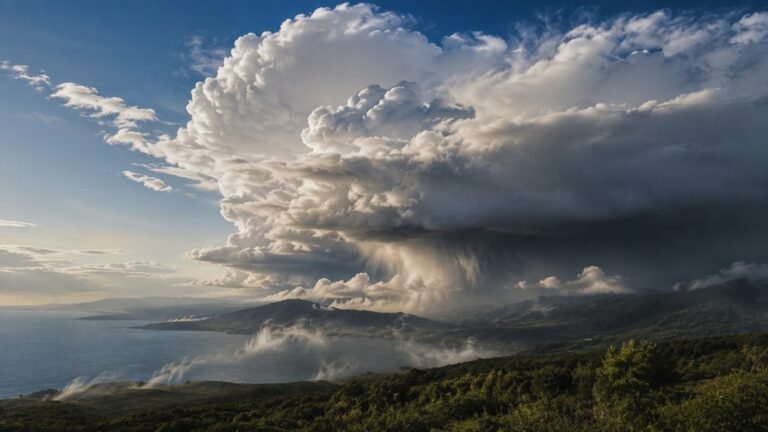
Clouds contain much larger water droplets or ice particles than individual air molecules.
These larger particles scatter visible wavelengths more similarly across the visible spectrum.
Because the different colors remain mixed together, the scattered light appears white or gray rather than strongly blue.
This is a different scattering regime from Rayleigh scattering.
The size of the particles matters.
Tiny gas molecules favor shorter wavelengths.
Much larger cloud particles scatter visible wavelengths more broadly.
Cloud droplets are much larger than atmospheric gas molecules and scatter visible light more broadly, making clouds appear white.
Why Does the Sky Turn Red at Sunset?
Sunset changes the geometry.
When the Sun is high in the sky, sunlight reaches you through a relatively shorter path through the atmosphere.
Near sunset, sunlight travels through much more atmosphere before reaching your eyes.
Along this longer path, more blue and violet light is scattered away from the direct beam.
The remaining direct sunlight becomes richer in longer wavelengths such as red and orange. (NOAA Global Monitoring Laboratory)
This is why the setting Sun can appear orange or red.
It is also why the surrounding sky can develop intense red, orange, and pink colors.
The same scattering process that makes the daytime sky blue helps create the colors of sunrise and sunset.
The difference is the length of the atmospheric path.
Why Can Sunsets Become Extremely Colorful?
Atmospheric particles can change the appearance of a sunset.
Dust, smoke, pollution, and other aerosols interact with sunlight differently from the small gas molecules responsible for Rayleigh scattering.
Their presence can influence the intensity and distribution of sunset colors. (NOAA Global Monitoring Laboratory)
But more particles do not automatically mean a better sunset.
Heavy haze can actually reduce visibility and make colors duller.
The appearance depends on particle size, concentration, altitude, atmospheric conditions, and the path sunlight takes through the atmosphere.
A brilliant sunset is therefore the result of several interacting conditions.
Why Does the Sky Look Different After a Volcanic Eruption or Large Fire?
Large amounts of aerosols can enter the atmosphere during events such as major volcanic eruptions and large wildfires.
These particles can remain suspended and alter how sunlight is scattered.
They can produce unusual colors during sunrise and sunset.
The effect depends on the type, size, concentration, and altitude of the particles.
This is different from the ordinary blue color of a clear daytime sky, which is dominated by scattering from atmospheric gas molecules.
Does Pollution Make the Sky More Blue?
Usually, no.
A clean atmosphere allows the normal molecular scattering pattern to dominate.
Larger airborne particles can scatter light more broadly across the visible spectrum.
This can make the sky look paler, hazier, or whitish rather than producing a deeper blue. (NOAA Global Monitoring Laboratory)
This is why a clear mountain sky can look much deeper blue than a hazy urban sky.
The difference is not simply about how much sunlight is present.
It is about what the sunlight encounters while traveling through the atmosphere.
Why Does the Sky Look Dark Blue From High Altitudes?
As you travel upward, there is less atmosphere above you.
That means there are fewer molecules available to scatter sunlight into your line of sight.
At high altitude, the sky can therefore appear darker.
From space, where there is essentially no atmosphere between an observer and the surrounding darkness, there is no blue atmospheric sky surrounding the spacecraft.
The blue color belongs to the interaction between sunlight and Earth’s atmosphere.
Why Does the Sky Look Black From Space?
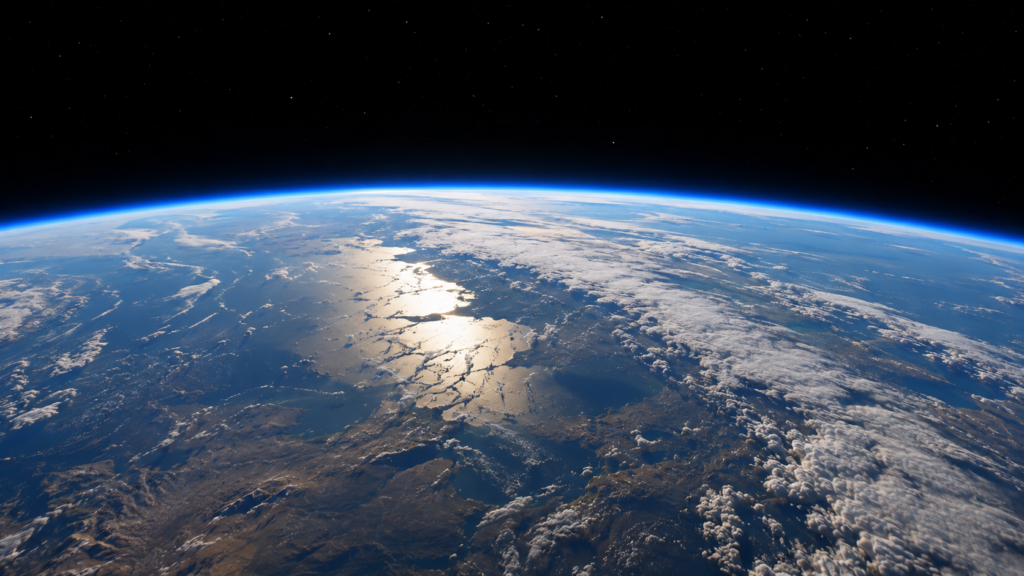
Space itself is not filled with Earth’s atmosphere.
There are no large amounts of nitrogen and oxygen surrounding an astronaut in the way they surround an observer at Earth’s surface.
Without the atmosphere scattering sunlight toward your eyes from all directions, the background remains dark.
An astronaut can therefore see the blackness of space while the illuminated Earth below displays a blue atmospheric layer.
The contrast is a direct demonstration of scattering.
Earth’s atmosphere creates the blue appearance.
Remove the atmosphere from the viewing path, and the background becomes dark.
The blue atmospheric layer around Earth is visible from space because sunlight is scattered by the atmosphere.
Does the Atmosphere Change the Color of the Sun?
Yes.
The Sun’s apparent color can change depending on how much atmosphere its light passes through.
When the Sun is high overhead, it may appear nearly white or slightly yellow.
Near sunrise and sunset, its light travels through a much longer atmospheric path.
More shorter-wavelength light is scattered away from the direct beam.
The remaining direct sunlight can therefore appear yellow, orange, or red. (NOAA Satellite Service)
The Sun itself has not suddenly changed color.
The atmosphere has changed the light reaching your eyes.
Why Is the Sky Blue on Other Planets?
The color of a planetary sky depends on the planet’s atmosphere and the particles within it.
Rayleigh scattering can occur in other atmospheres too, but the result depends on atmospheric composition, particle size, density, and the wavelengths of light involved.
NASA has observed Rayleigh scattering in planetary atmospheres and uses these effects to study atmospheric composition. (NASA Science)
Earth’s familiar blue sky is therefore not a universal property of planets.
It is a consequence of Earth’s atmosphere interacting with sunlight.
The Simple Physics Behind the Blue Sky
The explanation can be reduced to a sequence.
Sunlight enters Earth’s atmosphere.
The atmosphere contains tiny gas molecules.
These molecules scatter shorter wavelengths more efficiently.
Blue and violet light are scattered strongly.
That scattered light reaches your eyes from many directions.
Your visual system interprets the combined signal as a blue sky.
At sunset, sunlight travels through a much longer atmospheric path.
More blue light is scattered away from the direct beam.
Longer wavelengths become more prominent.
The sky and Sun can therefore appear red, orange, or pink.
The same atmosphere produces both effects.
The difference is geometry.
What Can You Learn by Looking at the Sky?
The sky is more than a background.
Its color provides information about the atmosphere.
A deep blue sky usually indicates relatively clear conditions with limited aerosol scattering.
A pale or whitish sky can indicate haze or larger particles.
A red sunset tells you that sunlight is traveling through a long atmospheric path.
Unusual colors can sometimes reveal the presence of smoke, dust, volcanic aerosols, or other particles.
Scientists use the same principles more systematically.
Satellites measure light at different wavelengths to study atmospheric gases, aerosols, clouds, and surface conditions. (NOAA Satellite Service)
The colors you see therefore contain information about what is happening in the atmosphere.
The Strange Lesson of the Blue Sky
The sky is not blue because air has a blue color.
It is blue because sunlight interacts with the atmosphere.
Tiny molecules scatter different wavelengths at different rates.
Blue light is scattered strongly.
That scattered light reaches you from across the sky.
At sunset, the same atmosphere removes more of the blue light from the direct path of sunlight.
Red and orange become more prominent.
A simple color in the sky is therefore the visible result of light, molecular physics, atmospheric composition, and the position of the Sun.
The next time you look upward, you are seeing an enormous optical experiment taking place above you.
Key Takeaways
- Sunlight contains many visible wavelengths.
- Earth’s atmosphere scatters sunlight in different directions.
- Rayleigh scattering affects shorter wavelengths more strongly.
- Blue light is scattered much more strongly than red light.
- Human vision also contributes to why the sky appears blue rather than violet.
- The sky often looks paler near the horizon because sunlight travels through more atmosphere.
- Clouds appear white because their larger water droplets scatter visible wavelengths more broadly.
- Sunsets become red and orange because sunlight travels through a longer atmospheric path.
- Aerosols such as dust and smoke can change the appearance of the sky.
- The blue sky is a result of sunlight interacting with Earth’s atmosphere.
Conclusion
The sky is not blue because the atmosphere contains blue pigment.
It is blue because light interacts with air.
Sunlight enters the atmosphere.
Tiny gas molecules scatter the shorter wavelengths more strongly.
Blue light is redirected throughout the atmosphere.
Some of that scattered light reaches your eyes.
You see blue.
At sunset, sunlight takes a longer route through the atmosphere.
More blue light is scattered away from the direct beam.
The remaining sunlight becomes richer in red and orange wavelengths.
The same physics therefore explains two familiar sights.
A blue daytime sky.
A red sunset.
Both are created by light traveling through Earth’s atmosphere.
Explore more from CAVELYRA‘s Science Explained collection for clear, evidence-based explanations of everyday questions, natural phenomena, and the science behind the world around you.